
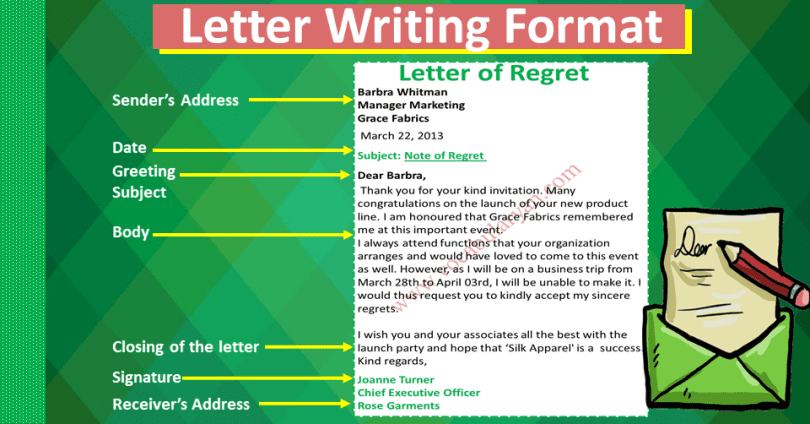
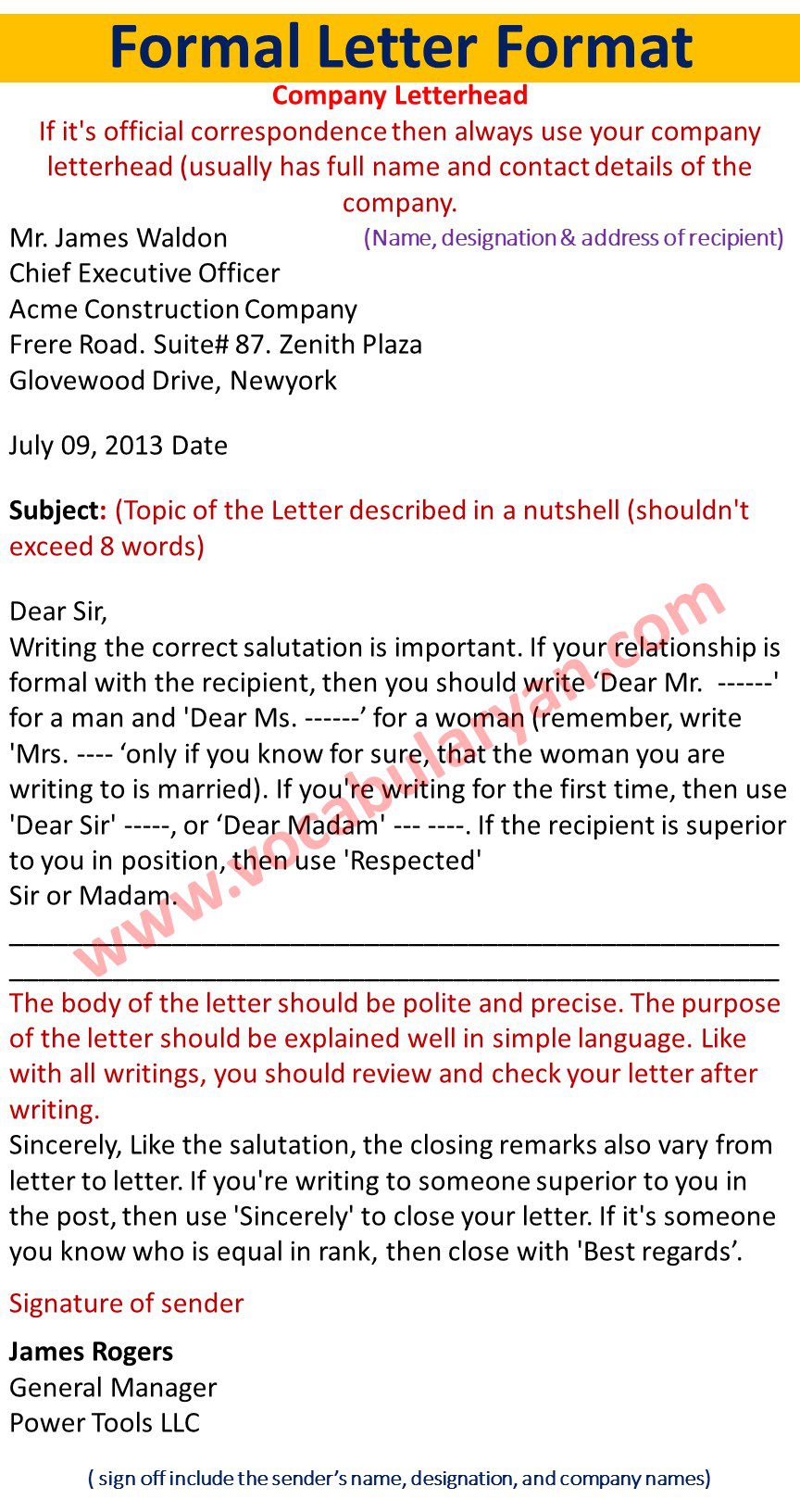
Formal letter writing is a key communication skill used in schools, offices, and official settings to convey messages with clarity and respect. Learning the correct Formal Letter Writing format, structure, and tone helps students and professionals write letters for applications, complaints, or official requests. This guide explains each part of a formal letter, including sender’s address, salutation, subject, body, and closing, using plain and effective language. It is designed for learners who want to write proper letters that meet academic, administrative, or professional standards in today’s digital-first world.
Here’s a complete format by which you can write a Formal Letter:
Sender’s Address
Write your full address at the top-left corner of the letter.
Example:
123-A Model Town
Lahore, Pakistan
Date
Leave a line after the address and write the date.
Example:
3rd May 2025
Receiver’s Address
Write the address of the person or organization you are writing to.
Example:
The Principal
City School
Lahore, Pakistan
Subject Line
Mention the purpose of the letter in one short line.
Example:
Subject: Request for Fee Concession
Salutation
Use a respectful greeting.
Example:
Respected Sir/Madam,
Body of the Letter
Write your message in 3 small paragraphs:
- Paragraph 1 – Introduce yourself and your purpose.
- Paragraph 2 – Give details or explanation.
- Paragraph 3 – Close politely and state what you expect.
Example:
I am a student of Class 10 at your school. I want to request a fee concession as my father is currently unemployed.
I have always maintained good academic performance and discipline.
I hope you will kindly consider my request.
Complimentary Close
End the letter politely.
Example:
Yours obediently,
Ali Raza
Signature
Write your full name and designation (if required).
Example:
Ali Raza
Class 10 – B
You May Also Like

Leave a Comment