
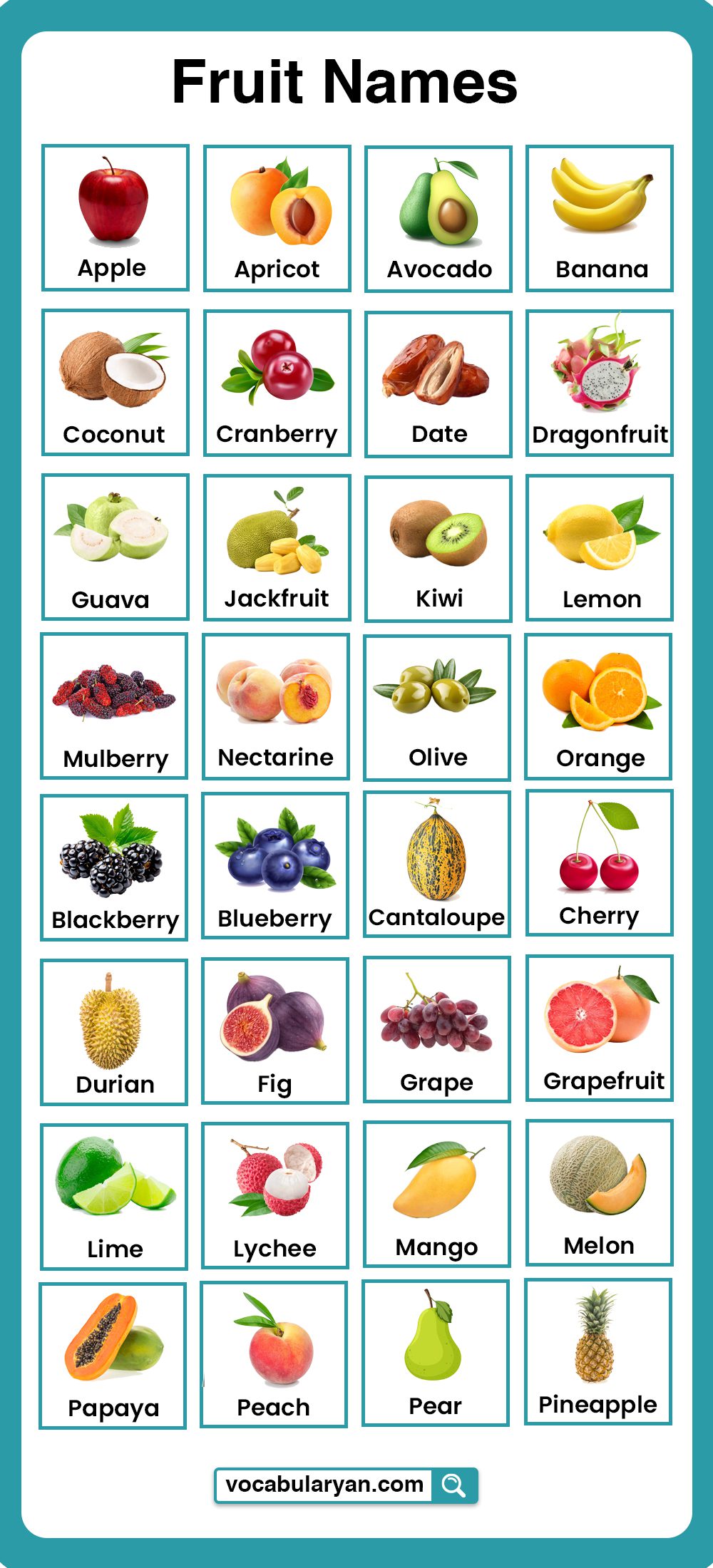
Learning fruits names in English helps kids and ESL learners talk about food, meals, and nutrition. It builds strong word-picture connections and makes it easier to group fruits by type—like seasonal fruits, tropical ones, or dried ones. This makes daily conversations, reading food packages, and classroom tasks easier. In this article, you’ll find fruit names grouped in categories with spellings and images to support better memory and faster learning.
Common Fruits Names for Daily Use
These are the most used fruits in daily vocabulary. They often appear in homes, markets, and school materials. Knowing their names supports basic food talk and English word recognition.
Below is a list of common fruits:
- Apple
- Banana
- Mango
- Orange
- Grapes
- Papaya
- Guava
- Watermelon
- Pear
- Peach
- Pineapple
- Kiwi
- Pomegranate
- Melon
- Coconut
- Plum
- Apricot
- Lychee
- Dates
- Fig
- Chikoo
- Strawberry
- Sweet Lime
- Nectarine
- Tangerine
- Avocado
- Blueberry
- Blackberry
- Dragon Fruit
- Jackfruit
- Passion Fruit
- Raspberry
- Custard Apple
- Star Fruit
- Cherry
- Gooseberry
- Cranberry
- Mulberry
- Jujube
- Olive
- Tomato
- Longan
Seasonal Fruits Names List
Seasonal fruits are grown in specific parts of the year. Learning these fruits names helps children understand seasonal foods and their uses in everyday English.
Summer Fruits List in English
Summer fruits are fresh, juicy, and often eaten cold.
- Mango
- Watermelon
- Lychee
- Muskmelon
- Pineapple
- Papaya
- Jamun
- Peach
- Apricot
- Grapes
- Plum
- Jackfruit
- Melon
- Guava
- Cucumber
- Chikoo
- Falsa
- Ice Apple
- Cherry
- Blueberry
- Raspberry
- Coconut
- Sweet Lime
- Star Fruit
- Mulberry
- Strawberry
- Fig
- Dragon Fruit
- Passion Fruit
- Kiwi
- Banana
- Gooseberry
- Orange
- Longan
Winter Fruits Names
Winter fruits are rich in nutrients and help in cold weather.
- Apple
- Pomegranate
- Orange
- Pear
- Guava
- Kiwi
- Grapes
- Tangerine
- Custard Apple
- Persimmon
- Mandarin
- Strawberry
- Pineapple
- Sweet Lime
- Sapodilla
- Dates
- Fig
- Carambola
- Grapefruit
- Pomelo
- Longan
- Mulberry
- Nectarine
- Blackberry
- Raspberry
- Red Currant
- Blueberry
- Bael
- Cranberry
Rainy Season Fruits in English
Rainy fruits are grown during wet months and are good for digestion.
- Papaya
- Banana
- Guava
- Jamun
- Sweet Lime
- Pear
- Plum
- Pineapple
- Indian Blackberry
- Rose Apple
- Wood Apple
- Water Apple
- Mango
- Lychee
- Rambutan
- Falsa
- Star Fruit
- Dragon Fruit
- Passion Fruit
- Sapodilla
Fruits Names for Kids Learning
Children learn faster when fruits are grouped and presented with pictures. This section focuses on fruits that are easy to remember, colorful, and found often.
Below is a list of fruits names ideal for kids:
- Apple
- Banana
- Mango
- Orange
- Grapes
- Watermelon
- Papaya
- Strawberry
- Pineapple
- Guava
- Cherry
- Kiwi
- Pear
- Lychee
- Peach
Citrus and Juicy Fruits Names
Citrus fruits are juicy and rich in Vitamin C. They help learners understand types of fruit textures and flavors.
- These citrus fruits are sweet, sour, or tangy and often used in juices, dishes, or snacks.
- Orange: Juicy and sweet fruit. Often eaten fresh or used in breakfast juices.
- Sweet Lime: Mild and watery taste. Commonly used in refreshing summer drinks.
- Lemon: Very sour fruit. Used in cooking, drinks, and sometimes for natural cleaning.
- Grapefruit: Big citrus with a bitter-sweet flavor. Often eaten raw or in fruit bowls.
- Tangerine: Sweeter than an orange and easy to peel. Great for quick snacks.
- Pomelo: Largest citrus fruit with thick skin. Its taste is sweet with a mild tang.
- Mandarin: Small and very sweet citrus. Popular in lunchboxes and winter seasons.
- Clementine: Seedless and juicy type of mandarin. Kids love its easy peel and taste.
- Blood Orange: Reddish flesh with berry-like flavor. Often used in fancy drinks or salads.
- Lime: Small and green fruit. Used to add sourness to dishes and drinks.
- Citron: Thick-skinned citrus with little juice. Mostly used for zest and sweets.
- Ugli Fruit: A mix of orange, grapefruit, and tangerine. Looks rough but tastes sweet.
- Finger Lime: Long and thin citrus. Its tiny juice pearls pop like caviar.
- Yuzu: A strong-smelling citrus. Used in Japanese cooking and sauces.
- Key Lime: Small and sharp-flavored lime. Often used in pies and tropical recipes.
- Kaffir Lime: Known more for its leaves than the fruit. Popular in Thai cooking.
- Calamondin: Very sour citrus. Used in jams or squeezed into cold drinks.
- Satsuma: Soft, seedless, and easy to peel. A winter favorite in many homes.
- Sudachi: Sour green fruit from Japan. Mostly used in sauces and marinades.
- Kumquat: Tiny orange-like fruit. You can eat the peel and the inside together.
Tropical and Exotic Fruits in English
These fruits grow in warm regions and are not always available everywhere. Knowing their names of fruits helps in advanced vocabulary.
- Mango: Called the king of fruits, soft and sweet
- Pineapple: Spiky outside, juicy rings inside
- Papaya: Soft, orange fruit, good for digestion
- Guava: Green skin, pink or white flesh
- Coconut: Hard shell, white flesh and water inside
- Dragon Fruit: Pink peel, black seeds inside
- Passion Fruit: Yellow inside, tangy taste
- Durian: Strong smell, creamy inside
- Rambutan: Hairy outside, juicy center
- Star Fruit: Star-shaped slices, sweet-sour flavor
Small-Sized Fruits and Berries
These fruits are tiny, often sweet, and easy to eat. They help build fruit vocabulary through color and shape learning.
- Strawberry
- Blueberry
- Raspberry
- Blackberry
- Cherry
- Cranberry
- Gooseberry
- Mulberry
- Currant
- Red Currant
- White Currant
- Loganberry
- Elderberry
- Barberry
- Sea Buckthorn
- Chokeberry
- Boysenberry
- Huckleberry
- Cloudberry
- Bilberry
- Juneberry
- Jostaberry
- Nannyberry
- Tayberry
- Marionberry
- Serviceberry
- Miracle Fruit
- Wolfberry
- Indian Gooseberry
- Cape Gooseberry
Big and Heavy Fruits Names
These are larger fruits that are usually shared or cut into parts. Their names of fruits help children describe size and form in English.
- Watermelon
- Jackfruit
- Coconut
- Pumpkin
- Pineapple
- Papaya
- Muskmelon
- Breadfruit
- Pomelo
- Durian
- Soursop
- Bael
- Star Apple
- Wood Apple
- Marang
- Water Apple
- Plantain
- Cantaloupe
- Casaba Melon
- Winter Melon
- Honeydew
- Banana Cluster
- Avocado
- Sugar Apple
- Java Plum
- Mangosteen
- Elephant Apple
- Melon
- Fig
- Snake Fruit
- Ambarella
Dry Fruits Names in English
Dry fruits are high in nutrients and last longer. They’re important for health vocabulary and snack-related words.
Below is a list of dry fruits:
- Almond
- Cashew
- Walnut
- Raisin
- Pistachio
- Fig
- Dates
- Prune
- Apricot
- Hazelnut
- Macadamia
- Brazil Nut
- Pine Nut
- Chestnut
- Sultana
- Golden Raisin
- Chironji
- Fox Nut
- Lotus Seed
- Acorn
- Pecan
- Dry Mulberry
- Dry Kiwi
- Dry Mango
- Dry Blueberry
- Dry Cranberry
- Dry Gooseberry
- Watermelon Seeds
- Sunflower Seeds
- Pumpkin Seeds
- Flaxseed
Sweet and Tangy Fruits List
This list helps learners group fruits names by taste, which is helpful in both conversation and food vocabulary.
- Mango: Juicy and sweet, it gives you a lot of vitamin A which helps keep your eyes and skin healthy.
- Apple: Crunchy and filling, apples give you fiber that helps digestion and keeps your stomach working well.
- Orange: Full of juice and flavor, it’s packed with vitamin C that supports your immune system.
- Grapes: Small but powerful, grapes have antioxidants that are good for your heart and blood health.
- Pineapple: Tangy and juicy, it gives you vitamin C and bromelain, which helps with digestion.
- Peach: Soft and sweet, peaches have vitamin C and help keep your skin glowing and fresh.
- Plum: Juicy with a sour kick, plums carry fiber and help prevent constipation.
- Cherry: Sweet or tart, cherries have antioxidants that may reduce swelling and help with muscle recovery.
- Pomegranate: Packed with juicy seeds, it offers antioxidants that help protect your heart.
- Strawberry: Bright red and sweet, strawberries are rich in vitamin C and support skin and immune health.
Fruits with Seeds or Pits Inside
These fruits names are useful to describe what’s inside, helping learners talk about fruit parts in English.
- Mango
- Papaya
- Guava
- Watermelon
- Pomegranate
- Apple
- Pear
- Plum
- Peach
- Cherry
- Kiwi
- Orange
- Grapes
- Dragon Fruit
Fruits Names by Color Groups
Learning fruit names in English by color helps young learners organize thoughts and describe food better.
Red and Pink Fruits:
- Apple
- Strawberry
- Watermelon
- Cherry
- Raspberry
- Pomegranate
- Dragon Fruit
Yellow and Orange Fruits:
- Mango
- Banana
- Orange
- Papaya
- Peach
- Apricot
- Sweet Lime
Green Fruits:
- Guava
- Pear
- Green Apple
- Gooseberry
- Kiwi
- Avocado
Purple and Blue Fruits:
- Grapes
- Plum
- Blueberry
- Blackberry
- Elderberry
Learn A to Z Fruits Names in English
Below is a list of fruits names from A to Z. This helps build full vocabulary using alphabet-based learning.
- A – Apple, Apricot, Avocado
- B – Banana, Blackberry, Blueberry, Breadfruit
- C – Cherry, Coconut, Cranberry, Cantaloupe
- D – Dates, Dragon Fruit, Durian
- E – Elderberry
- F – Fig
- G – Grapes, Guava, Gooseberry
- H – Honeydew
- I – Indian Fig
- J – Jackfruit, Java Plum
- K – Kiwi
- L – Lychee, Lemon, Lime
- M – Mango, Muskmelon, Mulberry
- N – Nectarine
- O – Orange, Olive
- P – Papaya, Peach, Pear, Pineapple, Plum, Pomegranate, Passion Fruit
- Q – Quince
- R – Raspberry, Rambutan
- S – Strawberry, Star Fruit, Sweet Lime
- T – Tangerine, Tomato (used as fruit in some contexts)
- U – Ugli Fruit
- V – Velvet Apple
- W – Watermelon, Walnut
- X – Xigua (a type of watermelon)
- Y – Yellow Passion Fruit
- Z – Ziziphus Fruit
You May Also Like
