
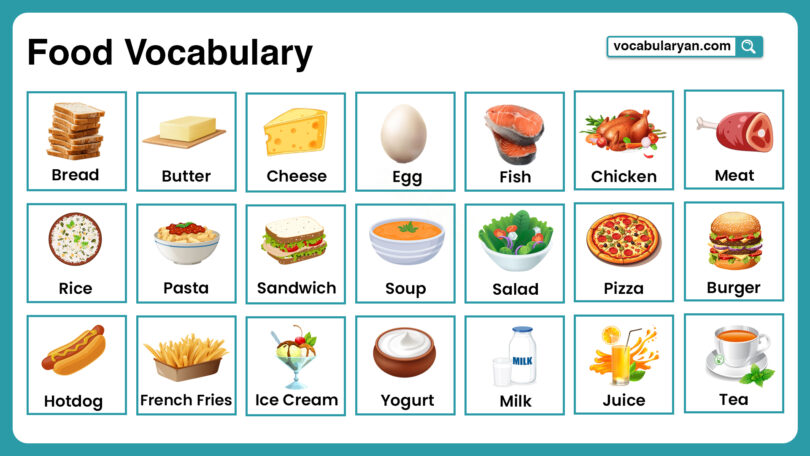
Food names in English include raw ingredients like rice and chicken, finished dishes like biryani and stew, and everyday drinks like tea and juice. Each food name here comes with its real taste, texture, and use.
Food Names by Category
Grain, meat, dessert, and drink food names each have their own taste, texture, and role at the table. A dish’s name usually points to its main ingredient or cooking method, as in fried rice or grilled chicken, while a raw ingredient’s name, such as tomato or garlic, stays the same no matter which recipe it appears in. Knowing the exact food name for a dish or ingredient keeps a conversation about food accurate instead of vague.
Fruits and Vegetables
- Apple: a round fruit with crisp, juicy flesh under thin red, green, or yellow skin. It is eaten fresh, baked into pies, or pressed into juice.
- Banana: a long, curved fruit with soft, sweet flesh under a peel that turns from green to yellow as it ripens. It is eaten on its own or blended into smoothies and baked goods.
- Mango: a fragrant fruit with soft, juicy orange flesh around a large flat seed. It is eaten fresh, blended into drinks, or dried into sweet strips.
- Watermelon: a large fruit with a hard green rind and sweet, watery red flesh. Its high water content makes it a common choice for cooling off in hot weather.
- Carrot: a crunchy orange root vegetable with a mildly sweet flavor. It is eaten raw in salads or cooked into soups, stews, and side dishes.
- Tomato: a juicy, round fruit used as a vegetable in cooking, ranging from tart to sweet depending on ripeness. It forms the base of many sauces and adds tang to salads.
- Spinach: a leafy green vegetable with a mild, slightly earthy taste. It cooks down quickly in a pan or is eaten raw in salads.
- Onion: a layered bulb vegetable with a sharp, pungent flavor that turns sweet when cooked slowly. It is used at the start of most savory dishes to build flavor.
- Full fruit and vegetable lists: covered in complete depth on Fruit Names in English and Vegetable Names in English.
Grains and Cereals
- Rice: small, starchy grains that turn soft and fluffy when boiled. It forms the base of countless meals worldwide, from simple steamed sides to elaborate mixed dishes.
- Wheat: a cereal grain ground into flour for bread, pasta, and countless baked goods. It is one of the most widely grown crops in the world.
- Corn: sweet, plump kernels eaten boiled, grilled, or popped. It is also ground into flour or meal for bread, tortillas, and other staples.
- Oats: flattened or rolled grains cooked into a soft, thick porridge. They are also baked into cookies, granola bars, and bread.
- Barley: a chewy, nutty grain often added to soups and stews for texture. It is also a key ingredient in brewing beer.
- Millet: a small, round grain cooked into porridge or ground into flour for flatbread. It grows well in dry climates where other grains struggle.
- Rye: a dense, slightly sour grain most often ground into flour for dark, hearty breads. It tolerates colder climates better than wheat.
- Sorghum: a drought-resistant grain ground into flour or cooked whole. It is common in flatbreads and porridge across parts of Africa and Asia.
- Quinoa: a small, protein-rich seed that cooks up light and fluffy. It is used much like rice as a base for salads and side dishes.
- Semolina: coarsely ground durum wheat used to make pasta, couscous, and certain puddings. Its slightly gritty texture holds its shape well during cooking.
Meat and Seafood Names
- Chicken: a lean, mild-flavored meat cooked by grilling, frying, roasting, or boiling. It appears in more dishes worldwide than almost any other meat.
- Beef: meat from cattle, ranging from tender cuts suited to quick grilling to tougher cuts that soften with slow cooking. Its flavor and texture vary widely depending on which part of the animal it comes from.
- Mutton: meat from an adult sheep, with a stronger, more distinct flavor than lamb. It is common in slow-cooked curries and stews.
- Lamb: meat from a young sheep, more tender and milder than mutton. It is often roasted whole or grilled as chops.
- Turkey: a large poultry bird with lean white meat and richer dark meat. It is traditionally roasted whole for holiday meals in several countries.
- Duck: a poultry bird with richer, fattier meat than chicken. It is often roasted or pan-seared skin-side down until the fat renders and the skin turns crisp.
- Goat Meat: a lean, firm meat with a distinct flavor stronger than beef. It is common in curries and slow-cooked stews across many cuisines.
- Sausage: ground meat seasoned with herbs and spices, then packed into a casing. It is grilled, fried, or boiled and served whole or sliced.
- Fish: a broad category of seafood cooked by grilling, frying, steaming, or baking. Taste and texture vary widely from one species to the next, from delicate white fish to rich, oily varieties.
- Shrimp: small, curved shellfish with firm, sweet flesh. They cook within minutes in almost any method, from boiling to stir-frying.
- Crab: a shellfish with a hard shell and sweet, delicate meat found mainly in its legs and claws. The shell must be cracked open to reach the meat inside.
- Lobster: a large shellfish with firm, rich meat prized in many cuisines. It is often boiled or steamed whole and served with melted butter.
- Prawns: shellfish similar to shrimp but generally larger, with a firm texture and mild sweetness. They are common in curries, stir-fries, and grilled skewers.
- Tuna: a firm, meaty fish with a deep red color when raw. It is grilled, seared, or used raw in dishes like sushi and sashimi.
- Salmon: an oily fish with pink flesh and a rich, distinctive flavor. It is grilled, baked, or smoked, and often served with the skin left on for crispness.
- Squid: a soft-bodied sea creature with a mild flavor. It is cooked quickly to stay tender, or sliced into rings and fried until crisp.
Meal-Based Dish Names
Some dishes belong most naturally to a specific time of day rather than a food type. Bread, eggs, milk, and rice already appear above as raw ingredients; the dishes below are specific prepared meals built around them.
- Porridge: grains, most often oats, simmered slowly in water or milk into a soft, warm dish. It is a common breakfast in many cultures, often sweetened with sugar or fruit.
- Toast: sliced bread browned by heat until crisp. It is usually topped with butter, jam, or eggs to start the day.
- Pancakes: flat, round cakes made from a thin batter, cooked on a griddle until golden on each side. They are usually served stacked with syrup, fruit, or cream.
- Waffles: a grid-patterned batter cake cooked in a hot iron until crisp outside and soft inside. The pockets in its surface are ideal for holding syrup or fruit.
- Omelet: beaten eggs cooked flat in a pan until just set. It is often folded around cheese, vegetables, or meat before serving.
- Fruit Salad: a mix of chopped fresh fruits served together in one bowl. It is usually eaten as a light breakfast or a refreshing dessert.
- Rice and Curry: steamed rice served alongside a spiced, sauce-based dish. This pairing is a common lunch combination across many South Asian and Southeast Asian meals.
- Burger: a cooked patty, usually meat, served inside a round bun with toppings such as lettuce, cheese, or sauce. It is one of the most widely recognized fast foods in the world.
- Chapati with Vegetables: a soft, round flatbread served alongside a cooked vegetable dish. It is a common lunch combination in South Asian households.
- Grilled Chicken: chicken cooked directly over heat until browned outside and juicy inside. It is often marinated beforehand to add flavor and keep the meat tender.
- Fried Rice: cooked rice stir-fried quickly with vegetables, egg, or meat. It is seasoned with soy sauce or similar flavorings and often made from rice cooked the day before.
- Kebabs: seasoned meat, and sometimes vegetables, grilled on a skewer or shaped into a formed patty. They are cooked over an open flame for a smoky, charred flavor.
- Stew: meat or vegetables simmered slowly in liquid until tender. The liquid often thickens during cooking into a hearty, warming sauce.
- Roasted Meat: meat cooked slowly in an oven with dry heat until browned outside and tender throughout. It is a common centerpiece for a larger family dinner.
- Biryani: a spiced rice dish layered with meat, vegetables, or both, then cooked together until the flavors blend fully. It is a festive dish in many South Asian households.
- Pizza: a flat baked dough topped with sauce, cheese, and other toppings. It is cut into wedge-shaped slices, letting several people share one pizza at a meal.
- Spaghetti: long, thin pasta strands usually served with a tomato, meat, or cream-based sauce. It is twirled onto a fork rather than cut into pieces.
- Barbecue: meat cooked slowly over an open flame or smoke, often basted with a flavorful sauce. The slow cooking process gives it a deep, smoky taste.
- Grilled Fish: fish cooked directly over heat until the outside is lightly charred and the inside stays tender. It is often brushed with oil or marinade to prevent sticking.
- Fried Chicken: chicken coated in seasoned flour or batter and deep-fried until the outside turns crisp. The coating locks in moisture while the exterior crisps in hot oil.
- Vegetable Curry: mixed vegetables simmered in a spiced sauce until tender. It is often served with rice or bread to soak up the sauce.
- Lentil Soup: split lentils simmered until soft and seasoned with spices, known as dal in South Asian cooking. It is a filling, protein-rich dish often eaten with rice or flatbread.
- Boiled Eggs: whole eggs cooked in their shells in boiling water. The cooking time determines whether the inside sets fully or stays soft in the center.
- Stuffed Bread: flatbread filled with a savory mixture, such as spiced potato or vegetables, before cooking. It is often pan-fried until the outside turns golden and slightly crisp.
Sweet Foods and Desserts
- Cake: a soft baked dessert made from flour, sugar, and eggs. It is often layered with frosting or cream for birthdays and celebrations.
- Ice Cream: a frozen, creamy dessert made from sweetened milk or cream. It is served in scoops, cones, or blended into other desserts.
- Chocolate: a sweet, rich treat made from cocoa. It is eaten as bars or candies, or melted into cakes, drinks, and other desserts.
- Cookies: small, flat baked treats, crisp or chewy depending on the recipe. They are often studded with chocolate chips, nuts, or dried fruit.
- Donuts: fried, ring-shaped dough coated in sugar or glaze. Some varieties are filled with cream, custard, or jam instead of having a hole in the center.
- Candy: a broad category of small, sweet treats, from hard sugar pieces to soft chewy bites. Flavors and textures vary enormously from one type to the next.
- Custard: a smooth, creamy dessert made from eggs, milk, and sugar. It is cooked gently until thickened, then served on its own or as a filling.
- Pudding: a soft, thick dessert, often milk-based, set to a smooth consistency. It is served chilled or warm, depending on the recipe.
- Jelly: a soft, wobbly dessert set with gelatin. It is usually fruit-flavored and served in bright, translucent colors.
- Pastry: baked dough, often layered and flaky, used as the base for tarts, pies, and similar desserts. Butter worked into the dough creates its characteristic light, crumbly layers.
- Muffins: small, dome-shaped baked cakes, denser than a cupcake and usually less sweet. They are often studded with fruit, nuts, or chocolate chips.
- Halwa: a dense, sweet dish made by cooking flour, semolina, or vegetables with sugar and ghee. It is a traditional dessert across South Asia and the Middle East.
- Gulab Jamun: soft, fried milk-based balls soaked in a sweet, fragrant syrup. It is a well-known South Asian dessert served at celebrations and festivals.
- Kheer: a creamy rice pudding simmered slowly in milk and sweetened with sugar. It is often flavored with cardamom, saffron, or chopped nuts.
Salty and Savory Snacks
- Chips: thin, crisp slices of fried or baked potato. They are lightly salted and sometimes flavored with spices or seasoning powder.
- Popcorn: corn kernels heated until they burst into light, crunchy puffs. It is often salted or buttered and eaten while watching a movie.
- Pretzels: twisted, salted baked dough with a firm, crisp bite. Some versions are soft and chewy rather than hard and crunchy.
- Salted Nuts: roasted nuts coated lightly in salt. They are eaten as a quick, crunchy snack or added to trail mixes.
- Pakoras: vegetables dipped in spiced batter and deep-fried until crisp. They are a common snack served with tea or chutney.
- Samosa: a triangular pastry filled with spiced potatoes or meat, deep-fried until golden and crisp. It is a common street food and tea-time snack across South Asia.
- Spring Rolls: thin pastry wrapped around vegetables or meat. They are either fried until crisp or served fresh and uncooked with a dipping sauce.
- Nachos: crisp tortilla chips topped with melted cheese and toppings such as salsa or jalapeños. The dish is typically shared from one large plate.
- Crackers: thin, dry, crisp baked snacks. They are eaten plain or topped with cheese, spreads, or cured meats.
- Fries: strips of potato fried until crisp outside and soft inside. They are usually salted and served alongside a main dish or on their own.
- Cheese Sticks: breaded cheese pieces fried until the outside is crisp and the inside turns soft and melted. They are often served with a dipping sauce.
- Breadsticks: long, thin baked bread, crisp throughout its length. They are often served alongside dips, soup, or salad.
- Chicken Nuggets: small pieces of breaded chicken, deep-fried or baked until crisp on the outside. They are a common quick meal for children.
Drinks and Beverages
- Water: a plain, essential drink with no flavor of its own. It is taken cold, at room temperature, or sparkling with added carbonation.
- Juice: liquid pressed or extracted from fruit. It is naturally sweet and usually served chilled, either fresh or from a carton.
- Lemonade: a tart, sweetened drink made from lemon juice, sugar, and water. It is usually served cold, especially in warm weather.
- Milkshake: a thick, cold drink blended from milk and ice cream. Flavorings such as chocolate, vanilla, or fresh fruit are common additions.
- Smoothie: a thick blended drink made from fruit, yogurt, or milk. It often includes vegetables, seeds, or protein powder for added nutrition.
- Soda: a carbonated, sweetened soft drink available in many flavors. Its fizz comes from carbon dioxide dissolved under pressure.
- Cola: a dark, carbonated soft drink with a distinct sweet, slightly sharp flavor. It is one of the most recognized soft drinks worldwide.
- Iced Tea: brewed tea served cold over ice. It may be sweetened with sugar or left plain, depending on regional taste.
- Energy Drink: a carbonated drink containing caffeine and other stimulants. It is marketed for a quick lift in alertness and energy.
- Iced Coffee: brewed coffee served cold over ice. It is often mixed with milk, sweeteners, or flavored syrups.
- Fruit Punch: a sweet, often colorful drink blending several fruit juices together. It is a common choice at parties and gatherings.
- Tea: dried leaves steeped in hot water. The flavor ranges from light and floral to strong and bitter, depending on the variety.
- Coffee: roasted, ground beans brewed with hot water into a bitter, energizing drink. It can be served black or mixed with milk and sugar.
- Hot Chocolate: warm milk mixed with cocoa or melted chocolate, then sweetened. It is often topped with whipped cream or marshmallows.
- Green Tea: a lightly processed tea with a mild, slightly grassy flavor. Its color stays much lighter than black tea after brewing.
- Herbal Tea: a hot drink steeped from herbs, flowers, or dried fruit rather than true tea leaves. It contains no caffeine naturally, unlike black or green tea.
- Chai: black tea brewed together with milk, sugar, and warming spices such as cardamom, cinnamon, and ginger. It is simmered rather than simply steeped, giving it a fuller flavor.
- Latte: espresso combined with a large amount of steamed milk. A thin layer of foam sits on top, thinner than a cappuccino’s.
- Cappuccino: espresso topped with roughly equal parts steamed milk and thick milk foam. Its foam layer is notably thicker than a latte’s.
Dairy and Milk-Based Food Names
- Milk: a white liquid from cows, goats, or other animals. It is drunk on its own or used as a base for countless dishes and drinks.
- Cheese: milk that has been curdled, then aged or pressed into a solid form. Varieties range from soft and mild to hard and sharp, depending on how long they age.
- Yogurt: milk fermented with live cultures into a thick, tangy food. It is eaten plain or sweetened with fruit, honey, or granola.
- Butter: a solid fat churned from cream. It is spread on bread or melted for cooking and baking.
- Cream: the thick, fatty part of milk, skimmed off before the rest is processed. It enriches sauces, coffee, and desserts with a smooth texture.
- Curd: milk set into a soft, thick texture through fermentation. It closely resembles yogurt and is common in South Asian meals, both sweet and savory.
- Cottage Cheese: a fresh, mild, firm cheese known as paneer in South Asian cooking. It holds its shape well when cooked into curries or fried.
- Ghee: butter that has been slowly melted and strained to remove milk solids and water. This leaves a clear, richly flavored fat with a long shelf life and a high smoke point for cooking.
- Buttermilk: the tangy liquid left over after churning butter from cream. It is drunk on its own or used in baking to make bread and pancakes rise and taste tangier.
Spices and Condiments
- Salt: a mineral seasoning that sharpens and balances flavor. It appears in nearly every savory dish across every cuisine.
- Pepper: dried, ground peppercorns adding a sharp, slightly hot bite to food. It is one of the most common seasonings on dining tables worldwide.
- Turmeric: a bright yellow-orange spice with an earthy flavor. It is common in curries and rice dishes, and gives many foods their golden color.
- Chili Powder: ground dried chilies used to add heat and color to a dish. The exact heat level varies widely depending on which chilies were used.
- Cumin: small, earthy seeds, used whole or ground, to season curries, stews, and roasted vegetables. Toasting the seeds briefly before use deepens their flavor.
- Coriander: dried, ground seeds with a warm, citrus-like flavor. This is distinct from the fresh coriander leaf, which tastes brighter and more herbal.
- Oregano: a dried herb with a strong, slightly bitter flavor. It is common in Mediterranean and Italian dishes, especially tomato-based sauces.
- Basil: a fragrant herb with a sweet, slightly peppery taste. It is used fresh in salads and sauces, or dried in long-simmered dishes.
- Mustard: ground mustard seeds, used dry or mixed into a sharp, tangy paste or sauce. It pairs commonly with grilled meats and sandwiches.
- Vinegar: a sour liquid made through fermentation. It is used in dressings, pickling, and marinades to add sharpness and help preserve food.
- Soy Sauce: a salty, fermented liquid made from soybeans. It seasons and darkens the color of many East Asian dishes.
- Tomato Ketchup: a sweet and tangy sauce made from tomatoes, sugar, and vinegar. It is served as a condiment for fries, burgers, and many other foods.
- Mayonnaise: a thick, creamy sauce made from oil, egg yolk, and vinegar or lemon juice. It is used as a spread or blended into other sauces and dressings.
- Garlic Paste: crushed garlic blended into a smooth paste. It seasons dishes quickly without the need to chop fresh cloves each time.
- Ginger Paste: crushed ginger blended into a smooth paste. It adds a sharp, warm flavor to cooking without the fibrous texture of fresh ginger.
FAQs
Q1. Which foods can be eaten without cooking?
Fruits, salads, sandwiches, and nuts can all be eaten raw or assembled without any cooking. Many vegetables, such as cucumber and tomato, are also commonly eaten uncooked.
Q2. Which foods are soft and which are crunchy?
Soft foods include bread, banana, and cheese, while crunchy foods include chips, carrots, and nuts. Texture often depends on preparation as much as the food itself, since frying or baking can turn a soft ingredient crisp.
Q3. Which foods are generally considered healthy?
Fruits, vegetables, whole grains, and lean meat are widely considered healthy choices because they supply fiber, vitamins, and protein with less added sugar or fat. Balance across food groups matters more than any single food on its own.
Q4. What is the difference between a grain and a cereal?
A grain is the harvested seed of a cereal plant, such as wheat, rice, or oats. Cereal usually refers to a prepared breakfast food made from processed grains, though the word is sometimes used loosely for the grains themselves.
Q5. What is the difference between lunch dishes and dinner dishes?
Lunch dishes tend to be lighter and quicker to prepare, such as a sandwich or fried rice, fitting into a shorter midday break. Dinner dishes tend to be heavier and more elaborate, such as biryani or roasted meat, since more time is usually available to cook and eat.
Q6. Are ghee and butter the same thing?
No. Butter is churned directly from cream, while ghee is butter that has been melted and strained to remove milk solids and water. This gives ghee a longer shelf life and a higher smoke point for cooking.
Q7. What counts as a snack rather than a meal?
A snack is a smaller amount of food eaten between meals, such as chips, popcorn, or salted nuts, rather than a full seated dish. Snacks are usually quicker to prepare and lighter than a breakfast, lunch, or dinner dish.

Leave a Comment