
When you feel unwell, saying “I am sick” can sound too direct or flat. In daily conversation, people often use phrases like “under the weather” or “come down with something” to describe a cold, fever, or flu. Without knowing these expressions, the meaning can feel unclear.
Idioms for being sick include phrases that range from casual talk with friends to neutral writing about health. Some suggest mild illness, while others hint at stronger discomfort. Their meanings and natural examples unfold as the topic develops.
We’ll explore what each phrase means, when it fits best, how it works in a sentence, and how it sounds in short dialogue, along with close alternatives you may hear. This helps you sense the tone before using one yourself. Let’s begin.
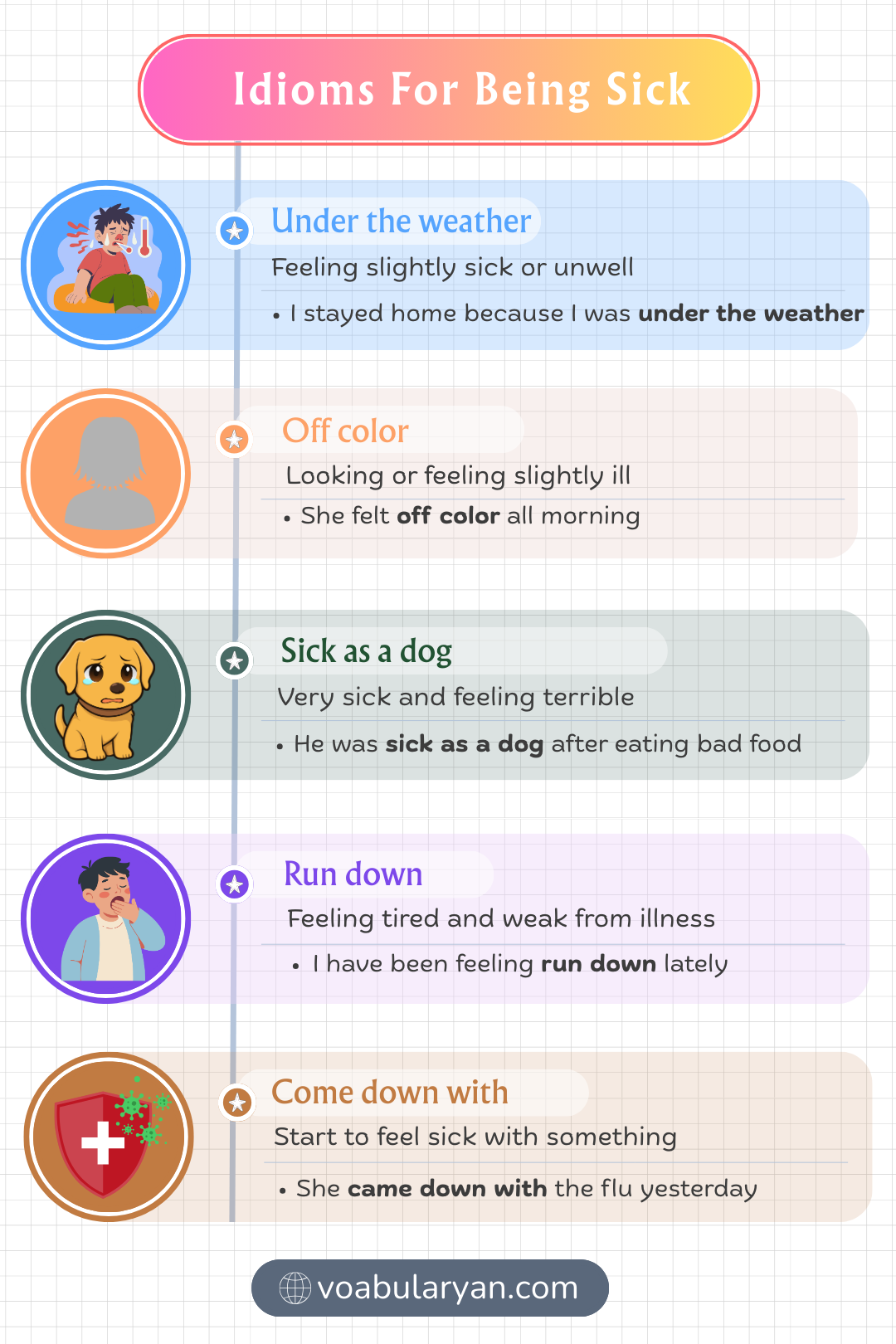
Idioms For General Feelings Of Illness
Under The Weather
Meaning: feeling slightly ill or unwell.
When To Use It: use it when someone has mild sickness.
Collocations: feel under the weather today
Example Sentences:
- I am feeling under the weather today.
- She stayed home because she was under the weather.
Dialogue:
Liam: I feel under the weather this morning.
Maya: Get some extra rest.
Closest Alternatives:
- not feeling well
- a bit sick
Sick As A Dog
Meaning: very ill and feeling terrible.
When To Use It: use it when someone feels seriously unwell.
Collocations: feel sick as a dog all night
Example Sentences:
- He was sick as a dog after dinner.
- She felt sick as a dog yesterday.
Dialogue:
Emma: I was sick as a dog last night.
Noah: That strong fever must hurt.
Closest Alternatives:
- very ill
- extremely sick
Run Down
Meaning: tired and lacking energy.
When To Use It: use it when someone feels weak from stress.
Collocations: feel run down after work
Example Sentences:
- She feels run down after exams.
- He looked run down and pale.
Dialogue:
Grace: I feel run down lately.
Daniel: You need proper rest.
Closest Alternatives:
- exhausted
- worn out
Come Down With
Meaning: start to feel sick with an illness.
When To Use It: use it when symptoms begin to appear.
Collocations: come down with the flu, come down with a fever
Example Sentences:
- She came down with the flu.
- He thinks he will come down with something.
Dialogue:
Emma: I may have come down with a cold.
Noah: Your sore throat sounds serious.
Closest Alternatives:
- fall ill
- get sick
Idioms For More Severe Illnesses
Down For The Count
Meaning: unable to continue because of illness or exhaustion.
When To Use It: use it when someone must stop due to weakness.
Collocations: be down for the count all week
Example Sentences:
- He was down for the count after the flu.
- She stayed home, down for the count.
Dialogue:
Liam: I am down for the count today.
Maya: That bad cold must be strong.
Closest Alternatives:
- knocked out
- completely exhausted
Take To One’s Bed
Meaning: stay in bed because of illness.
When To Use It: use it when sickness keeps someone resting.
Collocations: take to one’s bed for days
Example Sentences:
- She took to her bed with a fever.
- He had to take to his bed.
Dialogue:
Emma: I may take to my bed.
Noah: That high temperature needs rest.
Closest Alternatives:
- stay in bed
- be bedridden
On The Mend
Meaning: recovering and getting better after illness.
When To Use It: use it when health starts to improve.
Collocations: back on the mend, slowly on the mend
Example Sentences:
- She is on the mend after surgery.
- He felt on the mend this week.
Dialogue:
Liam: I am finally on the mend.
Maya: That steady recovery is good news.
Closest Alternatives:
- getting better
- recovering
Key Takeaways
Illness idioms describe weakness, exhaustion, and the need for rest through familiar physical images. The meaning depends on context and tone, since some expressions suggest mild discomfort while others imply serious sickness. In conversation or writing, these phrases usually keep stable wording and fixed word order, which preserves clarity and rhythm. When we consider these idioms closely, we see how ordinary language conveys physical condition and reduced strength beyond a direct medical description.
FAQs
Q1. What does under the weather mean?
A: Under the weather means you’re feeling sick or not quite well, like when you’re coming down with a cold or feeling tired from illness.
Q2. What does sick as a dog mean?
A: When someone says they’re sick as a dog, it means they feel very ill, often to the point where they need to rest or lie down.
Q3. What does coming down with something mean?
A: Coming down with something refers to the first signs of being sick, like when you start feeling a cold coming on.
Q4. What does caught a bug mean?
A: If you’ve caught a bug, it means you’ve picked up an illness, usually something minor like a cold or stomach issue.
Q5. What does green around the gills describe?
A: If someone looks green around the gills, it means they appear pale or sick, often as if they’re about to vomit.
Q6. What does run down mean when talking about health?
A: If you’re run down, it means you feel exhausted or weak, usually because of stress or being unwell.
You May Also Like