
Animals live in places that protect them, help them rest, and raise their young. Learning animals and their homes names helps you talk about nature, science, and behavior using the right words. Each animal home has a name that shows its shape, purpose, or location. This post includes clear pictures to help you learn, spell, and remember different animal home names easily and correctly.
Animals and Their Homes List
Every animal has a special home where it lives, sleeps, or stays safe. These homes protect animals from weather, danger, and other threats in nature. Learning the Animals and Their Homes Names helps us understand how they live, survive, and adapt in different places like jungles, farms, or water.
- Dog – Kennel
- Cat – Basket
- Cow – Shed
- Horse – Stable
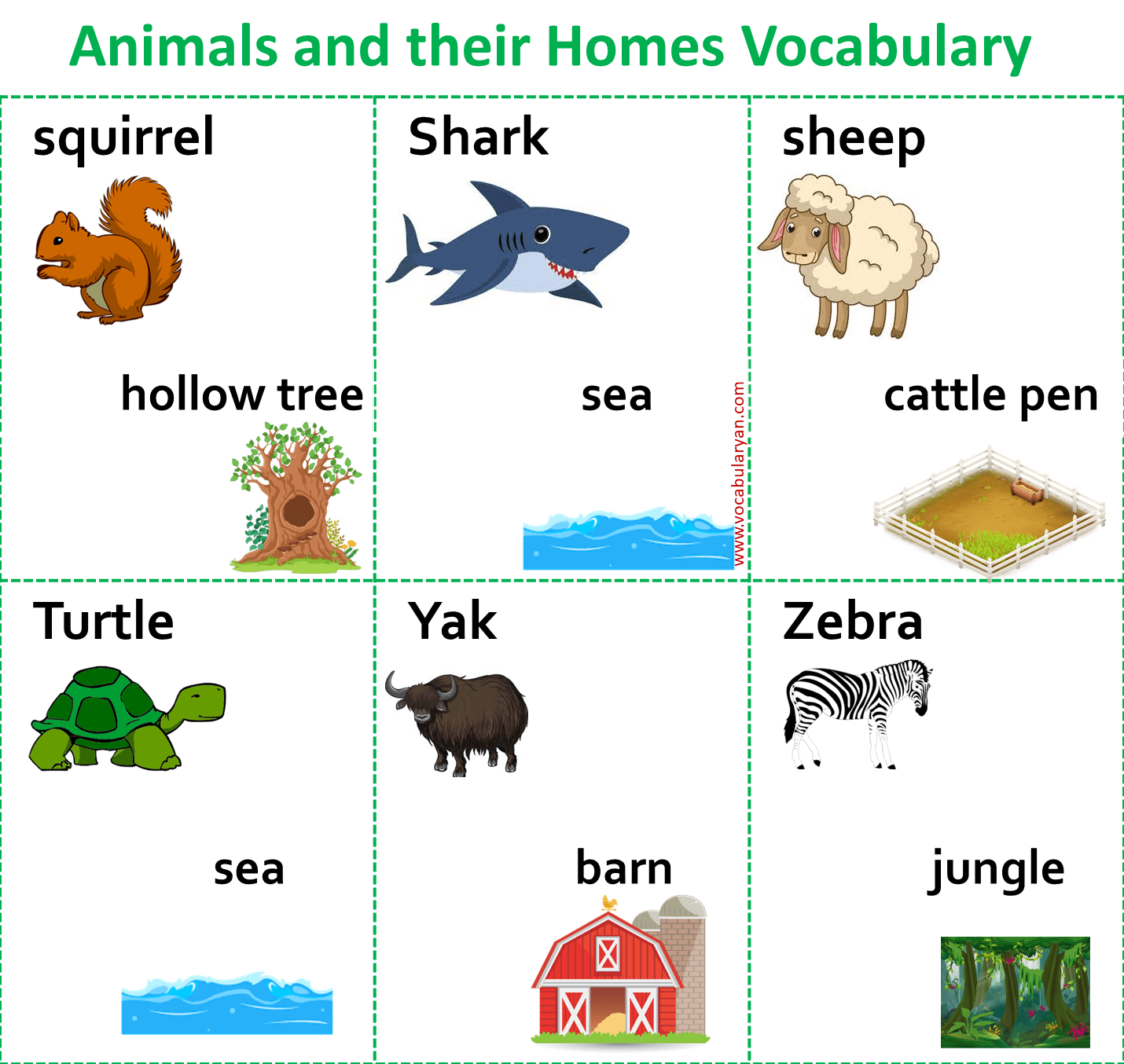
- Sheep – Pen
- Goat – Shed
- Pig – Sty
- Hen – Coop
- Duck – Pond
- Bee – Hive
- Bird – Nest
- Ant – Anthill
- Lion – Den
- Tiger – Den
- Elephant – Jungle
- Snake – Hole
- Frog – Marsh
- Rabbit – Burrow
- Spider – Web
- Fish – Water
- Bear – Cave
- Monkey – Tree
- Bat – Cave
- Owl – Tree hole
- Crocodile – Riverbank
- Camel – Desert
- Donkey – Stable
- Parrot – Nest
- Penguin – Ice burrow
- Peacock – Nest
- Wolf – Den
- Kangaroo – Grassland
- Turtle – Shell
- Fox – Den
- Buffalo – Shed
- Mole – Underground tunnel
- Squirrel – Tree
- Turkey – Coop
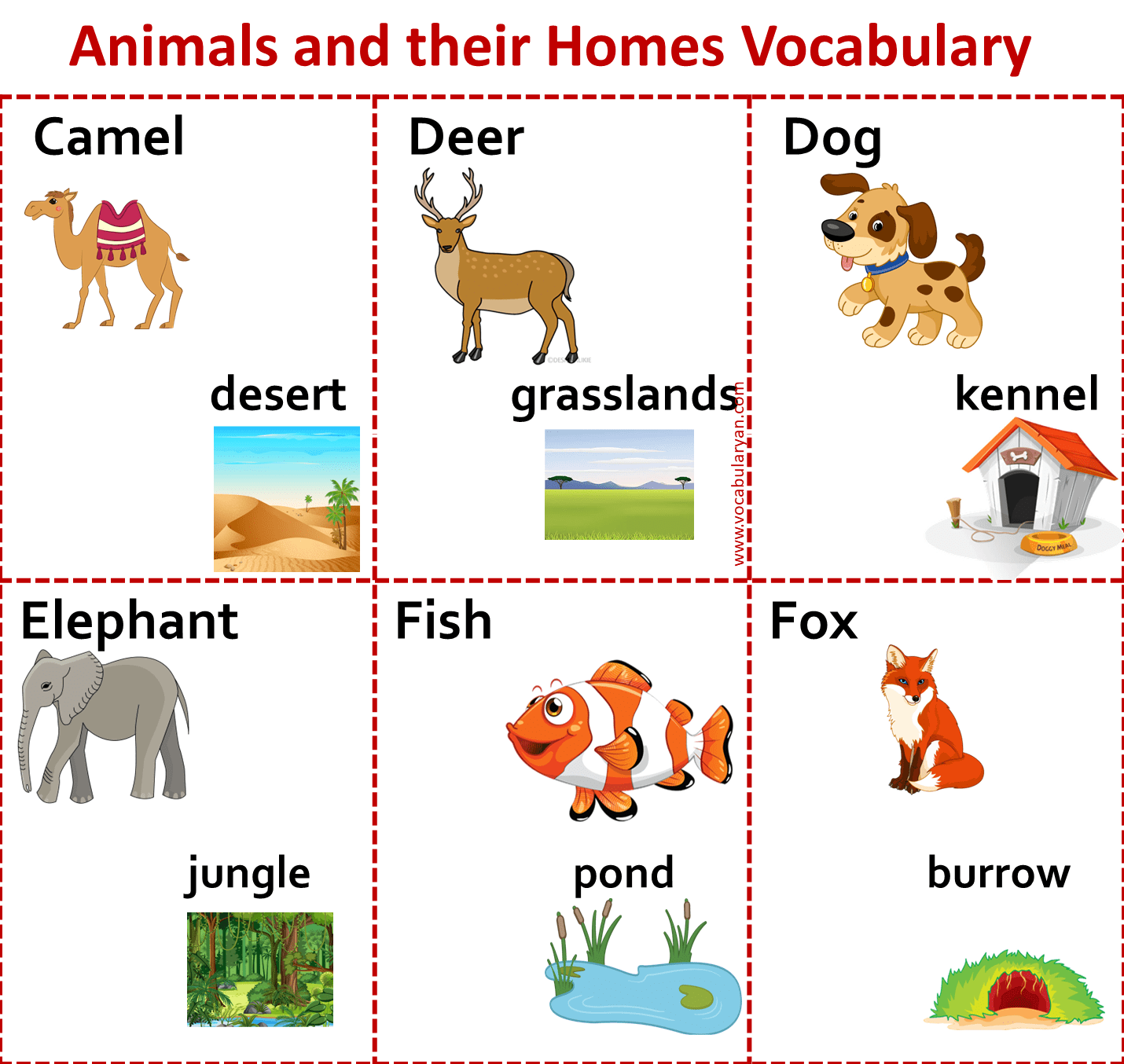
Animals and Their Homes
The houses of Animals and Their Homes Names help us understand where different creatures live, sleep, and stay safe. These names also teach us how animals choose places for comfort and protection.
Dog house
A dog lives in a small shelter often placed near homes. It is built to protect the dog from weather and give it a resting place.
- dog kennel
- pet house
- wooden dog shelter
- backyard dog hut
Cow shelter
A cow stays in a larger space called a shelter or shed, usually built with a roof and open sides. It keeps the cow safe, dry, and close to food.
- cow shed
- cattle barn
- livestock house
- open cattle shelter
Lion den
A lion lives in a den, often in rocks, caves, or thick bushes. This space is used for resting and raising cubs in the wild.
- rocky den
- forest cave
- dry bush hide
- shaded lion rest
Bird nest
A bird builds its own nest with twigs, grass, or leaves. Nests are used for laying eggs and raising chicks.
- hanging nest
- tree branch nest
- ground nest
- mud nest
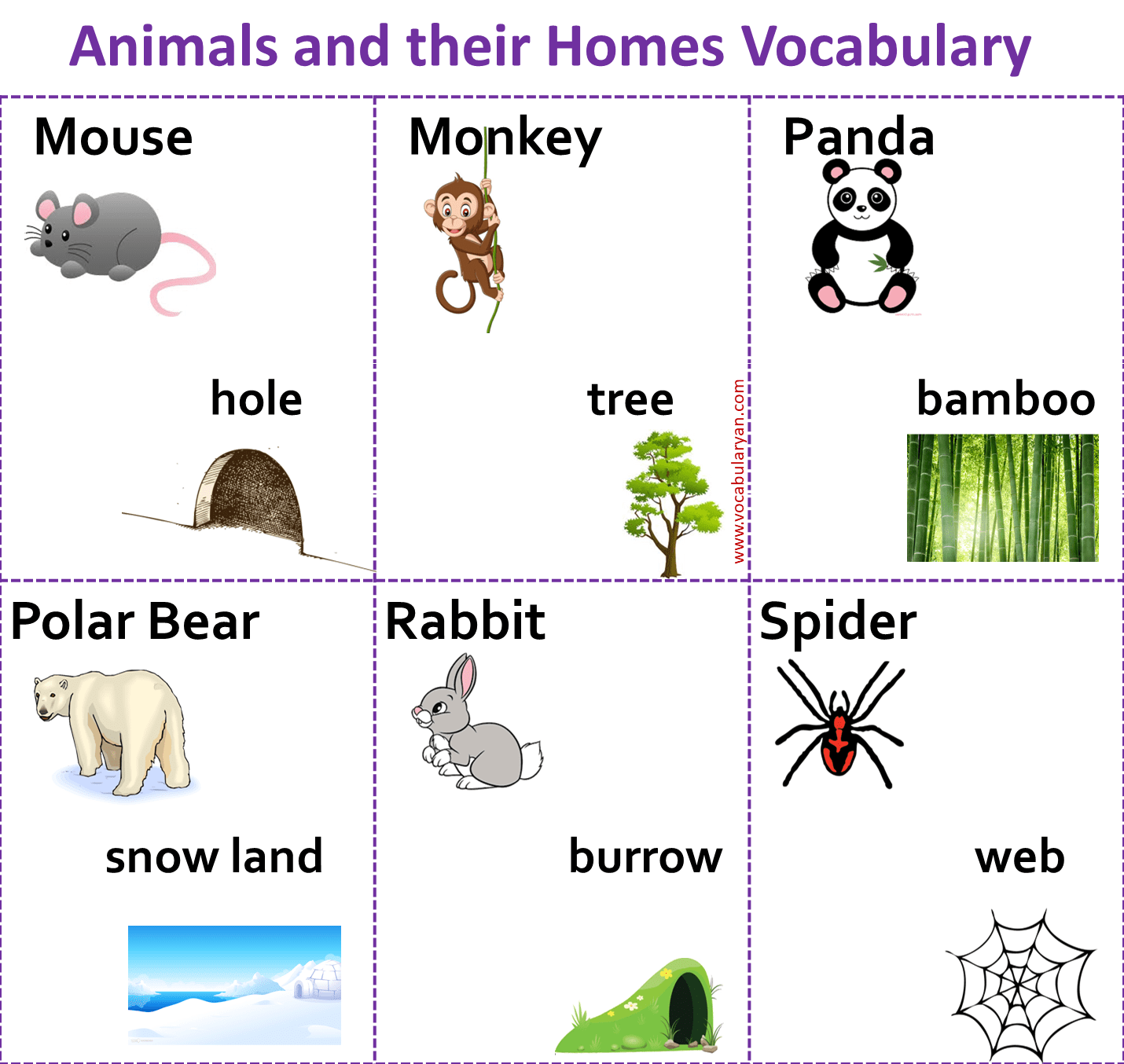
Wild Creatures and Their Dwellings
Learning animals and their homes names for wild creatures helps show how each species picks a place to survive in forests, mountains, or deserts.
Fox lair
A fox makes a lair, also called a burrow or den, under the ground. It’s a hidden space to sleep and care for pups.
- underground den
- leaf-covered lair
- forest burrow
- sand burrow
Bear cave
A bear rests and hibernates in caves during cold seasons. Caves give it warmth and cover from predators.
- mountain cave
- forest rock shelter
- hollow tree den
- snow cave
Elephant habitat
An elephant lives in open wild areas. It needs wide space to move, find water, and stay with its herd.
- forest zone
- grassland area
- muddy plains
- river valley region
Tiger territory
A tiger does not live in one fixed home. Instead, it controls a wide territory that includes places for hunting and sleeping.
- jungle territory
- tall grass cover
- riverside hideout
- dense forest path
Farm Animals and Their Spaces
Farm animal homes names help in learning the right words for spaces where animals are kept safely and fed on farms or backyards.
Goat pen
A goat lives in a pen, which is a fenced area or simple shelter that gives goats fresh air and space.
- fenced goat pen
- wooden shelter
- open goat yard
- raised hut for goats
Horse stable
A horse stays in a stable with stalls, clean floor, and enough room to rest. These buildings keep horses calm and protected.
- wooden stable
- brick horse shelter
- open barn stall
- gated horse block
Pig sty
A pig lives in a sty, which is a muddy, walled space where pigs eat and lie down.
- concrete pigsty
- brick-walled pen
- fenced mud yard
- shaded pig house
Hen coop
A hen sleeps and lays eggs in a coop. It is usually made of wood and placed off the ground.
- chicken coop
- wire-mesh cage
- wooden hen house
- egg-laying box coop
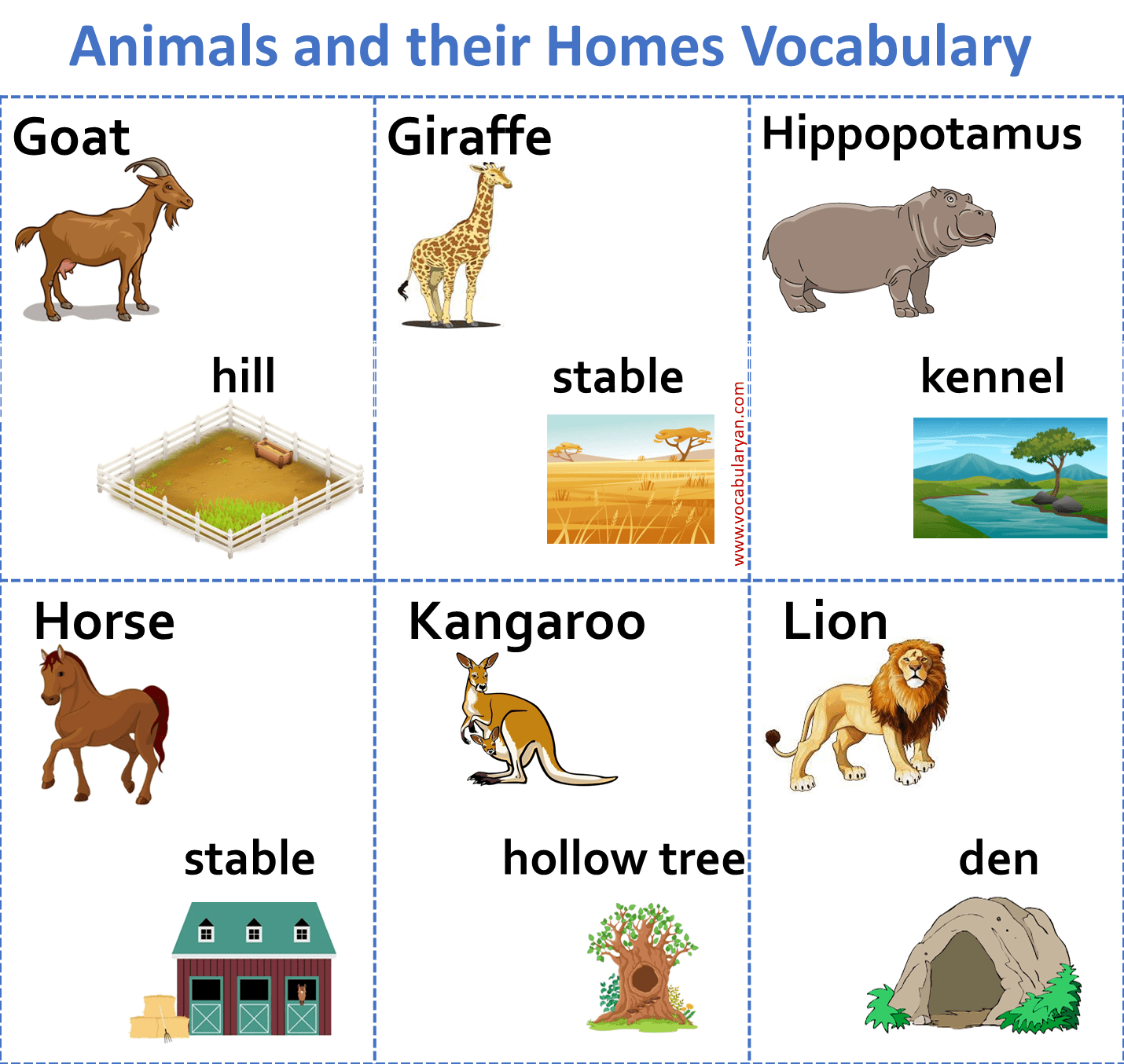
Insects and Their Shelters
Even the tiniest creatures have their own homes names that match how they live and survive in nature.
Ant hill
An ant lives in a hill made of soil or sand. These underground tunnels hold many chambers and worker ants.
- soil mound
- sandy hill
- mud tunnel home
- dry clay ant nest
Bee hive
A bee builds a hive to store honey and grow young bees. These hives are full of small hexagon cells.
- tree bee hive
- wall hive box
- wooden honeycomb
- hanging wax nest
Spider web
A spider spins a web to catch insects and rest. Webs can hang between plants, walls, or corners.
- orb web
- funnel web
- sheet web
- cobweb
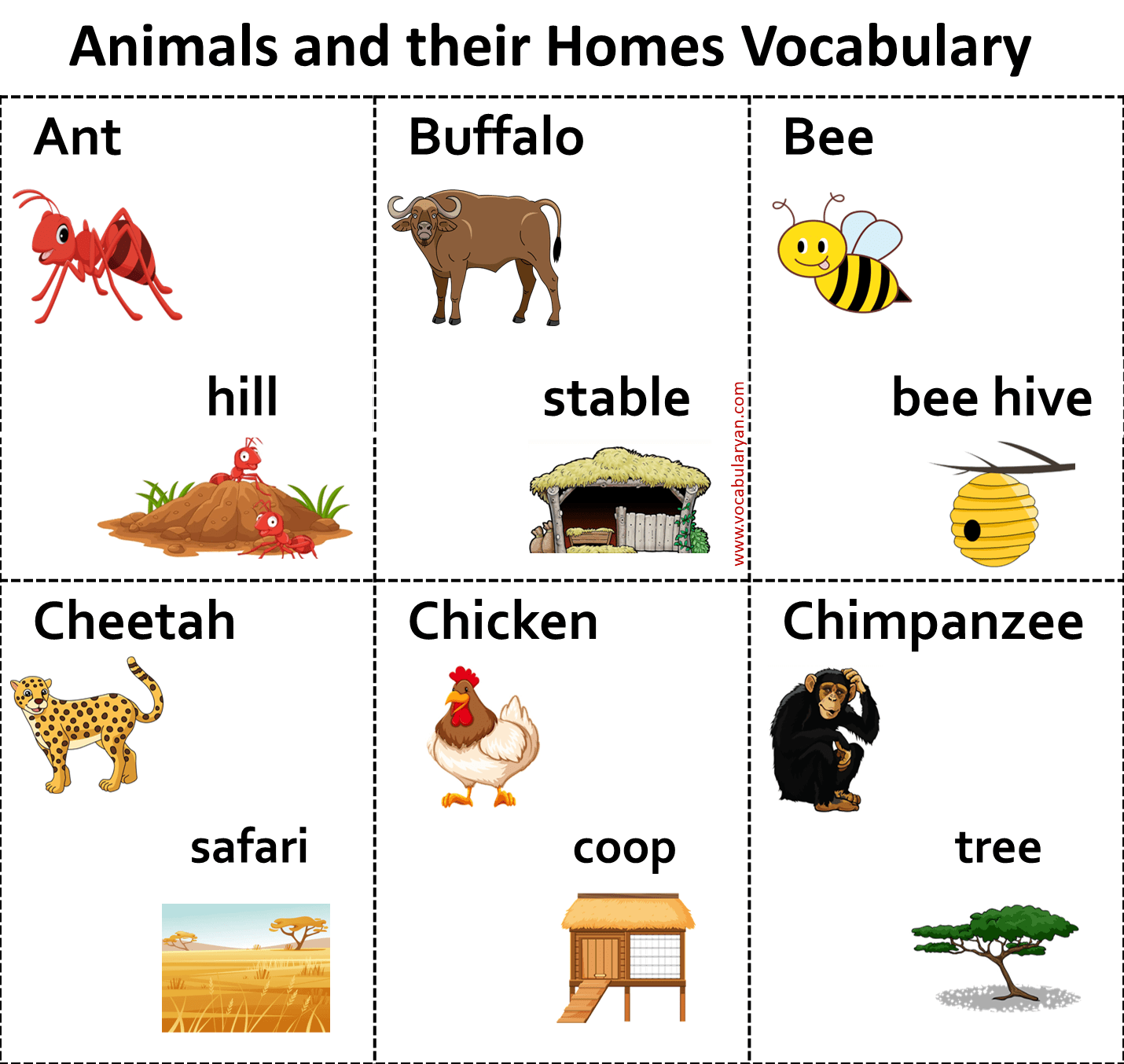
Water Animals and Their Homes
Some animals and their homes names show how creatures survive under or near water, using oceans, rivers, or icy zones.
Fish habitat
A fish lives in water and moves in schools. Its habitat includes places to hide, feed, and lay eggs.
- coral reef
- deep sea zone
- riverbed rocks
- underwater caves
Dolphin ocean
A dolphin lives in oceans or warm seas. It travels in pods and uses sound to navigate.
- saltwater region
- coastal zone
- warm sea habitat
- open ocean
Penguin ice nest
A penguin makes a nest on ice or rocks. These are built close to water but high enough to stay dry.
- rocky nest
- snowy patch nest
- icy ground shelter
- pebble-built penguin spot
FAQs about Animals and Their Homes Names
No. Some animals like birds and bees build homes, while others like lions or bears find natural shelters like dens or caves.
A den is a shelter used by animals like lions or foxes. A cave is a natural hollow used by animals like bears or bats.
A beehive is a home made by bees. It’s where they store honey and live in groups called colonies.
You May Also Like
