
Occupation names tell us what kind of job a person does in daily life. Each name shows the kind of work, tools, or place connected to that role. Learning these names helps you use the right words when talking about tasks, roles, or jobs at home, school, or anywhere. It also builds strong vocabulary for speaking, writing, and classwork. This post includes clear examples to help you learn, spell, and remember both common and special occupation names quickly.
List of Occupation Names
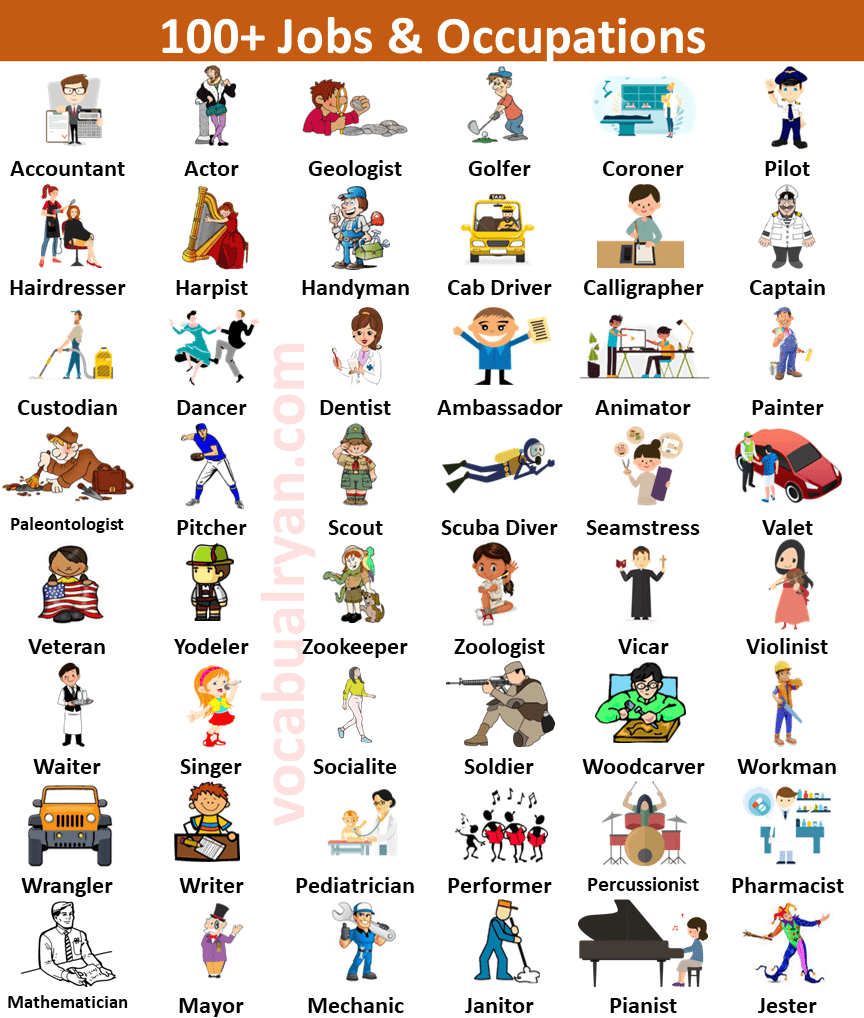
An occupation is the type of work a person does to earn a living. The list of occupation names includes roles like teacher, doctor, engineer, farmer, and many more. Each job plays a vital role in society’s growth and function.
- Accountant
- Actor
- Actress
- Architect
- Astronaut
- Athlete
- Author
- Baker
- Banker
- Barber
- Bartender
- Biologist
- Bus Driver
- Butcher
- Carpenter
- Cashier
- Chef
- Chemist
- Coach
- Construction Worker
- Cook
- Courier
- Dancer
- Dentist
- Designer
- Detective
- Director
- Doctor
- Driver
- Economist
- Editor
- Electrician
- Engineer
- Entrepreneur
- Farmer
- Firefighter
- Fisherman
- Flight Attendant
- Florist
- Football Player
- Garbage Collector
- Gardener
- Geologist
- Governor
- Graphic Designer
- Hairdresser
- Historian
- Illustrator
- Insurance Agent
- Interpreter
- Inventor
- Janitor
- Jewelers
- Journalist
Common Occupation Names
Learning occupation names helps identify what people do for work. These everyday jobs are easy to spot and often part of our community.
Everyday Jobs Around Us
These jobs are seen daily and are common in homes, markets, and neighborhoods.
- shopkeeper
- farmer
- cleaner
- delivery worker
- driver
- housemaid
- receptionist
- waiter
- cook
- cashier
Jobs That Help People
These occupations focus on helping others, often in health, safety, or emergency needs.
- doctor
- nurse
- firefighter
- police officer
- teacher
- social worker
- ambulance driver
- counselor
- dentist
- pharmacist
Jobs by Workplace
Different jobs happen in different places. Knowing where people work helps group occupation names by setting or work style.
Office and School Jobs
These roles happen inside offices or schools. They involve papers, computers, or teaching.
- office clerk
- principal
- school librarian
- data entry operator
- manager
- secretary
- accountant
- computer technician
- language teacher
- school counselor
Occupation Names Done Outside
Some jobs are done in open areas, streets, or construction sites. They often need movement and weather handling.
- street vendor
- gardener
- construction worker
- traffic police
- farmer
- sanitation worker
- electrician
- painter
- security guard
- plumber
Jobs That Need Skills
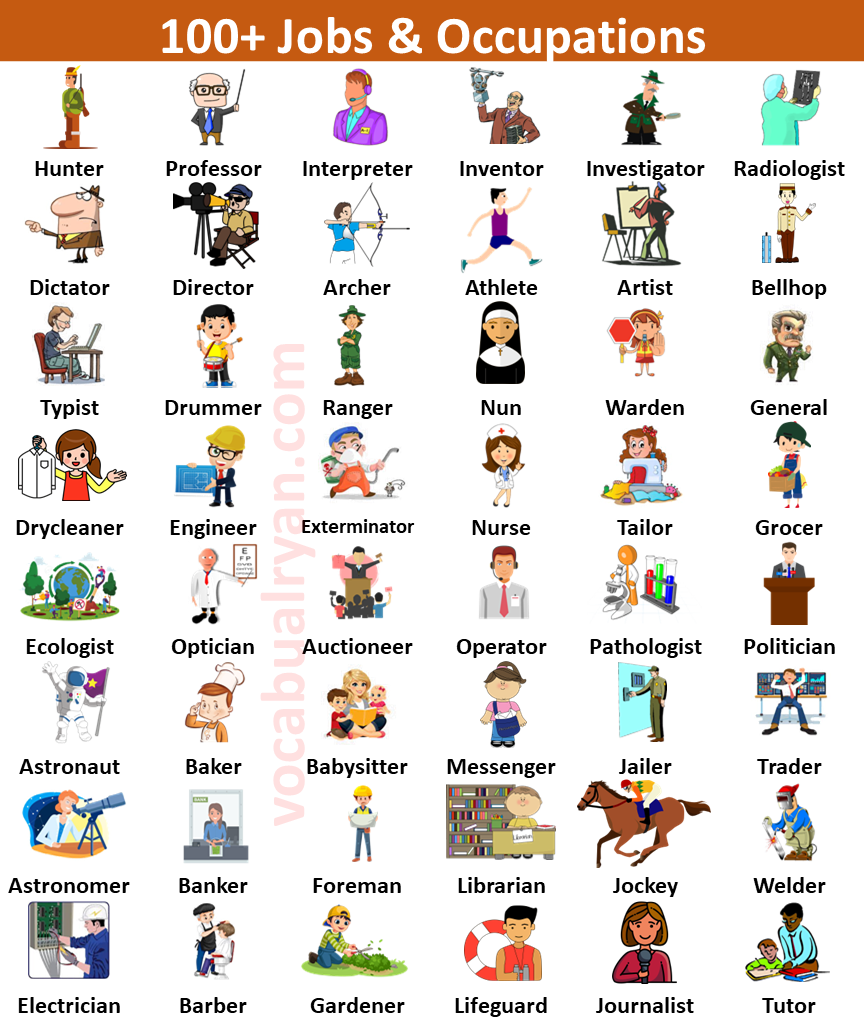
Many occupations need hands-on skills or tool use. These jobs often need training or experience instead of office work.
Hands-On Work Roles
These occupations require physical work and skill using hands or tools.
- carpenter
- tailor
- welder
- mechanic
- blacksmith
- shoemaker
- mason
- potter
- cook
- factory worker
Occupations That Needs Tools
These jobs involve specific tools or machines to do the work.
- electrician
- plumber
- machine operator
- computer technician
- auto mechanic
- woodworker
- metal cutter
- electrician helper
- printing press worker
- sewing machine operator
Creative and Public Work
These occupation names are tied to creativity, communication, or public attention. They include both performers and people in public media roles.
Art and Stage Jobs
These workers make art or perform for others in shows, events, or studios.
- singer
- dancer
- painter
- actor
- sculptor
- photographer
- music teacher
- fashion designer
- animator
- stage director
Occupation Names in News or Media
These occupations are found in newspapers, television, radio, or online platforms.
- news reporter
- news anchor
- journalist
- camera operator
- radio host
- TV producer
- editor
- video editor
- media planner
- social media manager
FAQs about occupation names
A job is a specific position at a company (e.g., cashier at XYZ Store), while an occupation is a general type of work (e.g., cashier).
White-collar jobs are office-based (like accountant or manager), while blue-collar jobs involve manual work (like plumber or mechanic).
A profession usually requires higher education and training (like doctor or lawyer), while a trade involves skill-based work, often learned through hands-on training (like carpenter or electrician).
You May Also Like
