
Some words point to small problems, and some point to real harm. The letter E holds both kinds. Negative words that start with E can name a tired feeling, a rude act, or a serious fault, and each one carries its own weight in a sentence.
Think of empty and evil. One sounds soft and a little sad, while the other sounds dark and final. Envious hints at a quiet feeling inside, but enraged shows anger that has burst out. The same letter, very different shades.
In this post you will learn negative words that start with E with simple meanings and short examples. Pick the one that fits the moment, and the right word will do the work for you.
Most Common Negative Words Starting With E
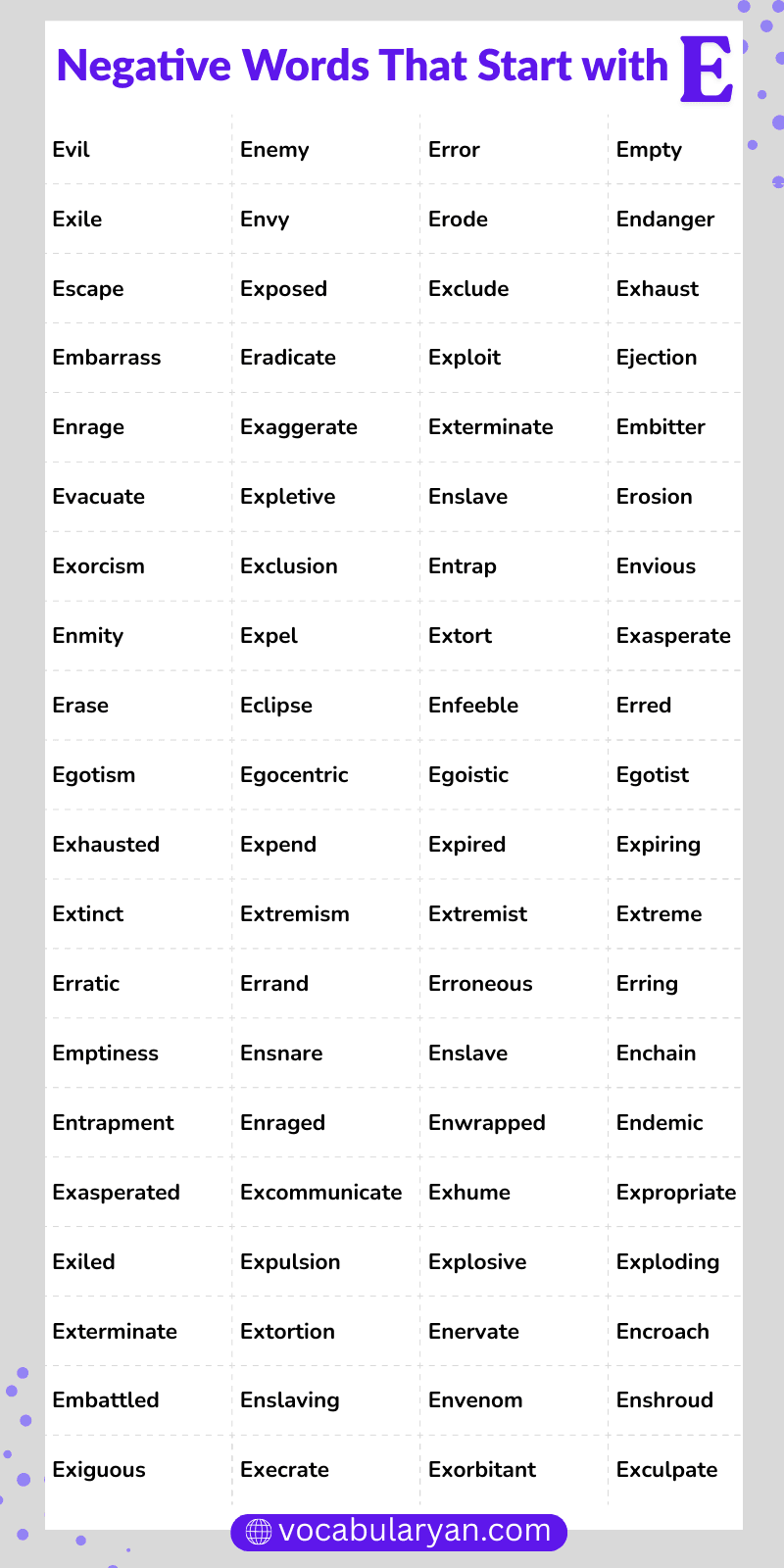
Common E words often show up in daily speech, writing, stories, schoolwork, workplace conversations, and emotional descriptions. They are familiar enough to read quickly, but each one still carries its own shade of negativity.
- Embarrassed: Ashamed or uncomfortable after a mistake
- Empty: Lacking feeling, value, or substance
- Envious: Bitter or unhappy because someone else has something desired
- Evil: Deeply cruel or morally wrong
- Exhausted: Extremely tired or drained
- Eerie: Strange and unsettling
- Erratic: Unpredictable or uneven
- Evasive: Avoiding truth, responsibility, or direct answers
- Excessive: Too much in an unreasonable way
- Expired: No longer valid, fresh, or useful
- Enemy: A person or force that opposes or harms
- Error: A mistake or wrong action
- Exiled: Forced away from home or a place of belonging
- Exposed: Left unprotected or open to harm
- Exasperated: Deeply annoyed or frustrated
- Entitled: Expecting special treatment without reason
- Egotistical: Too proud or self-centered
- Exploitative: Taking unfair advantage of others
- Excluded: Left out or deliberately kept away
- Estranged: Emotionally distant or separated
- Enraged: Filled with intense anger
- Eroded: Worn down, weakened, or damaged over time
- Excruciating: Extremely painful or distressing
- Egregious: Shockingly bad or offensive
- Extortionate: Unfairly expensive or demanding
Negative Words That Start With E With Definitions
E words can describe emotional strain, cruel behavior, failed results, social conflict, and damaged trust. The groups below keep each meaning short so the word stays easy to choose and use.
Emotional And Mental E Words
| Word | Short meaning |
|---|---|
| embarrassed | ashamed, self-conscious, or uncomfortable |
| embittered | made bitter by pain or resentment |
| emotionally drained | mentally worn out and tired |
| empty | hollow, numb, or lacking feeling |
| envious | resentful of another person’s success or comfort |
| edgy | nervous, tense, or irritable |
| enraged | extremely angry |
| exasperated | frustrated after repeated annoyance |
| exhausted | deeply tired or worn down |
| estranged | emotionally distant or separated |
| empty-hearted | lacking warmth, sympathy, or feeling |
| emotionless | showing no feeling or warmth |
Harsh And Cruel E Words
| Word | Short meaning |
|---|---|
| evil | deeply cruel or morally wrong |
| egotistical | too focused on oneself |
| egocentric | self-centered and unconcerned with others |
| elitist | acting superior to others |
| entitled | expecting special treatment |
| exploitative | using others unfairly for gain |
| extreme | too severe or excessive |
| exclusionary | keeping people out unfairly |
| extortionate | unfairly demanding or overpriced |
| enraging | causing intense anger |
| excessive | more than is fair, needed, or reasonable |
| egregious | shockingly bad or offensive |
Failure And Damage E Words
| Word | Short meaning |
|---|---|
| error | a mistake or wrong action |
| erroneous | wrong or based on a mistake |
| erratic | uneven, unstable, or unpredictable |
| eroded | gradually worn down or weakened |
| expired | no longer valid, fresh, or useful |
| expendable | seen as easy to replace or lose |
| endangered | at risk of harm or loss |
| enfeebled | made weak or powerless |
| exhausted | used up or drained |
| exposed | left open to risk or harm |
| empty | lacking value, strength, or meaning |
| evasive | avoiding the truth or a direct answer |
Conflict And Harm E Words
| Word | Short meaning |
|---|---|
| enemy | someone who opposes or harms |
| enmity | deep hostility or hatred |
| escalation | a rise in conflict, danger, or tension |
| exploitation | unfair use of people or resources |
| exclusion | the act of leaving someone out |
| expulsion | forced removal from a place or group |
| extortion | gaining something through threats |
| eviction | forced removal from a home or place |
| estrangement | emotional separation or distance |
| entrapment | being caught or trapped unfairly |
| embarrassment | shame or public discomfort |
| erosion | gradual damage or weakening |
Negative Adjectives That Start With E
Negative adjectives that start with E can make a sentence feel nervous, bitter, damaged, cruel, empty, or unfair. Some describe a person’s attitude, while others describe a mood, result, place, rule, or situation.
- Eerie: Strange and unsettling
- Edgy: Nervous, tense, or irritable
- Embarrassed: Ashamed or uncomfortable
- Embittered: Bitter after pain or resentment
- Empty: Hollow, meaningless, or lacking value
- Envious: Bitter over another person’s success or comfort
- Enraged: Extremely angry
- Erratic: Unpredictable or unstable
- Erroneous: Wrong or mistaken
- Evasive: Avoiding a direct answer
- Evil: Deeply cruel or morally wrong
- Exhausted: Extremely tired or drained
- Excessive: Too much or unreasonable
- Excluded: Left out or kept away
- Exclusionary: Unfairly keeping people out
- Excruciating: Extremely painful
- Exploitative: Taking unfair advantage
- Exposed: Unprotected or at risk
- Expired: No longer valid or useful
- Extreme: Too severe or intense
- Extortionate: Unfairly demanding or costly
- Egotistical: Too self-important
- Egocentric: Self-centered
- Elitist: Acting superior to others
- Entitled: Expecting special treatment
- Estranged: Emotionally separated or distant
- Eroded: Worn down or weakened
- Enfeebled: Made weak or powerless
- Endangered: At risk of harm or loss
- Egregious: Shockingly bad or offensive
Negative Words Starting With E To Describe A Person
A person word should be chosen with care because it can sound sharp, personal, or judgmental. Some E words describe one bad habit, while others point to a colder pattern of behavior, pride, avoidance, or harm.
- Egotistical: Too proud of oneself and dismissive of others
- Egocentric: Focused mainly on personal needs and views
- Elitist: Acting superior because of status, education, money, or taste
- Entitled: Expecting special treatment without earning it
- Envious: Bitter when another person receives success, praise, or comfort
- Evasive: Avoiding direct answers, truth, or responsibility
- Exploitative: Using others for gain without fairness
- Emotionless: Cold or showing little feeling
- Embittered: Carrying resentment after pain or disappointment
- Enraged: Filled with intense anger
- Erratic: Unpredictable in behavior, mood, or choices
- Exclusionary: Keeping others out unfairly
- Extremist: Holding extreme views or supporting severe action
- Eavesdropper: Someone who secretly listens to private conversations
- Enabler: Someone who allows harmful behavior to continue
- Exploiter: Someone who takes unfair advantage of people
- Enemy: Someone who opposes, harms, or threatens another person
- Embarrassment: A person whose behavior brings shame or discomfort
- Egomaniac: Someone with an extreme focus on their own importance
- Empty-hearted: Cold, unkind, or lacking sympathy
- Estranged: Distant from family, friends, or former closeness
- Exasperating: Annoying enough to cause deep frustration
- Eccentric: Unusual in a way that may feel odd or difficult to others
- Excessive: Too intense, demanding, or unreasonable in behavior
Negative Feeling Words Starting With E
Negative feeling words starting with E often come from pressure, shame, comparison, fear, anger, or emotional distance. They work well when the sentence needs to show what is happening inside a person, not only what others can see.
- Embarrassed: Ashamed or uncomfortable after attention or a mistake
- Empty: Numb, hollow, or emotionally drained
- Envious: Bitter because someone else has what is desired
- Edgy: Tense, restless, or easily irritated
- Embittered: Filled with bitterness after hurt or disappointment
- Enraged: Overcome by intense anger
- Exasperated: Frustrated after repeated annoyance
- Exhausted: Worn down in body or mind
- Estranged: Emotionally separated from someone once close
- Emotionless: Numb or unable to show feeling
- Empty-hearted: Cold, hollow, or lacking warmth
- Excluded: Hurt by being left out
- Exiled: Cut off from a place, group, or belonging
- Eerie: Uneasy because something feels strange or unnatural
- Embattled: Surrounded by pressure, criticism, or conflict
- Endangered: Feeling unsafe or at risk
- Ensnared: Trapped in a difficult or harmful situation
- Exposed: Vulnerable or unprotected
- Excruciated: Tormented by severe pain or distress
- Enfeebled: Weak, tired, or powerless
Sad Words That Start With E
Sad E words often sit in quiet scenes: an empty chair, a message left unanswered, a friendship that has cooled, or the tired silence after someone stops trying. They carry heaviness rather than loud anger.
- Empty: Hollow, lonely, or lacking comfort
- Embarrassed: Ashamed after a mistake or painful attention
- Embittered: Sadness hardened into resentment
- Estranged: Distant from someone once close
- Exhausted: Too worn down to keep going easily
- Emotionless: Numb or unable to feel fully
- Excluded: Left out and hurt by it
- Exiled: Forced away from home, comfort, or belonging
- Empty-handed: Left with nothing after hoping for more
- Empty-hearted: Cold, hollow, or without emotional warmth
- Endless: Seeming to continue without relief
- Erased: Made to feel forgotten or removed
- Eclipsed: Overshadowed or pushed out of attention
- Enfeebled: Weakened and low in strength
- Entombed: Trapped as if buried or shut away
- Eroded: Slowly worn down by pain, time, or pressure
- Estranging: Creating emotional distance
- Expendable: Treated as easy to lose or replace
Bad Words That Start With E
Bad E words belong to ugly behavior, spoiled results, unfair treatment, harsh judgment, and situations that leave people tense, angry, or disappointed. They often sound stronger than ordinary negative adjectives.
- Evil: Deeply cruel or morally wrong
- Egregious: Shockingly bad or offensive
- Excruciating: Extremely painful or distressing
- Exploitative: Taking unfair advantage of others
- Excessive: Too much in an unreasonable way
- Erroneous: Wrong or based on a mistake
- Eroded: Weakened or damaged over time
- Expired: No longer valid, fresh, or useful
- Extreme: Too severe or intense
- Exclusionary: Unfairly keeping people out
- Extortionate: Unfairly costly or demanding
- Expendable: Treated as easy to replace or sacrifice
- Enemy: A person or force that harms or opposes
- Enmity: Deep hostility
- Exploitation: Unfair use of people or resources
- Extortion: Taking something through threats
- Entrapment: Being trapped or tricked unfairly
- Escalation: A rise in conflict or danger
- Eviction: Forced removal from a home or place
- Erosion: Slow damage or weakening
Insult Words That Start With E
Insult words can cut deeper than expected. Use them with caution because many attack a person’s character, intelligence, pride, or behavior rather than one mistake.
- Egotist: A person who talks or acts with too much self-importance
- Egomaniac: A person with an extreme obsession with their own importance
- Elitist: A person who looks down on others from a place of status or taste
- Exploiter: A person who uses others unfairly
- Extremist: A person with extreme views or severe actions
- Enemy: A person treated as an opponent or threat
- Eavesdropper: A person who secretly listens to private talk
- Enabler: A person who allows harmful behavior to continue
- Embarrassment: A person whose behavior causes shame or discomfort
- Empty-head: A harsh insult for someone seen as foolish or thoughtless
- Egotistical person: Someone too focused on their own worth
- Entitled person: Someone who expects special treatment without reason
- Evasive person: Someone who avoids truth or direct answers
- Exploitative person: Someone who treats others as tools for personal gain
Negative Words Starting With E To Avoid In Communication
Some E words can make a message sound harsher than intended. In tense conversations, choose them only when the behavior is serious enough for the word.
- Evil: Deeply cruel or morally wrong
Save it for serious harm, not ordinary disagreement. - Egotistical: Too proud or self-centered
Use it carefully because it judges character, not only behavior. - Entitled: Expecting special treatment
This word can sound sharp, so tie it to a specific action. - Embarrassing: Causing shame or discomfort
Avoid using it to humiliate someone in public. - Exploitative: Taking unfair advantage
Use it when there is a clear pattern of unfair use. - Envious: Bitter about someone else’s success or comfort
This word can sound personal, so use it only when jealousy is clear. - Evasive: Avoiding a direct answer
This works better than calling someone a liar when the issue is avoidance. - Extreme: Too severe or intense
Use it for behavior or opinions that truly go beyond what is reasonable. - Enemy: A person or force that opposes or harms
This word creates distance quickly and should not be used for minor conflict. - Erratic: Unpredictable or unstable
Use it for behavior patterns, decisions, or movement, not as a careless insult. - Exasperating: Deeply frustrating
This is better for repeated irritation than a single small mistake. - Egregious: Shockingly bad
Save it for serious errors, not everyday slip-ups.
Negative Words Starting With E For Creative Writing
Creative writing needs words with atmosphere, not just meaning. An E word can make a room feel colder, a character feel bitter, or a scene feel unsafe without explaining everything directly.
- Eerie: Strange and unsettling
The hallway turned eerie after the last bulb flickered out. - Estranged: Emotionally distant or separated
He stood beside his brother like a stranger invited to the wrong house. - Emptied: Drained of feeling, hope, or life
Her voice sounded emptied after the final apology. - Envious: Bitter over what someone else has
Envious silence settled between them as the award was announced. - Embittered: Hardened by pain or resentment
Years of being ignored had left him embittered and sharp. - Erratic: Unpredictable or unstable
The candle threw erratic shadows across the cracked wall. - Exhausted: Worn down completely
The exhausted town slept under a sky heavy with smoke. - Exiled: Forced away from belonging
She walked through the market like an exile in the city of her birth. - Eroded: Slowly worn down
His patience had eroded long before the final insult. - Evasive: Avoiding the truth
Her evasive smile told him more than her answer did. - Evil: Deeply cruel or morally wrong
An evil calm moved through the room before anyone spoke. - Excruciating: Extremely painful
Each step sent an excruciating burn through his leg. - Egregious: Shockingly bad
The betrayal was too egregious to hide behind an apology. - Exposed: Left open to harm
On the bare hill, the soldiers felt exposed to every sound in the dark. - Entombed: Trapped as if buried
The old house felt entombed beneath dust, silence, and locked doors. - Enraged: Filled with intense anger
Enraged voices rose from the courtyard as the gates slammed shut. - Excluded: Left out
She watched from the doorway, excluded from the laughter inside. - Empty: Hollow or lacking life
The empty room kept the shape of everyone who had left it. - Exasperated: Deeply frustrated
His exasperated sigh filled the office before the meeting even began. - Endless: Seeming to never stop
The endless rain pressed against the windows like a warning. - Extortionate: Unfairly demanding
The landlord’s extortionate demand turned relief into panic. - Emotionless: Showing no feeling
Her emotionless reply made the apology feel even colder.
FAQs
Q1. What Is A Negative Word That Starts With E?
A common negative word that starts with E is evil. It means deeply cruel, harmful, or morally wrong.
Q2. What Are Common Negative Words Starting With E?
Common negative words starting with E are embarrassed, empty, envious, evil, exhausted, eerie, erratic, evasive, excessive, and expired.
Q3. What Are Negative Adjectives That Start With E?
Negative adjectives that start with E are eerie, edgy, embarrassed, empty, envious, erratic, erroneous, evasive, evil, exhausted, excessive, and exploitative.
Q4. What Are Negative Words Starting With E To Describe A Person?
Negative words starting with E to describe a person are egotistical, egocentric, elitist, entitled, envious, evasive, exploitative, emotionless, erratic, and exasperating.
Q5. What Are Sad Words That Start With E?
Sad words that start with E are empty, embarrassed, embittered, estranged, exhausted, emotionless, excluded, exiled, empty-handed, and empty-hearted.
Q6. What Are Strong Negative Words That Start With E?
Strong negative words that start with E are evil, egregious, excruciating, exploitative, extortionate, extreme, enraged, enmity, exploitation, and extortion.
You May Also Like

Leave a Comment