
Not every unkind word feels the same. Some sound sharp, some sound dull, and some quietly hurt without making a sound. Negative words that start with D hold a wide range of these feelings, from small letdowns to deep pain, and each one fits its own kind of moment.
A word like dull is soft and flat, while dreadful is heavy and strong. Dishonest points to a clear fault, but disloyal cuts a little deeper because trust is broken. Small word choices like these change how a sentence feels and how the reader takes it in.
In this post you will learn negative words that start with D, with simple meanings and short examples for each. Pick the one that matches your tone, and your writing or speech will say what you really mean.
Most Common Negative Words Starting With D
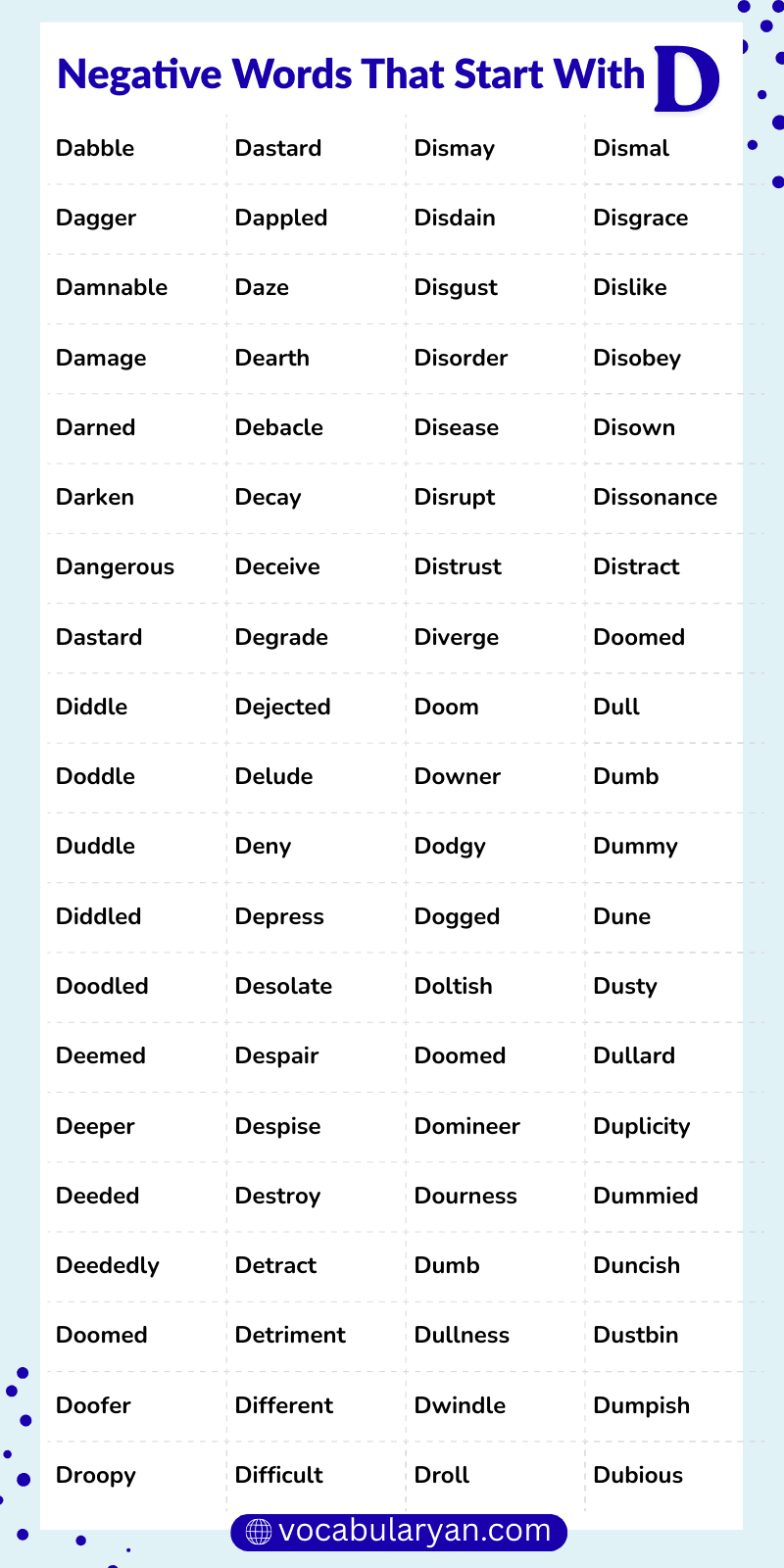
Many common D words describe things people meet in daily life: difficult conversations, damaged plans, doubtful decisions, and discouraging news. These words are familiar enough for school writing, workplace messages, stories, and everyday speech.
| Word | Short Meaning |
|---|---|
| Damaged | Harmed, broken, or weakened |
| Dangerous | Likely to cause harm or risk |
| Dark | Gloomy, serious, or without light |
| Deadly | Able to cause death or severe harm |
| Deceitful | Dishonest or likely to trick others |
| Defeated | Beaten, discouraged, or without hope |
| Defective | Faulty or not working properly |
| Defensive | Quick to protect oneself from blame |
| Defiant | Boldly refusing to obey |
| Degraded | Lowered in value, quality, or dignity |
| Delayed | Late or held back |
| Demanding | Hard to satisfy or too forceful |
| Depressed | Deeply sad or emotionally low |
| Desperate | Full of urgent fear or need |
| Destructive | Causing damage or ruin |
| Difficult | Hard to deal with or complete |
| Dirty | Unclean, unfair, or morally bad |
| Disappointed | Sad because hope was not met |
| Disastrous | Causing great failure or damage |
| Discouraged | Losing confidence or hope |
| Disgraceful | Shameful or dishonorable |
| Dishonest | Not truthful or fair |
| Disloyal | Breaking trust or loyalty |
| Dismissive | Treating something as unimportant |
| Disrespectful | Rude or lacking respect |
| Distressed | Upset, worried, or suffering |
| Disturbed | Troubled, upset, or mentally unsettled |
| Doubtful | Unsure, suspicious, or unlikely |
| Dreadful | Very bad, frightening, or unpleasant |
| Dreary | Dull, gloomy, or lifeless |
| Dull | Boring, weak, or lacking energy |
| Dysfunctional | Not working in a healthy or proper way |
Negative Words That Start With D With Definitions
A D word can describe a cracked object, a tense person, a cruel action, or a mood that sits heavily in the chest. The strongest words work best when they match the scene, not when they are added only to sound dramatic.
Harsh And Cruel D Words
| Word | Definition |
|---|---|
| Damaging | Causing harm to someone, something, or a situation |
| Dangerous | Likely to cause injury, loss, or serious trouble |
| Deadly | Extremely harmful or able to cause death |
| Deceitful | Hiding the truth or leading others wrongly |
| Degrading | Treating someone as if they have less worth |
| Dehumanizing | Treating people as less than human |
| Demanding | Requiring too much effort, time, or attention |
| Demoralizing | Making someone lose hope or confidence |
| Destructive | Ruining, breaking, or seriously harming something |
| Detestable | Deserving strong dislike or disgust |
| Dishonest | False, unfair, or not truthful |
| Disrespectful | Rude or showing a lack of respect |
| Domineering | Trying to control others too much |
Sad And Heavy D Words
| Word | Definition |
|---|---|
| Defeated | Feeling beaten or without energy to continue |
| Dejected | Sad, low, and discouraged |
| Depressed | Deeply sad, low, or emotionally heavy |
| Desolate | Empty, lonely, and without comfort |
| Despairing | Losing hope completely |
| Devastated | Deeply shocked, hurt, or emotionally crushed |
| Disappointed | Sad because something hoped for did not happen |
| Disconsolate | So sad that comfort feels hard to accept |
| Discouraged | Losing courage, hope, or confidence |
| Disheartened | Sad because confidence has been weakened |
| Distressed | Upset, worried, or suffering |
| Downcast | Quietly sad or discouraged |
| Drained | Exhausted in body, mind, or emotion |
Poor Quality And Failure D Words
| Word | Definition |
|---|---|
| Damaged | Harmed, broken, or no longer in good condition |
| Dead | No longer active, working, or alive |
| Decayed | Rotten, weakened, or broken down over time |
| Defective | Faulty or not working as it should |
| Deficient | Lacking something needed or expected |
| Delayed | Late, slowed, or held back |
| Depleted | Reduced, used up, or weakened |
| Dilapidated | Old, broken, and in poor condition |
| Dismal | Gloomy, poor, or depressing |
| Disorganized | Messy, confused, or badly arranged |
| Dreadful | Very bad, unpleasant, or frightening |
| Dreary | Dull, gray, and lifeless |
| Dull | Lacking interest, sharpness, or energy |
| Dysfunctional | Not working in a healthy or proper way |
Conflict And Behavior D Words
| Word | Definition |
|---|---|
| Defensive | Reacting as if being blamed or attacked |
| Defiant | Openly refusing to obey or cooperate |
| Devious | Dishonest and indirect in a tricky way |
| Difficult | Hard to deal with, manage, or understand |
| Disagreeable | Unpleasant, unfriendly, or hard to like |
| Disloyal | Breaking trust or turning against someone |
| Dismissive | Treating someone or something as unimportant |
| Disobedient | Refusing to follow rules or instructions |
| Disruptive | Interrupting order, peace, or progress |
| Divisive | Causing disagreement or separation |
| Domineering | Trying to control people too strongly |
| Doubtful | Unsure, suspicious, or not likely to be true |
| Dubious | Uncertain, suspicious, or not fully trusted |
Negative Adjectives That Start With D
Negative adjectives give a sentence its mood. A dull afternoon is not the same as a disastrous day, and a difficult person is not the same as a deceitful one. The adjective should match the level of trouble, hurt, or failure in the sentence.
- Mild Negative Adjectives: Dull, dusty, delayed, doubtful, difficult, dreary
- Strong Negative Adjectives: Dangerous, destructive, disastrous, dreadful, devastating, deadly
- Personality Adjectives: Deceitful, defensive, defiant, dismissive, domineering, dishonest
- Emotional Adjectives: Depressed, dejected, distressed, discouraged, devastated, downcast
- Condition Adjectives: Damaged, decayed, defective, deficient, dirty, dysfunctional
- Conflict Adjectives: Disagreeable, disloyal, disrespectful, disruptive, divisive, dubious
Negative Words Starting With D To Describe A Person
A person can be difficult for one moment or damaging over time. These D words are best used when behavior has a clear pattern: lying, controlling, ignoring, disrespecting, blaming, or draining the people around them.
- Deceitful: Someone who hides the truth or tricks others
- Defensive: Someone who reacts as if every comment is an attack
- Defiant: Someone who refuses to obey, cooperate, or listen
- Demanding: Someone who expects too much from others
- Difficult: Someone hard to work with, guide, or understand
- Dishonest: Someone who lies, cheats, or misleads
- Disloyal: Someone who breaks trust or turns against others
- Dismissive: Someone who treats other people’s thoughts as unimportant
- Disrespectful: Someone who speaks or acts without respect
- Disruptive: Someone who interrupts peace, work, or progress
- Domineering: Someone who tries to control others too strongly
- Draining: Someone who leaves others tired, tense, or emotionally worn out
- Devious: Someone who uses dishonest or tricky methods
- Disagreeable: Someone unpleasant, unfriendly, or hard to deal with
- Detached: Someone emotionally distant or hard to reach
- Distrustful: Someone who finds it hard to trust others
Negative Feeling Words Starting With D
Negative feeling words often sit close to real life: waiting for bad news, losing confidence, feeling ignored, or carrying stress after a hard conversation. These D words are about inner pressure, not just outward behavior.
- Defeated: Beaten in spirit or no longer hopeful
- Dejected: Quietly sad and discouraged
- Depressed: Deeply sad, low, or emotionally heavy
- Desperate: Frightened by urgent need or pressure
- Despairing: Losing hope completely
- Devastated: Shocked and emotionally crushed
- Disappointed: Sad because hope or trust was not met
- Discouraged: Losing courage, energy, or confidence
- Disheartened: Sad because hope has been weakened
- Distressed: Upset, worried, or suffering
- Disturbed: Troubled, shaken, or unsettled
- Doubtful: Unsure, hesitant, or suspicious
- Downcast: Sad in a quiet, visible way
- Drained: Exhausted after stress, work, or emotional pressure
- Dreadful: Full of fear, discomfort, or serious unpleasantness
Sad Words That Start With D
Sad D words often feel slow and heavy. They belong to moments when someone sits with bad news, walks away from a failure, misses what they lost, or keeps going while feeling emotionally worn down.
- Dejected: Low, quiet, and visibly discouraged
- She looked dejected after the final result
- Depressed: Deeply sad or emotionally low
- He felt depressed during the long, lonely winter
- Desolate: Empty, lonely, and without comfort
- The abandoned street felt desolate at night
- Despairing: Feeling that hope has disappeared
- Her despairing voice made everyone silent
- Devastated: Deeply hurt by loss, shock, or failure
- They were devastated after the fire destroyed their home
- Disappointed: Hurt because something expected did not happen
- Rina felt disappointed when her friend forgot the promise
- Disconsolate: So sad that comfort feels hard to accept
- The child sat disconsolate after losing the little dog
- Discouraged: Losing courage after repeated setbacks
- He felt discouraged after another rejected application
- Disheartened: Losing confidence or emotional strength
- The team became disheartened after the late goal
- Distressed: Worried, upset, or suffering
- Her distressed face showed how serious the news was
- Downcast: Looking sad, low, or discouraged
- He walked home with a downcast expression
- Drained: Emotionally or physically exhausted
- She felt drained after the argument
Bad Words That Start With D
Bad D words can point to poor quality, danger, damage, dirt, decay, failure, or an experience that leaves people upset. They are useful when a plain word like bad does not carry enough detail.
- Damaged: Broken, harmed, or weakened
- Dangerous: Likely to hurt someone or cause risk
- Dark: Gloomy, serious, or frightening in tone
- Deadly: Extremely harmful or life-threatening
- Decayed: Rotten, weakened, or broken down
- Defective: Faulty or not working properly
- Deficient: Lacking something important
- Delayed: Late or held back
- Deplorable: Shockingly bad or deserving criticism
- Dirty: Unclean, unfair, or morally wrong
- Disastrous: Causing great failure or damage
- Disgusting: Extremely unpleasant or offensive
- Dismal: Gloomy, poor, or depressing
- Dreadful: Very bad or frightening
- Dreary: Dull, gray, or lifeless
- Dysfunctional: Not working in a healthy or proper way
Insult Words That Start With D
Insult words can cut deeper than the speaker expects. This section keeps the focus on negative labels and harsh descriptions, not hateful slurs. Use these words carefully, especially when writing about real people.
- Deceitful: A harsh label for someone who lies or misleads
- Defensive: A critical word for someone who cannot accept feedback
- Delusional: A sharp word for someone who believes something far from reality
- Demanding: A negative label for someone who expects too much
- Dense: A rude word for someone who seems slow to understand
- Difficult: A broad label for someone hard to deal with
- Dirty: A harsh word for someone unfair, corrupt, or dishonest
- Dishonest: A direct label for someone who lies or cheats
- Disloyal: A strong word for someone who breaks trust
- Dismissive: A sharp label for someone who ignores others’ views
- Disrespectful: A direct word for rude behavior
- Domineering: A strong word for someone who tries to control people
- Dumb: A rude insult for someone’s intelligence
- Dull: A dismissive word for someone boring or lacking energy
Negative Words Starting With D To Avoid In Communication
Some negative D words sound too sharp for everyday communication. In messages, feedback, and workplace writing, a softer phrase often keeps the meaning without making the other person feel attacked.
| Avoid Saying | Why It Sounds Harsh | Better Wording |
|---|---|---|
| Dumb | It attacks intelligence | Unclear or mistaken |
| Lazy | It attacks character | Not finished yet |
| Useless | It sounds dismissive | Not working well |
| Disastrous | It may sound too dramatic | Did not go well |
| Dirty | It can sound insulting | Unfair or unclear |
| Deceitful | It strongly accuses someone | Not fully honest |
| Delusional | It sounds harsh and personal | Not realistic |
| Difficult | It can label the whole person | Hard to manage right now |
| Defensive | It may make someone more guarded | Concerned about criticism |
| Dismissive | It directly criticizes tone | Not giving this enough attention |
| Disrespectful | It can sound confrontational | The tone felt rude |
| Dreadful | It may exaggerate the issue | The result was poor |
Negative Words Starting With D For Creative Writing
Creative writing needs words that carry mood, scene, and pressure. A ruined house, a cold character, a bitter argument, and a hopeless morning all need different D words.
Dark Mood Words
- Dreadful: Works for fear, bad news, or a scene that feels deeply unpleasant
- Dreary: Fits dull weather, tired rooms, and lifeless settings
- Dismal: Carries a gloomy, hopeless feeling
- Desolate: Works for empty places, lonely roads, and people cut off from comfort
- Disturbing: Fits scenes that feel unsettling or mentally uncomfortable
Conflict Words
- Defiant: Fits a character who refuses to bend or obey
- Deceitful: Works for a liar, trickster, or hidden betrayal
- Disloyal: Carries broken trust between friends, partners, or allies
- Disruptive: Fits someone who breaks peace or interrupts progress
- Destructive: Works for choices, habits, or characters that ruin what they touch
Sad Character Words
- Downcast: Shows quiet sadness through face, posture, or mood
- Drained: Fits someone exhausted after pressure or grief
- Devastated: Works after shocking loss or serious emotional damage
- Dejected: Shows a low, discouraged spirit
- Disheartened: Fits someone whose courage has weakened
Dangerous Scene Words
- Deadly: Fits serious danger, poison, weapons, storms, or risk
- Damaging: Works for harm that leaves a mark
- Dangerous: Direct and strong for real threat
- Decayed: Fits rotten wood, old buildings, spoiled food, or moral decline
- Disastrous: Works for events that end in heavy damage or failure
FAQs
Q1. What Is A Negative Word That Starts With D?
A common negative word that starts with D is dangerous. It means likely to cause harm, risk, injury, or serious trouble.
Q2. What Are Common Negative Words That Start With D?
Common negative words that start with D are damaged, dangerous, dark, deadly, deceitful, defeated, depressed, desperate, destructive, difficult, dirty, disappointed, disastrous, dishonest, and dreadful.
Q3. What Are Negative Adjectives That Start With D?
Negative adjectives that start with D are dangerous, damaged, deceitful, defensive, defiant, defective, depressed, destructive, difficult, dirty, disloyal, disrespectful, dreadful, and dull.
Q4. What Are Negative Words Starting With D To Describe A Person?
Negative words starting with D to describe a person are deceitful, defensive, defiant, demanding, difficult, dishonest, disloyal, dismissive, disrespectful, domineering, draining, and devious.
Q5. What Are Sad Words That Start With D?
Sad words that start with D are dejected, depressed, desolate, despairing, devastated, disappointed, disconsolate, discouraged, disheartened, distressed, downcast, and drained.
Q6. What Are Bad Words That Start With D?
Bad words that start with D are damaged, dangerous, deadly, decayed, defective, deficient, deplorable, dirty, disastrous, disgusting, dismal, dreadful, dreary, and dysfunctional.
You May Also Like