
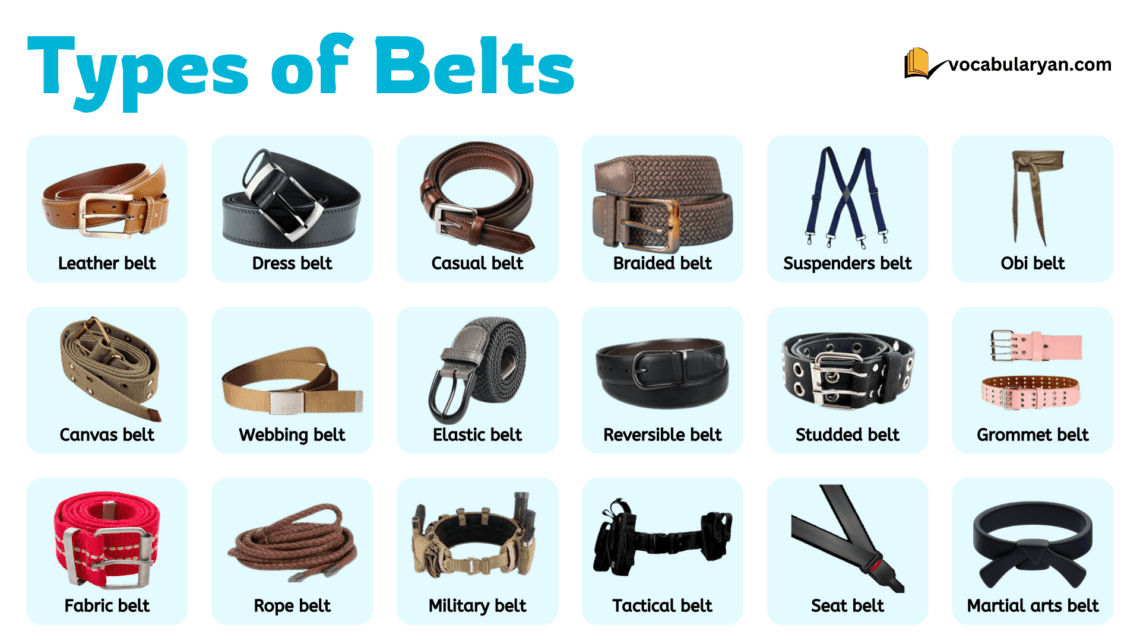
Belts are more than just waist accessories—they’re functional tools and fashion pieces. Learning the types of belts helps you understand how each belt style fits different clothes and activities. From casual belts to formal ones, each type serves a specific purpose. This post helps you learn and recognize every kind, so you use the right word and image. Pictures are included to support learning and make each belt type easier to remember.
Common Belts for Daily Use
These belts are designed for comfort and convenience. They’re easy to wear with regular clothes like jeans, chinos, or shorts.
- Leather belt
- Canvas belt
- Reversible belt
- Braided belt
- Webbed belt
- Elastic stretch belt
- Faux leather belt
- D-ring belt
- Slide belt (ratchet belt)
- Woven fabric belt
- Chain belt
- Buckle-less belt
- Velcro belt
- Snap belt
- Suspender belt
- Utility belt
- Skinny belt
- Wide waist belt
- Rope belt
- Studded belt
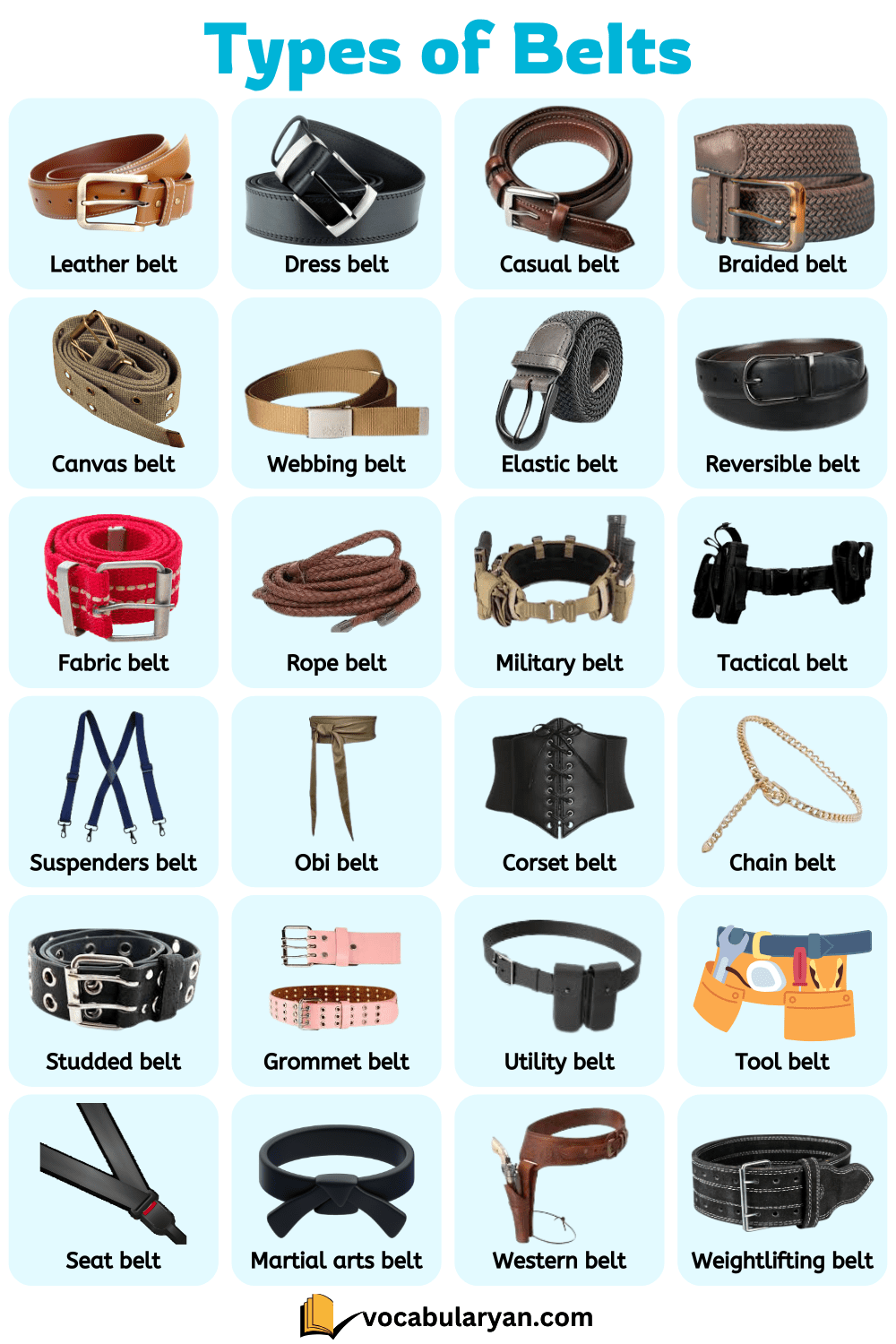
Types of Belts and Their Names
Types of belts and their names help you recognize how belts are grouped based on style and function. Learning these names improves your vocabulary by connecting words to how people wear and use different belts every day.
Formal Belts for Workwear and Suits
Formal belts are clean, professional, and pair well with office or business clothing. They match dress shoes and formal trousers.
- Black leather belt
- Brown leather belt
- Reversible dress belt
- Polished finish belt
- Slim formal belt
- Italian leather belt
- Business classic belt
- Patent leather belt
Casual Belts for Everyday Outfits
Casual belts are versatile and comfortable. They are made in many materials and colors, great for jeans, shorts, or casual pants.
- Fabric belt
- Woven belt
- Braided belt
- D-ring belt
- Denim belt
- Rope belt
- Velcro belt
- Colored canvas belt
Fashion Belts That Complete Your Look
Fashion belts are bold and stylish. They enhance an outfit and are often worn for trend or statement.
- Chain belt
- Corset belt
- Wide waist belt
- Designer logo belt
- Studded belt
- Rhinestone belt
- Animal print belt
- Transparent fashion belt
Leather Belt Styles You Should Know
Leather belt styles you should know include important names that show how leather is used in fashion and function. These names help you tell the difference between textures, finishes, and types of leather belts.
Full Grain vs Top Grain Leather Belts
These styles differ by how the leather is cut and finished. Some are tougher and last longer, while others feel smoother.
- Full grain belt
- Top grain belt
- Corrected grain belt
- Split leather belt
- Bonded leather belt
- Suede leather belt
Classic Black and Brown Leather Options
These timeless leather colors fit almost every dress code. The type of finish also changes how formal or casual they appear.
- Matte black belt
- Polished brown belt
- Dual-tone belt
- Oil-tanned belt
- Embossed black belt
- Distressed brown belt
Textured and Embossed Leather Finishes
Some belts are pressed or treated for extra character. They give detail to formal or semi-formal outfits.
- Pebbled leather belt
- Crocodile print belt
- Snake skin belt
- Woven leather belt
- Lizard skin texture
- Crackle effect leather belt
Different Types of Belts by Purpose
Different belts by purpose shows how belts are designed to meet specific needs. Learning these names helps you connect each belt to its job, from heavy-duty work to sports and fitness use.
Work Belts for Tools and Utility
These belts are made to support weight and hold tools securely for hands-on jobs.
- Tool belt
- Carpenter belt
- Utility belt with pouches
- Electrician belt
- Belt with hammer loop
- Construction rig belt
- Heavy-duty leather belt
Belts for Tactical and Military Use
Tactical belts are rugged, adjustable, and ideal for carrying gear or use in extreme conditions.
- Tactical duty belt
- Web tactical belt
- MOLLE-compatible belt
- Survival belt
- Combat belt
- Battle belt
- Quick-release belt
Weightlifting and Gym Belts Explained
Gym belts support the lower back and improve posture during lifts. They come in different widths and closures.
- Powerlifting belt
- Velcro gym belt
- Leather gym belt
- Bodybuilding belt
- Neoprene support belt
- Contoured lifting belt
Materials Used in Making Belts
Materials used in making belts help you understand how different fabrics and textures change a belt’s strength and style. Knowing these names improves recognition and sorting of belts by how they feel and function.
Nylon and Canvas Belts for Durability
These belts are tough and washable. They’re perfect for casual use, hiking, or outdoor work.
- Tactical nylon belt
- Webbed canvas belt
- Ripstop fabric belt
- Military-style canvas belt
- Heavy-weave belt
- Cotton-blend web belt
Faux Leather and Synthetic Options
Faux leather belts mimic real leather but are cheaper and animal-friendly. They come in many styles.
- PU leather belt
- Vegan leather belt
- Coated synthetic belt
- Faux patent belt
- Embossed faux belt
- Glossy synthetic belt
Braided and Woven Material Styles
These styles are flexible and good for comfort. They’re often used in both casual and smart-casual looks.
- Cotton braided belt
- Elastic woven belt
- Paracord belt
- Macrame style belt
- Two-tone braided belt
- Leather-woven hybrid belt
Types of Buckle Mechanisms
Types of buckle mechanisms show how belts fasten and adjust to fit the wearer. Learning these names builds a better sense of design, function, and how each type suits different outfits or uses.
Frame Buckles and Plate Buckles
These classic buckles are common in dress and Western belts. They often use prongs and holes to secure.
- Single prong frame buckle
- Double prong buckle
- Western plate buckle
- Military slide buckle
- Trophy belt buckle
- Harness buckle
Snap, Clip, and Ratchet Buckle Styles
These buckles focus on ease of use and modern convenience. They often don’t need holes.
- Click buckle
- Ratchet buckle
- Magnetic clasp buckle
- Snap closure buckle
- Auto-lock buckle
- Lever-release buckle
Sliding Belts Without Holes
These are known for micro-adjustability and neat appearance. They use a track or friction to lock.
- Track belt
- Clasp belt
- Sliding adjust belt
- Buckle-less slide belt
- Grip-lock belt
- Trim-to-fit sliding belt
Cultural and Traditional Belt Styles
Cultural and traditional belt styles teach how belts are used in different regions and customs. Knowing these names helps you recognize clothing patterns and appreciate how fashion connects to history and identity.
Types of Belts in Japanese Fashion
Obi belts are part of traditional Japanese dress. They are also used today in modern fashion with a twist.
- Wide kimono obi
- Decorative obi sash
- Casual cotton obi
- Formal silk obi
- Obi belt with bow
- Obi wrap for dresses
Kamarband and Waist Belts in South Asia
These belts are worn over traditional South Asian outfits, especially in weddings or cultural events.
- Gold kamarband
- Chain kamarband
- Bridal waistband
- Stone-studded kamarband
- Embroidered fabric kamarband
- Traditional metal waist chain
Sashes and Robe Belts Around the World
Sashes are worn in many cultures for ceremonies, uniforms, or style. They are tied, wrapped, or knotted.
- Silk sash
- Military sash
- Robe fabric belt
- Monastic waist tie
- Graduation sash
- Festival costume sash
FAQs
1. What are the most common materials used for belts?
Belts are made from leather, fabric, metal, and synthetic materials. Leather belts are the most durable and stylish, while fabric belts offer more flexibility and comfort for casual wear.
2. Why do weightlifters wear belts?
A weightlifting belt provides support to the lower back and core, reducing the risk of injury while lifting heavy weights. It also improves stability and posture, helping athletes maintain proper form.
3. What is the purpose of a reversible belt?
A reversible belt offers two different looks in one item, making it versatile for various outfits. It usually has a rotating buckle, allowing wearers to switch between two colors or textures.
You May Also Like
