
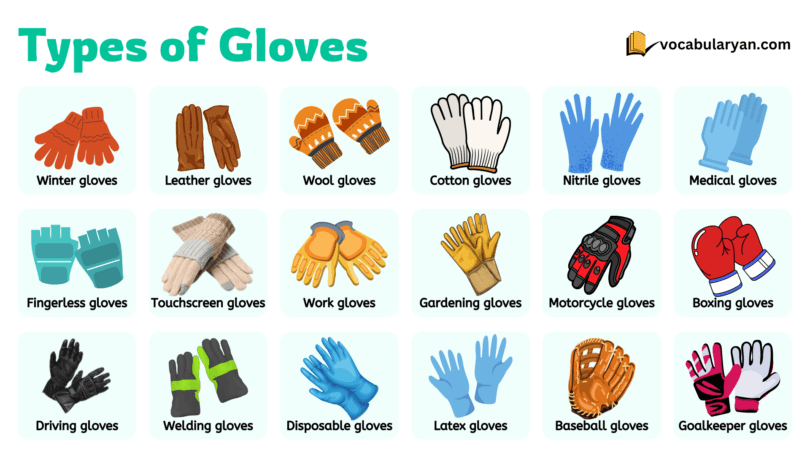
Gloves protect, warm, or grip depending on the job they’re built for, and the material, thickness, and design change accordingly. The types below group by use and material, so each glove stays connected to what it actually does.
Work and Safety Gloves
- Cut-Resistant Gloves: woven from fibers strong enough to resist blades and sharp edges. Butchers, glaziers, and warehouse workers rely on them wherever a slip could mean a serious cut.
- Impact Protection Gloves: padded across the knuckles and back of the hand to absorb blows and shocks. Riggers and heavy-equipment operators wear them where falling tools or crushing hazards are a real risk.
- Heat-Resistant Gloves: insulated with layers that block high temperatures from reaching the skin. Foundry workers and furnace operators depend on them when handling equipment too hot to touch bare-handed.
- Chemical-Resistant Gloves: made from materials that keep corrosive liquids from soaking through to the skin. Lab technicians and industrial cleaners wear them whenever solvents, acids, or strong cleaning agents are involved.
- Abrasion-Resistant Gloves: reinforced with tougher fabric that withstands rough surfaces and repeated friction. Workers handling sheet metal, concrete, or rope all day need this durability to avoid the gloves wearing through in hours.
- Welding Gloves: thick, heat-resistant, and long enough to cover the lower arm. They shield welders from sparks, radiant heat, and stray drops of molten metal during the job.
- Mechanic Gloves: snug-fitting and durable, giving grip without sacrificing feel for small parts. Auto and machine technicians wear them to handle tools and engine components while staying protected from grease and sharp edges.
- Electrical Safety Gloves: insulated specifically to block electric current from reaching the hands. Electricians rely on them whenever they work near live wires or powered equipment, since ordinary gloves offer no protection here.
- Anti-Vibration Gloves: padded internally to absorb vibration from power tools before it reaches the hand. Workers using jackhammers, grinders, or drills for hours at a time wear them to reduce long-term nerve and joint strain.
- PVC-Dipped Gloves: a fabric glove dipped in plastic across the palm and fingers for grip and light protection. Warehouse and general labor jobs use them as an inexpensive option for everyday handling tasks.
- Latex Gloves: thin, stretchy, and disposable, giving close-fitting sensitivity for detailed tasks. Medical and food-service settings use them widely, though the material can trigger allergic reactions in some wearers.
- Nitrile Gloves: a latex-free synthetic rubber that resists punctures and chemicals better than latex. Many hospitals and labs have switched to nitrile as the standard disposable glove for exactly this reason.
- Vinyl Gloves: looser-fitting and less durable than latex or nitrile, but noticeably cheaper. Food handling and short, low-risk tasks are the main setting where vinyl gloves still make sense.
- Polyethylene Gloves: thin, loose, and inexpensive, made from a lightweight plastic film. Fast-food counters and quick food-prep tasks often hand these out for brief single-use handling.
- Surgical Gloves: sterile and precisely fitted to preserve fine motor control during an operation. Surgeons wear them to maintain a strict, contamination-free barrier between their hands and a patient.
- Sterile Gloves: individually packaged and sterilized before use, unlike gloves pulled from a bulk box. Any procedure requiring a completely germ-free barrier calls for this level of sterility.
- Powder-Free Gloves: made without the internal cornstarch powder older disposable gloves used for quick on-and-off. Removing the powder reduces skin irritation and lowers the risk of contaminating sensitive work areas.
- Chemotherapy Gloves: tested and rated specifically to block hazardous chemotherapy drugs from passing through the material. Oncology nurses and pharmacists wear them whenever they prepare or administer these medications.
- Dental Exam Gloves: thin and closely fitted to allow the fine motor control dental work demands. Dentists and hygienists wear them throughout exams and procedures to block contamination without losing precision.
- Food-Grade Gloves: manufactured and approved for direct contact with food under health regulations. Commercial kitchens and food processing lines use them to keep hands from directly touching food during prep.
Warmth and Fashion Gloves
- Wool Gloves: knitted from natural wool fiber that traps warmth effectively even when slightly damp. They remain a reliable everyday choice for cold mornings and commutes.
- Fleece Gloves: made from soft, lightweight synthetic fabric that adds warmth without much bulk. They suit everyday cold-weather wear better than heavier technical gloves meant for extreme conditions.
- Thermal Gloves: built with an insulating inner layer designed specifically to hold in body heat. People choose them over plain wool or fleece gloves when the cold is more severe.
- Mittens: enclose all four fingers together in one shared pocket rather than separate slots. That shared space traps more warmth than fingered gloves, at the cost of individual finger movement.
- Knit Gloves: made from tightly looped yarn that gives a flexible, breathable fit. They work well for mild cold rather than harsh winter conditions.
- Heated Gloves: contain a battery-powered heating element built into the lining. They add active warmth beyond what insulation alone provides, a real advantage for people who work outdoors in extreme cold for long stretches.
- Ski Gloves: heavily insulated and fully waterproofed to handle long hours of exposure to snow. Skiers and snowboarders rely on their combination of warmth, grip, and weatherproofing on the slopes.
- Snow Gloves: built like ski gloves but aimed more at everyday snow play or shoveling than sport. Keeping snow and moisture out matters more here than technical performance features.
- Touchscreen Winter Gloves: include conductive thread woven into the fingertips. This lets a wearer answer a phone or check a map without removing the glove in the cold.
- Down-Insulated Gloves: filled with real or synthetic down feathers for exceptional warmth relative to their weight. People who need serious cold protection without bulky, heavy gloves often choose this fill.
- Leather Gloves: cut from genuine animal hide, prized for durability and a classic look. They work equally well in casual outfits and more formal wear, aging well with use.
- Faux Leather Gloves: made from synthetic material styled to resemble real leather closely. They cost less than genuine leather and appeal to shoppers avoiding animal products.
- Suede Gloves: cut from the soft, napped underside of a hide rather than the smooth outer surface. The resulting matte texture is favored in dressier, more textured glove styles.
- Cashmere Gloves: knitted from fine cashmere wool, prized for exceptional softness paired with real warmth. Their lightweight feel makes them a common choice for dressing up a winter coat.
- Crochet Gloves: hand-looped from yarn in an open, decorative pattern rather than a tight knit. People choose them more for their look than for serious cold protection.
- Fingerless Fashion Gloves: leave the fingertips exposed while still covering the palm and back of the hand. This lets a wearer keep a stylish look while still using their fingers freely for typing or handling small objects.
- Embellished Gloves: decorated with beads, embroidery, or other added details. They suit a dressier occasion where a plain glove would look too plain against the outfit.
- Ribbon-Accent Gloves: trimmed with a ribbon or bow detail at the wrist. This finishing touch is common in vintage-inspired or formal glove styles rather than everyday wear.
- Designer Gloves: produced under a fashion label, emphasizing style and brand identity alongside everyday hand coverage. Shoppers pay a premium here mainly for the name and design rather than any added protective feature.
- Button-Trim Gloves: finished with decorative buttons running along the wrist or cuff. This classic detail appears often in formal and vintage-style glove design.
Material-Based Glove Types
- Cowhide Leather Gloves: made from cattle hide, giving a strong, thick material that holds up under demanding work. Ranchers and heavy laborers favor cowhide for its balance of toughness and availability.
- Goatskin Gloves: softer and more flexible than cowhide while still resisting wear well. The added dexterity suits tasks needing both protection and a close feel.
- Synthetic Leather Gloves: manufactured to copy real leather’s look and feel using man-made materials. They usually cost less than genuine leather and require less upkeep after use.
- PU Gloves: made from polyurethane-coated fabric that offers grip and light protection. They sit below genuine leather in price and durability but suit lighter-duty tasks well.
- Split Leather Gloves: cut from the inner, rougher layer of a hide rather than the smooth top grain. This makes them more affordable than full-grain leather gloves while still holding up reasonably well.
- Driver’s Gloves: cut short at the wrist with a snug, close fit. The design is meant to preserve grip and steering-wheel feel rather than provide heavy-duty protection.
- Gardening Gloves: reinforced across the palm and fingers to resist thorns, dirt, and repeated digging. Most pairs also flex easily enough to handle small tools and delicate plants without losing dexterity.
- Insulated Leather Gloves: combine leather’s natural durability with an inner lining added for warmth. Outdoor workers in cold climates choose them when they need both toughness and insulation in one glove.
- Puncture-Resistant Leather Gloves: built with reinforced material specifically to resist nails, thorns, or broken glass. Landscapers and demolition crews rely on this extra layer of protection where sharp debris is common.
- Nitrile Disposable Gloves: single-use gloves made from synthetic rubber that resist punctures and chemicals better than latex. They have become a standard choice wherever latex allergies or chemical exposure are a concern.
- Household Cleaning Gloves: thick, waterproof gloves meant to protect skin from cleaning chemicals and hot water. Most extend well past the wrist to keep splashes from running down the arm.
- Dishwashing Gloves: extend past the wrist and resist both water and grease. Their length and grip keep hands dry and steady while scrubbing pots and dishes.
- Industrial Rubber Gloves: heavier-duty than household versions, built to withstand harsher chemicals and rougher handling. Factories and chemical plants use them where consumer-grade rubber gloves would fail quickly.
- Acid-Resistant Gloves: made from materials specifically tested to withstand contact with strong acids without breaking down. Chemical handlers rely on this specific rating rather than assuming any rubber glove will do.
- Latex-Coated Gloves: combine a fabric shell with a latex coating layered over the palm and fingers. The coating adds grip and light liquid resistance while the fabric base keeps the glove breathable.
- Neoprene Gloves: made from a synthetic rubber that resists chemicals, oils, and water while staying flexible. Divers and industrial workers both use neoprene for its rare combination of flexibility and resistance.
- PVC-Coated Gloves: covered in a plastic layer that adds water resistance and grip over a fabric base. Wet or greasy jobs, from fishing to food processing, commonly rely on this coating.
- Multi-Purpose Nitrile Gloves: designed for general use across cleaning, food handling, and light mechanical tasks. Their versatility makes them a common choice for households that want one glove type for several jobs.
Waterproof and Breathable Gloves
- Waterproof Ski Gloves: sealed against snow and moisture to keep hands dry through long runs. Skiers depend on this seal holding up through repeated falls and contact with wet snow.
- Snowboarding Gloves: built with reinforced palms and waterproofing to handle frequent contact with snow and ice. The reinforced palm also helps riders push themselves up after a fall without tearing the glove.
- Kayaking Gloves: designed to stay functional even when soaked, using a flexible, quick-drying material. Paddlers need a glove that keeps grip on the paddle rather than becoming slippery once wet.
- Fishing Gloves: waterproof or water-resistant, sometimes with cut fingertips for handling lines and bait. The exposed fingertips let anglers tie knots and bait hooks without removing the glove entirely.
- Rainproof Cycling Gloves: sealed against rain while keeping enough flexibility to operate brakes and gears. Commuting cyclists rely on them to keep hands dry and functional in wet weather.
- Hiking Gloves with Waterproof Lining: combine a breathable outer shell with a waterproof lining underneath. This layered build keeps rain out while still letting sweat escape during a long hike.
- Paddling Gloves: grip-focused and quick-drying, built for repeated contact with water during rowing. The textured palm helps maintain grip on an oar even when both the glove and the equipment are wet.
- Mesh Work Gloves: built with mesh panels across the back of the hand to let air through. Warm-weather labor jobs use them to cut down on sweat buildup during long shifts.
- Ventilated Cycling Gloves: include perforated or mesh sections positioned to keep hands cool. Long summer rides are far more comfortable with this airflow than in a fully padded glove.
- Lightweight Hiking Gloves: thin and breathable, offering light protection without overheating hands on a trail. Hikers choose them over heavier gloves when the goal is scrapes and sun protection rather than serious cold defense.
- Gym Gloves with Open Backs: cover the palm for grip while leaving the back of the hand exposed. This design keeps hands cooler during a workout than a fully enclosed glove would.
- Sailing Gloves: often cut with open fingertips to balance line-handling grip with airflow and feel. Sailors need to feel rope tension directly, which a fully covered fingertip would dull.
- Gardening Gloves with Breathable Backs: protect the palm from dirt and thorns while a mesh back keeps hands cooler. This split design suits long hours of yard work in warm weather.
- Construction Gloves with Mesh Fabric: built with mesh sections added to reduce heat buildup during long shifts. Workers wearing full protective gear all day benefit from any extra airflow this mesh provides.
Sports and Job-Specific Gloves
- Gym Gloves: padded across the palm to reduce friction and improve grip on equipment. Weightlifters and general gym-goers both use them to protect against calluses and improve their hold on a bar.
- Weightlifting Gloves: reinforced at key pressure points on the palm to protect skin under heavy loads. Serious lifters wear them specifically to maintain bar grip through repeated heavy sets.
- Baseball Gloves: shaped with a deep pocket and webbing between the thumb and fingers. That pocket and webbing let a fielder catch and hold onto a thrown or batted ball securely.
- Cycling Gloves: padded across the palm to reduce pressure on the hands during long rides. The padding cuts down on numbness and discomfort from gripping handlebars for extended periods.
- Goalkeeper Gloves: textured and padded to improve grip and cushion the impact of stopping shots. The textured palm helps a keeper hold onto a wet or fast-moving ball rather than deflecting it away.
- Golf Gloves: thin and snug-fitting, improving grip on the club without restricting the swing. Most golfers wear just one, on the lead hand, to prevent the club from slipping mid-swing.
- Boxing Gloves: heavily padded to protect both the wearer’s hands and their opponent during a bout. The padding absorbs impact that would otherwise injure both the striking hand and the person struck.
- Archery Gloves: protect the fingers from the bowstring’s repeated friction and pressure during draw and release. Archers who shoot often rely on them to prevent blistering over repeated practice sessions.
- Rock Climbing Gloves: reinforced across the palm and fingers to handle rope friction and rough rock. Belayers in particular use them to avoid rope burn while controlling a partner’s line.
- Anti-Slip Kitchen Gloves: textured across the palm for grip when handling wet dishes, pots, or utensils. Busy kitchens rely on this texture to prevent drops during fast-paced cleanup.
- Heat-Resistant Chef Gloves: insulated to allow safe handling of hot pans, trays, and oven equipment. Chefs use them instead of a folded towel for a more secure, dedicated grip on hot cookware.
- Butcher Gloves: cut-resistant and often chainmail-lined, protecting hands while working close to a blade. Butchers rely on this metal-reinforced construction specifically because standard cut-resistant fabric alone would not stop a direct slip.
- Cut-Proof Cooking Gloves: designed to resist slicing injuries during food prep involving knives, mandolins, or graters. Home cooks increasingly use them for the same reason professional kitchens have used cut-resistant gloves for years.
- Landscaping Gloves: reinforced for durability against dirt, thorns, and constant contact with tools. Long days spent digging, pruning, and hauling material call for this extra reinforcement over a standard gardening glove.
- Plumber Gloves: resistant to water, grease, and minor chemical exposure encountered during pipe and fixture work. Plumbers need this resistance while still keeping enough dexterity to handle small fittings and tools.
Protective and Smart Gloves
- Firefighter Gloves: heavily insulated and heat-resistant, protecting hands during direct exposure to flame. They are built to withstand far higher temperatures than any standard heat-resistant work glove.
- Oven Gloves: thickly padded and heat-resistant, used specifically for handling hot trays, pots, and racks. Their thickness trades away fine dexterity in exchange for reliable heat protection at the stove.
- Cut-Resistant Kitchen Gloves: worn under or instead of regular gloves to prevent knife injuries during food prep. Home cooks slicing vegetables or shucking oysters use them as a reliable safeguard against a slipped blade.
- Kevlar Gloves: made from an extremely tough synthetic fiber originally developed for body armor. This fiber resists cuts and abrasion far better than standard cotton or leather work gloves.
- Forge Gloves: thick and heavily heat-resistant, built for blacksmithing and other work involving open flame and hot metal. Blacksmiths need this level of protection to handle glowing metal fresh from the forge.
- High-Heat BBQ Gloves: insulated to let a user handle grills, hot grates, and cooking equipment directly. Grilling enthusiasts use them to move hot charcoal or adjust grates without reaching for tongs.
- Construction-Grade Cut Gloves: combine cut resistance with the general durability needed for job-site handling of sharp materials. Workers cutting rebar, sheet metal, or glass on site depend on this combination daily.
- Touchscreen Gloves: fitted with conductive material woven into the fingertips. This lets a wearer operate a phone or tablet screen without removing the glove in cold weather.
- Smart Fitness Gloves: built with sensors that track grip strength, movement, or workout data. Serious training programs use this data to fine-tune technique in ways a plain glove cannot measure.
- Virtual Reality Gloves: equipped with sensors that translate hand and finger movement into a virtual environment. These gloves let a user reach for and manipulate virtual objects with their real hand motions.
- Gesture Control Gloves: detect specific hand movements and translate them into commands for a connected device. They are used in settings from stage performance to industrial control rooms where hands-free input matters.
- Industrial Smart Gloves: combine standard safety features with sensors that monitor grip force, temperature, or hand position. Factories use the data these gloves collect to catch unsafe handling patterns before an injury happens.
- Bluetooth-Enabled Gloves: connect wirelessly to a phone or device, often adding features like call control. Runners and cyclists use them to answer calls or skip a song without pulling out their phone.
FAQs
Q1. Why do people wear gloves?
People wear gloves to protect their hands from cold, injury, chemicals, and germs, and to improve grip during specific tasks. Different settings, from sports to medical work to fashion, call for gloves built around different priorities.
Q2. Are nitrile gloves better than latex gloves?
Nitrile gloves are generally more durable and more resistant to chemicals than latex gloves, and they carry no risk of the allergic reactions latex can cause in some wearers. Latex gloves offer slightly better flexibility and a closer fit, which is why some medical settings still use them for detailed work.
Q3. Are disposable gloves reusable?
No. Disposable gloves such as latex, vinyl, and nitrile are designed for one-time use and should be discarded after a single task, since repeated use compromises both their protective barrier and their fit.
Q4. What is the difference between work gloves and fashion gloves?
Work gloves are built around a specific protective function, such as resisting cuts, heat, or chemicals, often at the cost of a stylish appearance. Fashion gloves prioritize look and material quality, such as leather or cashmere, and offer far less protection against hazards.
Q5. Which gloves are best for cold weather?
Insulated options such as wool, fleece, thermal, and down-insulated gloves all trap body heat effectively, while mittens trap the most warmth by keeping all four fingers together in one pocket. Heated gloves add an extra layer of warmth through a battery-powered heating element built into the lining.
Q6. What makes a glove waterproof or breathable?
A waterproof glove uses a sealed outer material or lining that blocks water from passing through, while a breathable glove uses mesh panels or ventilated fabric that lets air circulate and moisture escape. Some gloves combine both approaches, sealing out rain while still venting heat and sweat from inside.

Leave a Comment