
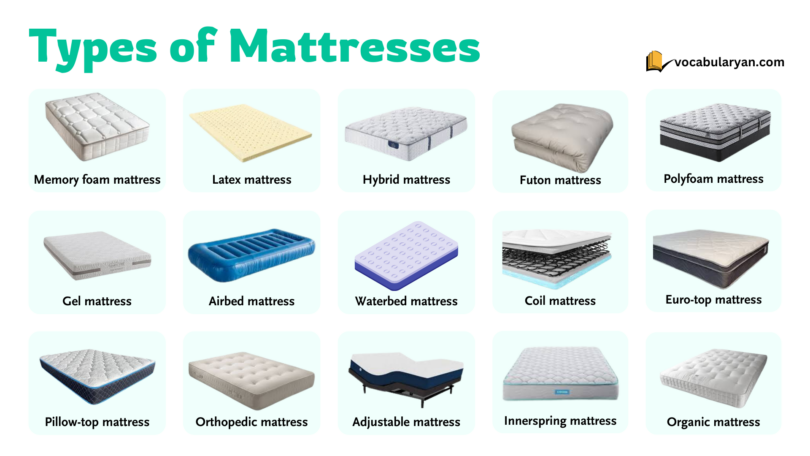
A mattress’s material, firmness, and build directly affect how it feels and how well it supports the body during sleep. Sleep position, body weight, and personal comfort preference each point toward a different best-fit mattress type.
Types of Mattresses by Material and Firmness
Foam, innerspring, latex, and hybrid are the four main types of mattresses, based on core material. Within each category, firmness level, adjustment, and cooling technology separate one exact type from another. Layer structure, support zones, and cover material are the specific differences between one type of mattress and the next.
Memory Foam Mattresses
These types of mattresses use dense foam that molds closely to the body’s shape.
- Memory Foam Mattress: a dense foam layer molds to the body’s shape and slowly returns to flat once weight lifts. It absorbs movement well, which suits couples who share a bed.
- Gel Memory Foam Mattress: gel beads or a gel layer are mixed into the foam to pull heat away from the body. This addition helps offset standard memory foam’s tendency to trap warmth.
- Plant-Based Memory Foam Mattress: plant oils replace some of the petroleum used in standard foam production. This substitution results in a slightly faster response time than standard memory foam.
- Open-Cell Memory Foam: the foam’s internal structure holds more open air pockets than standard closed-cell foam. This structure improves airflow through the mattress.
- High-Density Memory Foam: the foam is manufactured at a higher density than standard memory foam, giving it more weight and durability. Higher density directly extends the foam’s usable lifespan before it breaks down.
- Copper-Infused Memory Foam: copper particles are blended into the foam, valued for their heat-conducting and antimicrobial properties. This addition targets both temperature regulation and odor control.
- Zoned Support Memory Foam: different firmness levels are built into separate zones across the mattress, softer at the shoulders and firmer at the hips. This zoning targets spinal alignment more precisely than a single-density foam.
- Slow-Rebound Memory Foam Mattress: the foam returns to its flat shape more slowly than standard memory foam after weight lifts. This slower response gives a deeper, more pronounced body-molding sensation.
Innerspring Mattresses
These types of mattresses use a coil support core for a bouncier, more traditional feel.
- Innerspring Mattress: a network of steel coils forms the core support layer, topped with a layer of padding. Its coil structure gives a bouncier, more responsive feel than foam, and it remains the most widely sold mattress type worldwide.
- Bonnell Coil Mattress: hourglass-shaped coils connect to each other across the mattress, forming one of the oldest spring designs still in production. This connected structure transfers motion across the surface more than newer coil types.
- Pocket Spring Mattress: individual coils sit inside their own fabric pockets rather than connecting to their neighbors. This isolation reduces motion transfer between two sleepers sharing the mattress.
- Offset Coil Mattress: coils are shaped with flattened sides that hinge against each other for closer body contouring. This hinging action gives more targeted support than a Bonnell coil design.
- Continuous Coil Mattress: a single continuous wire forms every coil in one connected row across the mattress. This one-piece construction adds extra durability to the coil layer.
- Firm Innerspring with Pillow Top: a firm coil base is topped with an extra layer of soft padding stitched onto the surface. This combination keeps strong support underneath a plush top layer.
- Dual Coil Mattress: two separate layers of coils stack on top of each other for added support and bounce. This double-coil build gives noticeably more responsiveness than a single coil layer.
- Innerspring with Edge Support: reinforced coils or foam encasement line the perimeter of the mattress to prevent sagging at the edge. This reinforcement adds usable sleeping surface all the way to the border.
Latex Mattresses
These types of mattresses use natural or synthetic rubber for a responsive, breathable support layer.
- Latex Mattress: natural or synthetic rubber forms the support layer, offering a bouncier, more responsive feel than foam. Its open-cell structure naturally resists dust mites without added chemical treatment.
- Natural Latex Mattress: the rubber comes directly from the sap of rubber trees rather than a synthetic chemical process. This natural sourcing appeals to buyers avoiding synthetic materials.
- Talalay Latex Mattress: liquid latex is poured into a mold, then frozen and baked to set its shape. This process gives a softer, more consistent, but more expensive result than Dunlop latex.
- Dunlop Latex Mattress: liquid latex is poured and cured in a single step without the freezing stage Talalay uses. This process produces a denser, firmer, more affordable latex layer.
- Blended Latex Foam: natural and synthetic latex are combined into one material. This blend balances the cost of synthetic latex with some of natural latex’s durability.
- Ventilated Latex Mattress: small holes are punched through the latex layer to improve airflow. This venting helps the mattress sleep cooler than a solid latex slab.
- Organic Latex Foam: the latex is certified free of synthetic additives and produced under organic farming standards. This certification matters to buyers specifically avoiding chemical treatments.
- Latex with Cotton Cover: a natural cotton fabric wraps the latex core instead of a synthetic blend. This cover adds breathability directly at the mattress surface.
Hybrid Mattresses
These types of mattresses pair a coil base with a foam or latex comfort layer on top.
- Hybrid Mattress: a coil support base pairs with a foam or latex comfort layer on top. This combination balances the bounce of springs with the pressure relief of foam.
- Memory Foam and Innerspring Hybrid: a coil base supports a memory foam comfort layer above it. This build gives the body-molding feel of foam without losing the coil layer’s airflow underneath.
- Latex Hybrid Mattress: a coil base supports a latex comfort layer instead of memory foam. This pairing keeps a bouncier surface feel than a foam-topped hybrid.
- Gel Hybrid Mattress: a coil base supports a gel-infused foam layer designed to pull heat away from the body. This combination targets both motion isolation and temperature control.
- Pillow Top Hybrid Bed: an extra layer of soft padding is stitched onto the surface of a standard hybrid build. This top layer adds a plusher initial feel before reaching the firmer coil support underneath.
- Zoned Coil Hybrid: the coil layer is arranged into distinct firmness zones, softer at the shoulders and firmer at the hips. This zoning gives more precise support than an evenly spaced coil layer.
- Medium-Firm Hybrid Foam: the comfort layer is calibrated to a middle firmness point between soft and firm. This balance suits a wide range of sleeping positions without favoring one specifically.
- Dual-Layer Hybrid Design: exactly two support layers, one coil and one foam, make up the entire mattress. This simpler two-layer build costs less than a multi-layer hybrid.
Mattresses by Sleep Position
These types of mattresses are built to match a specific sleeping position, whether on the side, back, or stomach.
- Plush Memory Foam Mattress: a softer, thicker top layer of memory foam cushions the shoulders and hips. Side sleepers rely on this extra give to reduce pressure at these two contact points.
- Soft Hybrid Mattress: a coil base is paired with an especially soft comfort layer on top. This build suits a side sleeper who wants both cushioning and coil support underneath.
- Pillow Top Latex Bed: a soft padded layer sits above a latex support core. This combination adds initial softness to latex’s naturally bouncier feel.
- Gel-Infused Foam Mattress: gel is worked into a foam comfort layer to offset heat buildup from close body contact. Side sleepers, who sink deeper into the surface, benefit most from this cooling.
- Zoned Contour Foam Mattress: the foam is shaped into distinct support zones that curve to match the body’s natural contours. This shaping targets the shoulders and hips specifically for side sleeping.
- Responsive Soft Latex: a softer latex formulation reacts quickly to body movement while still cushioning pressure points. This responsiveness suits a side sleeper who shifts position through the night.
- Adaptive Foam Mattress: the foam adjusts its firmness response based on applied pressure and body temperature. This adaptability helps it suit more than one sleep position on the same surface.
- Firm Innerspring Mattress: a firm coil base resists sinking at the midsection. Back and stomach sleepers rely on this resistance to keep the spine level.
- Medium-Firm Hybrid: a hybrid build calibrated toward the firmer end of medium. This balance suits back sleepers who need support without a fully rigid surface.
- High-Density Latex Foam: a denser latex formulation resists compression under body weight. Stomach sleepers benefit from this resistance, since it keeps the midsection from sinking too low.
- Orthopedic Support Mattress: the mattress is built specifically to support spinal alignment, with reinforced zones at the lower back. Back sleepers with existing spine concerns are the primary audience for this design.
- Coil Mattress with Lumbar Support: a reinforced coil zone sits specifically beneath the lower back area. This targeted reinforcement addresses a common weak point in standard coil layouts.
- Flat Surface Memory Foam: a firmer, flatter foam formulation avoids the deep sink of plush memory foam. Stomach sleepers need this flatter profile to avoid the hips dropping below the shoulders.
- Supportive Dual-Firmness Mattress: two firmness zones run the length of the mattress, letting the shoulders sink slightly more than the hips. This layout suits a combination sleeper who shifts between back and side positions.
Mattresses by Firmness Level
These types of mattresses range from a soft, deep sink to a firm, minimal-give surface.
- Ultra-Plush Memory Foam: the softest tier of memory foam firmness, offering the deepest body sink available in the category. Light sleepers and those seeking maximum pressure relief favor this level.
- Soft Gel Foam Mattress: a gel-infused foam layer is calibrated to the softer end of the firmness scale. This combination adds cushioning while working against heat buildup.
- Pillow Top Comfort Bed: an extra stitched layer of soft padding sits above the main support core. This addition softens the overall feel regardless of what firmness the core layer provides.
- Deep Sink Latex Foam: a softer latex formulation allows more compression than standard latex firmness. This deeper sink suits sleepers who prefer latex’s bounce with a plusher initial feel.
- Soft Hybrid with Contour Zones: a soft comfort layer is shaped into zones that follow the body’s curves. This combination targets pressure relief at specific points rather than uniformly across the surface.
- Fluffy Euro Top Mattress: an extra layer of padding is sewn flush with the mattress edge rather than stitched on top as a separate pillow top. This construction gives a softer surface without the visible seam of a pillow top.
- Medium Hybrid Foam Mattress: a hybrid build calibrated to a balanced middle firmness. This level suits the widest range of sleepers and sleep positions.
- Responsive Latex Blend: a latex formulation set at medium firmness reacts quickly to shifting body weight. This responsiveness benefits sleepers who change position several times through the night.
- Memory Foam with Zoned Comfort: medium firmness memory foam is divided into support zones across the mattress. This zoning balances the classic slow-response feel of memory foam with more targeted support.
- Dual-Comfort Layered Mattress: two distinct comfort layers stack to reach a combined medium firmness. This layered approach blends the feel of two different materials into one middle ground.
- Medium Plush Coil Bed: a coil base is topped with enough padding to soften the feel without losing coil bounce. This balance suits sleepers who want spring responsiveness with added cushioning.
- Medium Pillow Top Mattress: a moderate pillow top layer sits above a medium-firmness core. This combination avoids both the extremes of ultra-plush sinking and rigid firmness.
- Extra Firm Support Foam: the firmest tier of foam firmness, offering minimal sink under body weight. Sleepers needing maximum spinal support favor this level.
- Dense Latex Mattress: a high-density latex formulation resists compression more than standard latex firmness. This density suits heavier sleepers who need extra resistance to avoid bottoming out.
- Firm Coil Mattress with Base Layer: a reinforced base layer sits beneath a firm coil structure for added support. This extra base layer resists sagging longer than a standard firm coil design alone.
- Minimal Give Hybrid Bed: a hybrid build calibrated to the firmest end of the scale, with very little surface compression. This rigidity suits sleepers who specifically dislike a sinking sensation.
- Orthopedic Innerspring Mattress: a firm coil layer is built specifically to support spinal alignment. This design targets sleepers managing back pain or posture concerns.
- Flat-Top Firm Memory Foam: a firm, flat foam surface avoids the deep contouring of softer memory foam tiers. This flatness suits sleepers who want memory foam’s material without its usual sinking feel.
Adjustable and Smart Mattresses
These types of mattresses pair with motorized bases or built-in technology for a customized sleep setup.
- Adjustable Base Mattress: the mattress pairs with a hinged, motorized frame that raises the head or foot sections. This adjustment supports both comfort preferences and specific medical needs.
- Electric Adjustable Bed: an electric motor powers the base’s movement instead of a manual crank. This motorized system has become the standard across most adjustable base designs.
- Remote-Controlled Memory Foam: a memory foam mattress is paired specifically with a remote-operated adjustable base. This pairing lets a sleeper change position without physically getting up.
- Zero-Gravity Sleep System: the base tilts until the legs sit level with or above the heart, mimicking the posture astronauts use during liftoff. This position is designed to reduce spinal pressure and improve circulation.
- Motorized Base Mattress: the mattress is designed specifically to work with a motorized adjustable frame underneath. This pairing requires a mattress flexible enough to bend at the base’s hinge points.
- Adjustable Split King Mattress: two separate mattresses sit side by side on independent adjustable bases beneath one shared king-size setup. Each side adjusts on its own, letting two sleepers choose separate positions.
- Programmable Recline Mattress: preset positions can be saved and recalled at the touch of a button on the adjustable base. This programmability speeds up switching between favorite sleep and relaxation positions.
- Dual-Chamber Memory Foam: two separate air or foam chambers let each side of the mattress hold a different firmness. Couples with different firmness preferences use this design to share one mattress.
- Split-Firmness Hybrid Mattress: the hybrid build uses different coil tension or foam density on each half of the mattress. This split lets two sleepers each get their preferred support level.
- Smart Cooling Mattress with Dual Zones: built-in temperature control technology lets each side of the mattress be set to a different temperature. This zoning addresses partners who run at noticeably different body temperatures overnight.
- Individualized Latex Bed: the latex layer is customized per side, in firmness, thickness, or both, for two different sleepers. This customization applies latex’s natural responsiveness to two separate comfort needs.
- Two-Sided Adjustable Foam: each half of the foam mattress adjusts its firmness independently through a connected control system. This independent control lets partners avoid compromising on one shared firmness.
Natural and Organic Mattresses
These types of mattresses replace synthetic foam and fiber with natural materials such as latex, wool, or cotton.
- GOLS-Certified Latex Mattress: the latex meets the Global Organic Latex Standard, verifying organic farming and processing methods. This certification gives buyers an independently verified organic claim rather than a marketing label alone.
- Organic Talalay Latex Bed: the Talalay production process is applied to certified organic latex rather than standard latex. This combination keeps Talalay’s soft, consistent feel while meeting organic sourcing standards.
- Natural Dunlop Latex Mattress: the denser, firmer Dunlop process is applied to natural, non-synthetic latex. This combination suits buyers wanting Dunlop’s firmness with a fully natural material source.
- Latex with Organic Cotton Cover: a certified organic cotton fabric wraps the latex core instead of a standard cotton or synthetic blend. This cover keeps the mattress surface free of synthetic fiber treatments.
- Eco-Friendly Firm Latex Bed: a firm latex core is produced using sustainable farming and low-impact manufacturing methods. This combination appeals to buyers prioritizing both firmness and environmental impact.
- Plant-Based Latex Hybrid: a coil base pairs with a latex comfort layer sourced from plant-based rather than petroleum-based materials. This hybrid combines natural sourcing with coil support underneath.
- Organic Wool Mattress: wool fiber fills the comfort layer instead of foam or synthetic batting. Wool naturally regulates temperature and resists moisture without added chemical treatment.
- Cotton Fiber Mattress: natural cotton fiber forms the padding layer throughout the mattress. This material breathes well but compresses faster than wool or latex over time.
- Bamboo Foam Mattress: bamboo-derived fibers are blended into the foam or cover material. Bamboo fiber is naturally moisture-wicking and resists odor buildup.
- Hemp-Filled Mattress: hemp fiber fills part or all of the comfort layer. Hemp fiber is durable and naturally resistant to mold and mildew.
- Natural Fiber Hybrid: a coil base is topped with a comfort layer built from natural fibers such as wool or cotton rather than foam. This combination keeps coil support while avoiding synthetic foam entirely.
- Chemical-Free Futon Mattress: a foldable futon-style mattress is built without synthetic flame retardants or foam treatments. This construction suits buyers specifically avoiding chemical additives in a compact mattress format.
Compact and Travel Mattresses
These types of mattresses fold or roll down for storage, travel, or occasional guest use.
- Foldable Mattress: a lightweight foam core folds into sections for storage or transport. Guest rooms without room for a full-size mattress rely on this fold-away design.
- Tri-Fold Foam Mattress: the mattress folds into exactly three even sections. This three-panel design is one of the most common foldable mattress formats sold.
- Guest Bed Foldable Mattress: a foldable mattress is paired with a matching frame designed specifically for occasional guest use. This pairing sets up quickly and stores flat between visits.
- Foldable Memory Foam Topper: a thinner memory foam layer folds for storage, designed to sit on top of an existing mattress or frame. This topper adds cushioning without the bulk of a full foldable mattress.
- Compact Guest Bed Mattress: the mattress is sized smaller than a standard twin to fit tighter guest spaces. This reduced footprint suits small apartments without a dedicated guest room.
- Three-Panel Foam Mattress: three separate foam sections connect with fabric hinges to fold flat. This design is functionally identical to a tri-fold foam mattress under a different name.
- Convertible Fold-In Frame Bed: the mattress and its frame fold together into a single compact unit. This combined design saves more storage space than a mattress that folds separately from its frame.
- Rollable Bed Mattress: a thin, flexible foam or latex core rolls into a compact cylinder for storage or shipping. This design is common for both mattress-in-a-box shipping and travel use.
- Roll-Up Latex Sleeping Pad: a thin latex core rolls up for travel or storage rather than folding into sections. This rolled format keeps the surface free of the crease lines a folded mattress can develop.
- Foam Roll Mattress for Camping: a lightweight foam pad rolls up small enough to fit inside a backpack or car trunk. Weight and pack size matter more than deep cushioning for this format.
- Japanese Futon Rollable Mattress: a thin, firm cotton-filled mattress rolls up daily and stores away when not in use. This daily fold-away tradition dates back centuries in Japanese living spaces.
- Bamboo Roll Mattress: bamboo fiber padding is built into a rollable mattress format. This material adds natural moisture resistance to a compact, portable design.
- Portable Memory Foam Roll: a foam mattress is manufactured specifically to compress and roll for shipping or travel. Mattress-in-a-box products rely on this same rolling and compression process.
- Travel-Size Sleep Mat: a thin, minimal padding layer prioritizes pack size over sleeping comfort. Backpacking and lightweight travel favor this mat over any thicker rollable option.
FAQs
Q1. What’s the difference between memory foam and hybrid mattresses?
A memory foam mattress uses foam throughout the support and comfort layers, giving a slow, body-molding feel. A hybrid mattress pairs a coil support base with a foam or latex comfort layer, balancing that same pressure relief with more bounce and airflow.
Q2. How long does a mattress last?
On average, a mattress lasts 7 to 10 years, depending on the material and how well it is cared for. Latex and high-density foam mattresses last toward the longer end of that range.
Q3. What is a mattress-in-a-box?
A mattress-in-a-box is a compressed mattress shipped in a box, designed to expand fully once unpacked. It ships conveniently and commonly comes with an extended trial period.
Q4. What is the difference between Talalay and Dunlop latex?
Talalay latex is frozen and baked during production, giving a softer, more consistent feel at a higher cost. Dunlop latex skips the freezing step, producing a denser, firmer, and more affordable result.
Q5. Which mattress firmness is best for back or stomach sleepers?
Back and stomach sleepers benefit from a firm to medium-firm mattress that keeps the midsection from sinking below the shoulders and hips. A mattress that is too soft lets the spine curve out of alignment in these positions.
Q6. What makes a mattress organic or natural rather than synthetic?
An organic or natural mattress uses materials such as natural latex, organic cotton, or wool instead of petroleum-based foam or synthetic fiber. Certifications such as GOLS confirm the material was farmed and processed under organic standards rather than relying on a marketing label alone.

Leave a Comment