
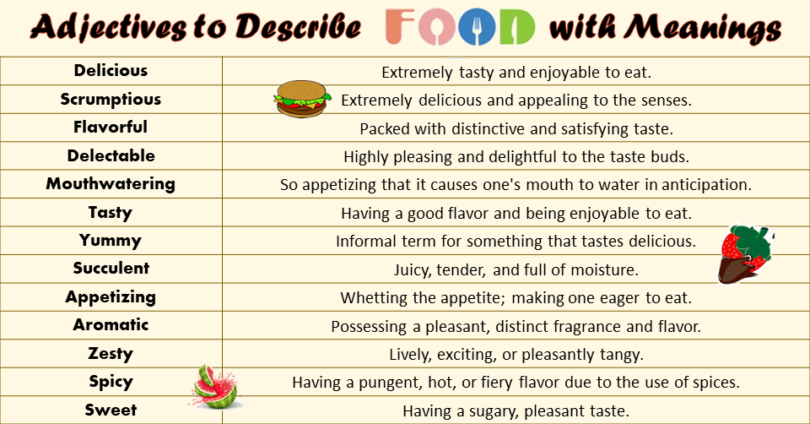
Adjectives to describe food name one specific quality of a dish: how it tastes, how it feels in the mouth, how it smells, or how it looks. English organizes this vocabulary by sense, and a complete set includes words for food you dislike as well as food you enjoy. Six categories cover the full range: taste, texture, aroma, appearance, overall quality, and negative description. A adjectives to describe a person lesson works through the same sense-based approach for describing people instead of food.
What Makes a Good Food Adjective
A strong food adjective names a specific sense rather than a vague judgment like good or bad. English groups this vocabulary into six categories, each answering a different question about the food.
- Taste: how the food tastes.
- Texture: how the food feels in the mouth.
- Aroma: how the food smells.
- Appearance: how the food looks.
- Overall quality: a general impression rather than one specific sense.
- Negative: words for food that falls short.
A precise word does more work than a vague one. Crispy and savory tell a reader far more than good does.
Taste Adjectives for Food
A taste adjective names the flavor a food delivers.
- Spicy: having a hot, pungent flavor from chili or pepper. Maya added extra chili because she likes her food spicy.
- Savory: rich and full-flavored, without sweetness. The broth tasted savory, deep with roasted garlic and onion.
- Sweet: having a sugary taste. The dessert was almost too sweet to finish.
- Tangy: sharp and slightly sour. A tangy dressing balanced the richness of the salad.
- Bitter: having a sharp, biting taste, found in dark greens or coffee. The espresso had a strong bitter edge.
- Salty: having the sharp, mineral taste of salt. The pretzels were salty enough to make Maya want water.
Spicy describes heat from chili or pepper specifically, while savory describes a general richness with no heat at all. The two words are not interchangeable, even though both fall outside the sweet-versus-sour range.
Texture Adjectives for Food
A texture adjective names how a food feels in the mouth.
- Crispy: firm, with a light crunching sound when bitten. The fries came out crispy and golden.
- Creamy: smooth and rich, from dairy or fat. The soup turned creamy once Maya stirred in the cream.
- Tender: soft, requiring little effort to cut or chew, as with meat. The roast was so tender it fell off the bone.
- Chewy: requiring sustained chewing before swallowing. The bread had a chewy crust and a soft center.
- Juicy: full of moisture that releases when bitten. Maya bit into the juicy peach and felt it run down her chin.
- Crunchy: hard and loud when bitten, firmer than crispy. The raw carrot stayed crunchy long after the salad was tossed.
Aroma Adjectives for Food
An aroma adjective names how a food smells.
- Aromatic: having a strong, pleasant smell, from herbs or spices. The soup smelled aromatic before Maya even tasted it.
- Fragrant: sweetly or delicately scented. Fragrant jasmine rice filled the kitchen with its scent.
- Pungent: having a sharp, strong smell that can overpower other scents. The pungent garlic hit Maya as soon as she opened the jar.
Appearance Adjectives for Food
An appearance adjective names how a food looks before it is tasted.
- Golden-brown: cooked to an appealing, even brown color. The chicken came out of the oven golden-brown.
- Glazed: coated in a shiny sugar or sauce layer. The donut had a thin, glazed coating.
- Vibrant: bright and rich in color. The salad’s vibrant greens and reds looked fresh.
- Appetizing: visually appealing enough to make someone want to eat. The golden-brown crust looked appetizing on the plate.
- Rustic: plain and homemade in appearance, charmingly imperfect. The rustic loaf had an uneven, hand-shaped crust.
Overall Quality Adjectives for Food
Some adjectives describe a general impression rather than one specific sense. Delicious, tasty, and scrumptious all describe overall enjoyment, though each fits a different register.
- Delicious: pleasing to the taste in a general, widely used sense. Maya said the meal was delicious without singling out one specific quality.
- Tasty: having good flavor, a more casual, everyday word than delicious. The sandwich was simple but tasty.
- Scrumptious: delicious in a way that suggests indulgence, used for desserts. The scrumptious cake disappeared within minutes.
- Rich: having a high content of fat, flavor, or indulgence. The chocolate cake was rich enough that a small slice felt satisfying.
Negative Food Adjectives
A complete vocabulary includes words for food that falls short, not only food that succeeds.
- Bland: lacking flavor or seasoning. The sauce tasted bland, so Maya added more spice.
- Soggy: unpleasantly wet or limp, describing food that should be crisp. The fries turned soggy after sitting in the box too long.
- Greasy: coated in an unpleasant amount of oil or fat. The pizza left a greasy shine on the paper plate.
- Stale: no longer fresh, describing bread or baked goods. The bread had gone stale by the next morning.
- Rubbery: tough and difficult to chew, describing overcooked meat or eggs. The overcooked eggs turned rubbery.
Food Adjectives Comparison Chart
The comparison chart organizes each category by test and example, keeping every cell to one short phrase so the chart stays readable on a small screen.
| Category | Test | Example |
|---|---|---|
| Taste | Names the flavor | Spicy in Maya likes her food spicy |
| Texture | Names the mouthfeel | Crispy in The fries came out crispy |
| Aroma | Names the smell | Aromatic in The soup smelled aromatic |
| Appearance | Names the look | Golden-brown in The chicken looked golden-brown |
| Overall quality | Names a general impression | Delicious in The meal was delicious |
| Negative | Names an undesirable quality | Bland in The sauce tasted bland |
How to Choose the Right Food Adjective
Five steps convert the categories into a method you run whenever you describe a dish:
- Decide which sense you are describing: taste, texture, aroma, or appearance.
- Choose a word specific to that sense rather than a general one like good.
- Check whether the word fits the food’s actual quality, not just its category.
- Vary your word choice rather than repeating the same word for every dish.
- Include a negative word if the food genuinely falls short.
Common Mistakes With Food Adjectives
Four confusions repeat across food writing and everyday conversation, and catching them keeps you from reaching for a vague or mismatched word.
The food was good. ❌ The food was crispy and savory, since a specific sense-based word tells a reader more than a general judgment. ✅
The meal was delicious, delectable, scrumptious, and heavenly. ❌ The meal was delicious, with a rich, savory sauce that made every bite satisfying, since stacking near-identical synonyms adds no new meaning. ✅
The cake looked delicious. ❌ The cake looked appetizing, since looked describes appearance, while delicious describes taste. ✅
The overcooked steak was tender. ❌ The overcooked steak was rubbery, since tender describes a positive texture, while rubbery names the actual problem. ✅
The raw carrots were crispy. ❌ The raw carrots were crunchy, since crunchy names a harder, denser bite, while crispy suits a lighter texture like a fried coating. ✅
Food Adjectives Practice Questions
Test the five-step method against nine questions before checking your answers.
- Classify spicy by category.
- Classify crispy by category.
- Classify aromatic by category.
- Correct the error in The food was good.
- Is golden-brown a taste word or an appearance word?
- Correct the error in The overcooked steak was tender.
- Name a negative adjective for bread that has lost its freshness.
- Correct the sense confusion in The cake looked delicious.
- Correct the error in The raw carrots were crispy.
Answers
- Spicy functions as a taste adjective, since it names the flavor.
- Crispy functions as a texture adjective, since it names how the food feels in the mouth.
- Aromatic functions as an aroma adjective, since it names the smell.
- A stronger sentence names a specific sense, such as The food was crispy and savory, rather than the vague word good.
- Golden-brown functions as an appearance word, since it describes how the food looks rather than how it tastes.
- The correct word is rubbery, since tender describes a positive texture while the sentence describes an overcooked, unpleasant result.
- Stale names bread that has lost its freshness.
- The correct sentence is The cake looked appetizing, since looked describes appearance rather than taste.
- The correct word is crunchy, since raw carrots have a harder, denser bite than the light texture crispy describes.
FAQs
Q2. What are adjectives to describe food texture?
Texture adjectives describe how food feels in the mouth, including crispy, creamy, tender, chewy, and juicy. The roast was so tender it fell off the bone names a specific mouthfeel rather than a general quality.
Q3. What are some negative words to describe food?
Common negative food adjectives include bland, soggy, greasy, stale, and rubbery. Each names a specific way a dish falls short, as in The fries turned soggy after sitting in the box too long.
Q4. How do you describe food in a review?
A strong review names a specific sense rather than a vague judgment, pairing taste, texture, aroma, or appearance words with the actual dish. The dish looked appetizing but tasted bland tells a reader far more than simply calling the meal good or bad.
Q5. What is the difference between “tasty” and “delicious”?
Tasty is a casual, everyday word for good flavor, as in the sandwich was simple but tasty. Delicious covers the same general idea in a more widely used, slightly more formal register, fitting both casual and polished writing equally well.
Q1. What are good adjectives to describe food taste?
Strong taste adjectives include spicy, savory, sweet, tangy, and bitter, each naming a specific flavor rather than a general judgment. The broth tasted savory tells a reader far more than the broth tasted good.