
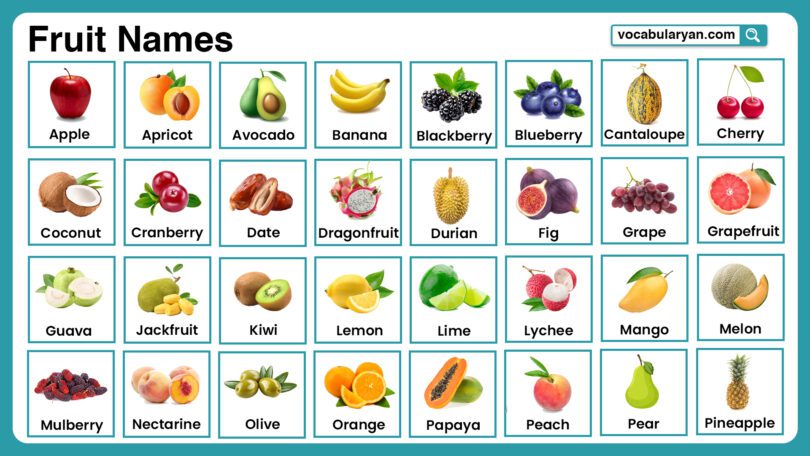
Fruit vocabulary spans citrus and tropical fruit, orchard staples like apple and pear, large fruits like watermelon, tiny berries, and dried fruits and nuts kept in a pantry. The names below group by type, so each fruit stays connected to its taste, texture, and origin.
Fruit Names by Type and Growing Region
Citrus fruits form segments under a peel. Tropical fruits need warm, humid climates to ripen. Orchard fruits grow on trees in cooler regions. Melons spread low across open fields. Berries stay small and soft. Dried fruits and nuts lose most of their water on purpose, for a longer shelf life.
Citrus Fruits
- Orange: round and juicy, with sweet segments under a thick orange peel. It is eaten fresh or squeezed into breakfast juice.
- Sweet Lime: mild and watery, with a taste barely sour enough to notice. It is often pressed into refreshing summer drinks.
- Lemon: small, bright yellow, and intensely sour. It flavors cooking, drinks, and dressings far more often than it is eaten on its own.
- Grapefruit: the largest common citrus after the pomelo, with a bitter-sweet flavor and pink, red, or yellow flesh. It is often halved and eaten straight from the rind with a spoon.
- Tangerine: smaller than an orange, sweeter, and much easier to peel. It works well as a quick, portable snack.
- Pomelo: the largest citrus fruit grown, with thick skin surrounding a mild, sweet flesh with a light tang. Its segments separate easily once the thick rind comes off.
- Mandarin: small and very sweet, with loose skin that separates from the flesh with barely any effort. It is common in lunchboxes and appears widely during winter.
- Clementine: a seedless type of mandarin with a juicy texture and skin that peels off in one piece. Its small size and sweetness suit young children well.
- Blood Orange: an orange variety with reddish flesh and a flavor carrying berry-like notes. It appears often in fancy drinks and salads.
- Lime: small, green, and sharply sour. It adds brightness to dishes, drinks, and marinades far more than it is eaten whole.
- Citron: thick-skinned with very little juice inside. Its main value lies in its fragrant zest and its use in candied sweets.
- Ugli Fruit: a citrus hybrid combining orange, grapefruit, and tangerine. Its rough, wrinkled skin hides a surprisingly sweet interior.
- Finger Lime: long, thin, and filled with tiny juice pearls that pop like caviar when bitten. Chefs use it as a garnish more often than a fruit to eat whole.
- Yuzu: strongly fragrant and native to East Asia. Its zest and juice flavor cooking and sauces far more often than the fruit is eaten fresh.
- Key Lime: smaller and more aromatic than a standard lime, with a sharper flavor. It is best known for flavoring pies and tropical recipes.
- Kaffir Lime: valued more for its fragrant leaves than for the fruit itself. Thai cooking relies on those leaves for a distinctive citrus note.
- Calamondin: very small and intensely sour. It is used in jams or squeezed into cold drinks rather than eaten whole.
- Satsuma: soft, seedless, and quick to peel. It is a winter favorite in many households.
- Sudachi: a sour green citrus fruit from Japan. Sauces and marinades use it far more often than it is eaten on its own.
- Kumquat: tiny and orange-like, eaten whole with the peel included. Its skin tastes sweet while its flesh stays tart.
Tropical and Exotic Fruits
- Mango: fragrant, with soft, juicy orange flesh around a large flat seed, sometimes called the king of fruits. It is eaten fresh, blended into drinks, or dried into sweet strips.
- Pineapple: covered in a spiky outer shell, hiding juicy, tangy-sweet rings of flesh inside. It is eaten fresh, grilled, or blended into drinks.
- Papaya: soft-fleshed and orange, known for aiding digestion. Most people eat it fresh, often with a squeeze of lime.
- Guava: green-skinned with pink or white flesh, dotted with small edible seeds. It is eaten fresh or made into juice, jam, or paste.
- Coconut: encased in a hard brown shell that holds both white flesh and clear liquid inside. Its flesh, milk, and water are all used separately in cooking and drinks.
- Dragon Fruit: bright pink outside with white or red flesh speckled by tiny black seeds. Its mild, slightly sweet taste is often compared to a kiwi.
- Passion Fruit: small, with a tough purple or yellow shell around tangy, seed-filled pulp. That pulp is scooped out and eaten directly or added to drinks and desserts.
- Durian: famous for its strong smell and rich, creamy interior. Opinions on the smell are famously divided, even though many consider the flavor a delicacy.
- Rambutan: covered in soft, hair-like spines, hiding sweet, juicy flesh similar to lychee. The skin peels away easily to reveal the fruit within.
- Star Fruit: forms star-shaped slices when cut crosswise, with a sweet-sour flavor. It is eaten fresh, skin included, and often used to decorate desserts and drinks.
- Jackfruit: one of the largest tree fruits in the world, with sweet, fibrous, yellow flesh pods inside a thick, bumpy rind. Ripe jackfruit is eaten fresh, while unripe jackfruit is cooked as a meat substitute.
- Lychee: rough and red on the outside, hiding sweet, translucent flesh within. The shell peels away easily, revealing a single large seed inside.
- Chikoo: also called sapodilla, brown-skinned with a soft, grainy texture and a flavor similar to brown sugar. It is eaten fresh once fully ripe and soft.
- Custard Apple: bumpy-skinned, with soft, creamy, sweet flesh similar in texture to custard. It is eaten with a spoon once the skin has been split open.
- Longan: closely related to lychee, with a thin tan shell and sweet, translucent flesh. It is smaller and slightly less juicy than its relative.
- Jamun: small and purple, also called Indian blackberry, with a tangy, slightly astringent taste. It is eaten fresh in summer and believed to help regulate blood sugar.
- Falsa: small, tart, and purple, common across South Asia during summer. It is often mixed with sugar and water into a cooling drink.
- Ice Apple: the soft, jelly-like fruit of the sugar palm tree, mildly sweet and watery. It is eaten chilled during hot summer months.
Orchard and Stone Fruits
- Apple: round, crisp, and juicy under thin red, green, or yellow skin. It is eaten fresh, baked into pies, or pressed into juice.
- Pear: rounded at the bottom and narrower at the top, with flesh that ranges from crisp to soft depending on ripeness. It is eaten fresh or poached in desserts.
- Peach: covered in soft, fuzzy skin, with juicy, sweet flesh around a hard central pit. It is eaten fresh or baked into cobblers and pies.
- Plum: smooth-skinned and juicy, with a sharp, slightly sour edge around its pit. It is eaten fresh or dried into prunes.
- Apricot: small and orange, with velvety skin and a single flat pit inside. It is eaten fresh, dried, or cooked into jams.
- Cherry: small and round, ranging from sweet to tart, with a single hard pit inside. It is eaten fresh, baked into pies, or preserved in syrup.
- Nectarine: nearly identical to a peach, but with smooth skin instead of fuzz. It is eaten fresh or grilled alongside other stone fruits.
- Persimmon: an orange fruit ranging from firm and slightly tannic to soft and honey-sweet depending on variety and ripeness. It is eaten fresh, dried, or baked into desserts.
- Pomegranate: filled with clusters of juicy, ruby-red seeds packed inside a tough outer shell. Those seeds are eaten fresh or pressed into juice.
- Fig: soft-skinned, with a sweet, seed-flecked interior. It is eaten fresh or dried for longer storage.
- Quince: hard and fragrant, related to apples and pears, too tart and firm to eat raw. It softens and sweetens considerably once cooked into jams or desserts.
- Grapes: small and round, growing in clusters with thin skin and juicy flesh. They are eaten fresh, dried into raisins, or pressed into juice and wine.
- Banana: long and curved, with soft, sweet flesh under a peel that turns from green to yellow as it ripens. It is eaten fresh or blended into smoothies and baked goods.
- Dates: small and oblong, with wrinkled skin over a dense, very sweet, chewy interior. They are eaten fresh or dried and often used to sweeten desserts.
- Olive: small and oval, too bitter to eat straight from the tree without curing. Once cured, it is eaten whole or pressed into oil.
- Jujube: small and apple-like, with smooth reddish-brown skin. It is eaten fresh when crisp or dried when it turns soft and wrinkled like a date.
Melons and Large Fruits
- Watermelon: large, with a hard green rind and sweet, watery red flesh dotted with seeds. Its high water content makes it a common choice for cooling off in hot weather.
- Muskmelon: round, with netted skin covering sweet, orange flesh. It is eaten fresh, often chilled and sliced into wedges.
- Cantaloupe: a type of muskmelon with rough, netted skin and orange flesh. It is nearly identical to muskmelon in taste and texture.
- Casaba Melon: large, with wrinkled yellow skin and mild, sweet, pale flesh. It ripens later in the season than most other melons.
- Winter Melon: large and mild-tasting, with pale green skin under a waxy coating that helps it store for months. It is used mostly in soups and slow-cooked dishes rather than eaten raw.
- Honeydew: smooth and pale green outside, with sweet, light green flesh inside. It is eaten fresh, often alongside cantaloupe in fruit salads.
- Pumpkin: large and round, with tough orange skin over soft, sweet flesh. It is used in soups, pies, and roasted dishes, and its seeds are eaten separately.
- Breadfruit: large and starchy, typically cooked rather than eaten raw, with a texture resembling bread once prepared. It is roasted, fried, or boiled in tropical cuisines.
- Soursop: large and spiky-green outside, with soft, white, fibrous flesh that tastes tart and custard-like. It is eaten fresh or blended into juices and desserts.
- Bael: hard-shelled, with sweet, aromatic, orange pulp inside. It is often made into a cooling drink or dried for later use.
- Star Apple: round, with smooth purple or green skin and sweet, milky flesh arranged in a star pattern when sliced. It is eaten fresh with a spoon.
- Wood Apple: hard-shelled and strongly aromatic, with tangy, brownish pulp inside. It is scooped out and mixed with sugar or made into chutney.
- Marang: spiky-skinned and related to jackfruit and breadfruit, with soft, sweet, cotton-like flesh. It is eaten fresh once the tough outer skin is peeled away.
- Water Apple: bell-shaped, with thin, crisp, watery flesh and a mild, faintly sweet taste. It is eaten fresh, skin included.
- Plantain: similar in shape to a banana but starchier and firmer, rarely eaten raw. It is fried, boiled, or roasted as a savory side dish.
- Avocado: rough and dark green outside, with smooth, buttery, pale green flesh inside. It is sliced into salads, mashed for spreads, or eaten on its own with a pinch of salt.
- Sugar Apple: bumpy-skinned, with soft, sweet, custard-like flesh similar to a custard apple. It is eaten fresh with a spoon once split open.
- Java Plum: another name for jamun, a small purple fruit with a tangy, slightly astringent taste. It is eaten fresh, most often during the summer months.
- Mangosteen: covered in a thick, deep purple rind protecting soft, segmented white flesh inside. Its flavor combines sweetness and tartness, and it is eaten fresh with a spoon.
- Elephant Apple: hard-shelled, with sour, fibrous pulp. It is most often cooked into chutneys and pickles rather than eaten raw.
- Snake Fruit: covered in reddish-brown, scaly skin resembling snakeskin, with crisp, tangy-sweet flesh inside. It is peeled by hand and eaten fresh in segments.
- Ambarella: oval, with crisp, tangy flesh around a fibrous pit. It is eaten fresh when ripe or pickled while still firm.
- Rose Apple: bell-shaped, with thin, crisp, watery flesh carrying a faint rose-like fragrance. It is eaten fresh, most often during the rainy season.
Berries and Small Fruits
- Strawberry: red and heart-shaped, with tiny seeds embedded across its surface. It is eaten fresh, in desserts, or blended into smoothies and jams.
- Blueberry: small, round, and deep blue, with a sweet, mild flavor. It is eaten fresh or baked into muffins and pies.
- Raspberry: made of tiny clustered segments around a hollow center. Delicate, sweet-tart, and best eaten soon after picking.
- Blackberry: dark purple to black, similar in shape to a raspberry but with a deeper, tarter flavor. It grows on thorny bushes and is eaten fresh or made into jam.
- Cranberry: small, firm, and tart, rarely eaten raw due to its sourness. Most often it appears dried, juiced, or cooked into sauce.
- Gooseberry: small and round, ranging from tart to sweet depending on the variety, with translucent, veined skin. It is eaten fresh or cooked into jams and pies.
- Mulberry: long and cylindrical, made of tiny clustered segments ranging from red to deep purple. It is eaten fresh or dried, tasting like a mix of blackberry and grape.
- Currant: small, round, and translucent, growing in hanging clusters. Tart on its own, it is typically cooked into jellies rather than eaten raw.
- Red Currant: a bright red variety of currant with a sharp, tart flavor. Jellies, sauces, and garnishes rely on it most.
- White Currant: pale and translucent, milder and sweeter than the red variety. It is eaten fresh or used in light desserts.
- Elderberry: small and dark purple, growing in clusters, toxic when raw and always cooked before eating. It becomes syrups, jams, and traditional remedies.
- Loganberry: a natural cross between a raspberry and a blackberry, with a tart-sweet flavor. It is eaten fresh or made into jams and desserts.
- Barberry: small, tart, and red, used mostly dried rather than fresh. It adds a sharp, tangy note to rice dishes and stews.
- Sea Buckthorn: tiny and bright orange, with a very tart, tangy flavor. It is pressed into juice or oil rather than eaten whole.
- Chokeberry: small and dark, with an intensely tart, mouth-drying taste when raw. Juice and jam production usually tames its sharpness.
- Boysenberry: large and dark purple, a cross of blackberry, raspberry, and loganberry. It has a rich, sweet-tart flavor and is used fresh or in jams.
- Huckleberry: small, dark blue to purple, and closely related to blueberry, with a slightly more tart, wild flavor. It is eaten fresh or baked into pies.
- Cloudberry: golden-orange and native to cold northern climates, with a tart, slightly tangy taste. Scandinavian jams and traditional desserts prize it highly.
- Bilberry: small and dark blue, closely related to blueberry but with a deeper color and more intense flavor. It grows wild in parts of Europe and is used in jams and pies.
- Juneberry: small and round, ripening in early summer with a mild flavor similar to a blueberry and almond. It is eaten fresh or baked into muffins.
- Jostaberry: a cross between a blackcurrant and a gooseberry, combining traits of both. It has a tangy-sweet flavor and is used in jams.
- Nannyberry: small and dark blue, growing on a wild shrub, with a sweet, raisin-like taste once fully ripe. It is eaten fresh or made into preserves.
- Tayberry: large and reddish-purple, a cross between a blackberry and a raspberry. It has a rich, tart-sweet flavor similar to both parent fruits.
- Marionberry: a type of blackberry known for its deep flavor and slightly tart edge. Jams, pies, and syrups rely on it widely where it is grown.
- Serviceberry: small, round, and purplish-red, with a mild, sweet flavor similar to a blueberry and almond. It grows on a shrub common across North America.
- Miracle Fruit: known for temporarily making sour foods taste sweet after it is eaten. Its own flavor stays mild, and the unusual effect lasts up to an hour.
- Wolfberry: more commonly known as the goji berry, small and red-orange with a tangy-sweet taste. It is usually eaten dried rather than fresh.
- Indian Gooseberry: also called amla, small, sour, and green, rich in vitamin C. It is eaten pickled, dried, or made into juice, since it is too sour to enjoy raw.
- Cape Gooseberry: small and golden-orange, wrapped in a papery husk. It has a sweet-tart flavor and is eaten fresh once the husk is peeled back.
Dry Fruits and Nuts
- Almond: oval, with a thin brown skin over a firm, slightly sweet interior. It is eaten roasted, raw, or ground into flour and butter.
- Cashew: curved and cream-colored, with a soft, buttery texture once roasted. It is eaten as a snack or ground into sauces and butter.
- Walnut: wrinkled and brain-shaped, with a rich, slightly bitter flavor. It is eaten raw, roasted, or baked into breads and desserts.
- Raisin: a dried grape with a chewy texture and concentrated sweetness. It is eaten on its own or added to baked goods and cereals.
- Pistachio: small and green, sitting inside a hard, often partly open shell. It is eaten roasted and salted, or used in desserts for its color and flavor.
- Prune: a dried plum with a soft, chewy texture and deep sweetness. It is eaten on its own or used to add moisture to baked goods.
- Hazelnut: small and round, with a rich, slightly sweet flavor. It is eaten roasted or ground into spreads and confections.
- Macadamia: round and cream-colored, with a rich, buttery flavor inside a very hard shell. It is eaten roasted and salted as a premium snack.
- Brazil Nut: large and curved, with a firm, oily texture. It grows inside a hard pod containing several nuts arranged like orange segments.
- Pine Nut: tiny and soft, harvested from pine cones, with a delicate, slightly resinous flavor. It is used in pesto and toasted as a garnish.
- Chestnut: starchy, unlike most other nuts, with a mild, slightly sweet flavor that intensifies when roasted. It is roasted over an open flame or used in stuffing and desserts.
- Sultana: a dried, seedless golden grape, milder and sweeter than a raisin. Baking and cereals use it widely.
- Golden Raisin: a dried grape treated to keep its golden color, slightly tangier than a standard raisin. It is used in both sweet and savory cooking.
- Chironji: small, flat, and brown, with a mild, sweet flavor similar to almond. South Asian desserts and sweets rely on it often.
- Fox Nut: also called makhana, a puffed seed with a light, airy crunch. It is roasted and lightly salted as a snack or added to curries.
- Lotus Seed: small and round, with a mild, starchy flavor. It is eaten dried and roasted, or boiled into desserts.
- Acorn: the nut of an oak tree, bitter and inedible raw due to natural tannins. It requires soaking or leaching before it can be ground into flour.
- Pecan: smooth and oval, with a rich, buttery, slightly sweet flavor. It is eaten raw or roasted, and central to pecan pie.
- Dry Mulberry: dried mulberries with a chewy texture and concentrated sweetness. They are eaten as a snack or added to trail mixes and granola.
- Dry Kiwi: dehydrated kiwi slices with a chewy texture and tangy-sweet flavor. They are eaten as a snack, keeping the fruit’s bright green color.
- Dry Mango: dried mango slices with a chewy texture and intense, concentrated sweetness. They are eaten as a snack across many tropical regions.
- Dry Blueberry: dried blueberries with a chewy texture and concentrated tartness. Cereals, trail mixes, and baked goods often include them.
- Dry Cranberry: dried cranberries, sweetened to balance their natural tartness. Salads, trail mixes, and baked goods commonly include them.
- Dry Gooseberry: dried gooseberries with an intensely sour, chewy texture. They are eaten as a tangy snack or used in traditional remedies.
- Watermelon Seeds: the flat black seeds from inside a watermelon, roasted and lightly salted for eating. They carry a mild, nutty flavor once dried.
- Sunflower Seeds: small and striped, from the sunflower head, with a mild, nutty flavor. They are eaten roasted and salted, shelled or unshelled.
- Pumpkin Seeds: flat and oval, from inside a pumpkin, roasted until crisp. They have a mild, nutty flavor and are often lightly salted.
- Flaxseed: tiny and oval, with a mild, nutty flavor, usually ground before eating. Smoothies, baked goods, and cereal often include it for texture.
Fruits by Season Color and Taste
Every fruit named above already belongs to one of the type-based categories. The groupings below simply note which of those same fruits also fit a season, color, or taste, without covering any of them twice.
- Summer fruits: mango, watermelon, lychee, muskmelon, pineapple, papaya, jamun, peach, apricot, grapes, plum, jackfruit, guava, chikoo, falsa, ice apple, cherry, coconut, sweet lime, star fruit, mulberry, strawberry, fig, dragon fruit, passion fruit, kiwi, banana, orange.
- Winter fruits: apple, pomegranate, orange, pear, guava, kiwi, grapes, tangerine, custard apple, persimmon, mandarin, strawberry, pineapple, sweet lime, chikoo, dates, fig, grapefruit, pomelo, mulberry, nectarine, cranberry.
- Rainy-season fruits: papaya, banana, guava, jamun, sweet lime, pear, plum, pineapple, rose apple, wood apple, water apple, mango, lychee, rambutan, falsa, star fruit, dragon fruit, passion fruit.
- Red and pink fruits: apple, strawberry, watermelon, cherry, raspberry, pomegranate, dragon fruit.
- Yellow and orange fruits: mango, banana, orange, papaya, peach, apricot, sweet lime.
- Green fruits: guava, pear, gooseberry, kiwi, avocado.
- Purple and blue fruits: grapes, plum, blueberry, blackberry, elderberry.
- Fruits with a visible pit or large seed: mango, papaya, guava, watermelon, pomegranate, apple, pear, plum, peach, cherry, kiwi, orange, grapes, dragon fruit.
- Fruits known for a sweet-and-tangy balance: mango, apple, orange, grapes, pineapple, peach, plum, cherry, pomegranate, strawberry.
Fruit Names A to Z
| Letter | Fruit Names |
|---|---|
| A | Apple, Apricot, Avocado, Ambarella |
| B | Banana, Blackberry, Blueberry, Breadfruit, Bael |
| C | Cherry, Coconut, Cranberry, Cantaloupe, Chikoo, Custard Apple |
| D | Dates, Dragon Fruit, Durian |
| E | Elderberry, Elephant Apple |
| F | Fig, Falsa |
| G | Grapes, Guava, Gooseberry, Grapefruit |
| H | Honeydew, Huckleberry |
| I | Ice Apple, Indian Gooseberry |
| J | Jackfruit, Java Plum, Jujube, Juneberry |
| K | Kiwi, Kumquat |
| L | Lychee, Lemon, Lime, Longan |
| M | Mango, Muskmelon, Mulberry, Mandarin, Marang |
| N | Nectarine, Nannyberry |
| O | Orange, Olive |
| P | Papaya, Peach, Pear, Pineapple, Plum, Pomegranate, Passion Fruit, Persimmon, Pomelo |
| Q | Quince |
| R | Raspberry, Rambutan, Rose Apple |
| S | Strawberry, Star Fruit, Sweet Lime, Soursop, Star Apple, Snake Fruit |
| T | Tangerine, Tayberry |
| U | Ugli Fruit |
| V | (none common) |
| W | Watermelon, Walnut, Wood Apple, Wolfberry |
| X | Xigua, a regional name for a type of watermelon |
| Y | Yuzu |
| Z | Ziziphus, another name for jujube |
FAQs
Q1. What is the difference between citrus and tropical fruits?
Citrus fruits, such as oranges and lemons, grow on trees in a wide range of climates and share a segmented, juicy structure under a peel. Tropical fruits, such as mango and papaya, grow only in warm, humid regions and cover a much broader range of shapes, textures, and structures.
Q2. Which fruits are best known for having pits or seeds inside?
Stone fruits like peach, plum, and cherry each hold one large central pit, while fruits like watermelon, pomegranate, and grapes are known for many small seeds scattered through the flesh. This structural difference is one reason stone fruits and seeded fruits are treated as different vocabulary groups.
Q3. What is the difference between a dry fruit and a fresh fruit?
A fresh fruit is eaten in its natural, moist state shortly after harvest, while a dry fruit has had most of its water removed, either naturally or through processing, extending its shelf life. Raisins, dried apricots, and dried mango are all fresh fruits turned into dry fruits through this process.
Q4. Which fruits are in season during summer?
Mango, watermelon, lychee, pineapple, and peach are among the fruits most associated with summer in many regions. Exact seasonality still depends on local climate, so the same fruit may ripen at a different time of year elsewhere.
Q5. Is a tomato a fruit or a vegetable?
Botanically, a tomato is a fruit, since it develops from a flower and contains seeds. In everyday cooking and shopping, it is almost always treated as a vegetable, which is why VocabularyAN’s own Vegetable Names page lists it alongside onions and potatoes.
Q6. What is the difference between a lime and a lemon?
A lime is smaller, greener, and generally more tart than a lemon, which is larger, yellow, and slightly sweeter beneath its sourness. Both are used similarly in cooking, though recipes are not always interchangeable between the two.
Q7. Which fruits are classified as berries?
True berries include grapes, blueberries, and cranberries, since botanically a berry is a fruit that develops from a single flower with one ovary. Some familiar “berries,” such as strawberries and raspberries, do not meet this strict botanical definition, even though they are grouped with berries in everyday language.

Leave a Comment