
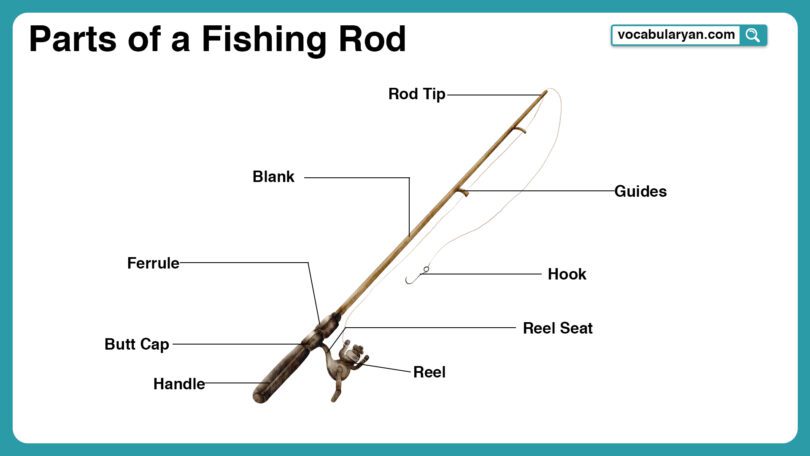
Parts of a Fishing Rod run from the sensitive tip at the top to the butt cap at the bottom. Together, these pieces form the fishing rod anatomy that controls line movement, bite feel, casting power, and pressure when a fish pulls. The blank forms the long shaft, the guides carry the fishing line, the reel seat holds the reel foot, and the handle gives your hand a firm place to cast, retrieve, and control the rod.
A good rod is more than a long stick with a reel attached. The tip bends when a fish bites, the blank carries the rod’s strength, the guides keep the line moving smoothly, and the butt section gives leverage during casting and fighting fish.
Small parts such as the tip top, windings, ferrule, hook keeper, and butt cap also affect how the rod feels in the hand and how it performs on the water.
What Are the Parts of a Fishing Rod?
The parts of a fishing rod are the built-in sections and fittings that make the rod cast, bend, guide line, hold the reel, and sit comfortably in the hand. Most rods have a rod tip, tip top, blank, line guides, windings, reel seat, handle, butt, and butt cap. Multi-piece rods also have a ferrule, and many rods include a hook keeper near the handle.
The reel, hook, lure, bait, and fishing line work with the rod, but they are not the same as rod parts. The reel attaches to the reel seat, the line passes through the guides, and the hook or lure rests on the hook keeper when the rod is not being cast.
Parts of a Fishing Rod include the rod tip, tip top, rod blank, line guides, windings, ferrule, hook keeper, reel seat, handle, fore grip, rear grip, butt, and butt cap.
| Rod Part | Main Function |
|---|---|
| Rod Tip | Shows light bites and bends under pressure |
| Tip Top | Guides the line from the very end of the rod |
| Rod Blank | Forms the main shaft, strength, and bend |
| Line Guides | Keep the fishing line aligned during casting |
| Windings | Hold the guides tightly to the blank |
| Ferrule | Connects sections of a multi-piece rod |
| Hook Keeper | Holds the hook or lure when not casting |
| Reel Seat | Locks the reel foot in place |
| Handle | Gives grip, comfort, and control |
| Butt Cap | Protects the bottom end of the handle |
Main Parts of a Fishing Rod

Fishing rod parts are easiest to understand from top to bottom. The upper section controls bite feel and line movement, the middle section carries bend and strength, and the lower section supports grip, reel placement, and leverage.
Rod Tip
The rod tip is the narrow, flexible section at the top end of the fishing rod. It bends faster than the thicker lower parts of the blank, which makes it important for feeling light bites and watching tiny movements in the line.
A soft rod tip reacts when a small fish nibbles, when a lure taps weeds, or when the line tightens under water. On some rods, the tip bends deeply for light lures and delicate fishing. On heavier rods, the tip still flexes, but it feels firmer and handles stronger fish.
Top Section
On multi-piece rods, the top section is the thinner upper piece of the rod. It carries the rod tip, tip top, and smaller guides, then joins the lower section through the ferrule.
This section is often more delicate than the lower rod piece because it is slim, sensitive, and built to show small line movements. It needs careful handling during travel, assembly, storage, and casting.
Example: If a two-piece rod separates for storage, the top section is the upper piece that holds the tip and several smaller guides.
Tip Top
The tip top is the small guide fixed at the very end of the rod tip. It is the last ring the fishing line passes through before reaching the lure, hook, or bait.
This tiny part takes a lot of line contact during casting and retrieving. A smooth tip top lets the line travel without scraping, while a cracked or rough insert can damage line and weaken knots. Because it sits at the most delicate end of the rod, the tip top is one of the easiest parts to bend, chip, or break.
Example: If the line feels rough while reeling, a damaged tip top may be scraping it every time the line moves.
Rod Blank
The rod blank is the long main shaft of the fishing rod. It gives the rod its length, strength, bend, and overall feel. Most modern blanks are made from graphite, fiberglass, carbon fiber, or blended materials.
Graphite blanks often feel light and sensitive, which makes them strong for detecting bites and working lures. Fiberglass blanks bend more deeply and are known for toughness. Carbon fiber and composite rods can feel crisp, strong, and light, depending on the design.
| Blank Material | Main Feel |
|---|---|
| Fiberglass | Strong, durable, and deeper bending |
| Graphite | Light, sensitive, and crisp in the hand |
| Composite | A mix of strength, sensitivity, and durability |
The blank tapers from a thicker lower section near the handle to a thinner upper section near the tip. That taper controls how the rod bends when casting or when a fish pulls against the line.
Rod action describes where the rod bends most, such as near the tip or deeper through the blank. Rod power describes how much force it takes to bend the rod. These two features come mainly from the blank, tip, and lower rod section, so the blank affects casting feel, hook setting, lure control, and fish-fighting pressure.
Line Guides
Line guides, also called rod eyes or guide eyes, are the ring-shaped fittings spaced along the rod blank. They hold the fishing line away from the rod surface and guide it from the reel to the tip.
Each guide usually has a metal frame and a smooth inner ring, often called an insert. The insert reduces friction as line shoots forward during a cast or pulls tight under a fish. Good guides keep the line path steady, reduce tangles, and spread pressure along the blank.
Guide size and spacing change by rod type. Spinning rods often have larger lower guides because line comes off a spinning reel in loops. Casting rods usually use smaller guides because the line leaves the reel in a straighter path.
The first larger guide near the reel is often called the stripping guide or butt guide. Smaller guides closer to the tip continue the line path and help spread pressure along the blank when the rod bends.
On baitcasting rods, the guides usually face upward when the rod is held for fishing. On spinning rods, the guides usually hang below the blank because the line comes off a spinning reel in larger loops.
Windings
Windings, also called wraps, are the tight thread layers that hold the guides to the rod blank. They are usually sealed under epoxy or a glossy protective finish, which keeps the thread safe from water, rubbing, and wear while holding the guide foot firmly in place.
Windings may look decorative, but they have a real job. They secure guide frames, protect the blank surface around the guide foot, and keep the guide from shifting during casting or pressure from a fish.
Cracked finish, loose thread, or a guide that wiggles can signal damage in this area. On a close-up rod image, windings are easy to spot because they sit like neat bands around the blank at each guide.
Example: When a guide starts twisting sideways, the thread winding around its foot may have loosened or cracked.
Ferrule
The ferrule is the joint where two rod sections connect on a multi-piece fishing rod. One section slides into or over another so the rod can be assembled before fishing and taken apart for travel or storage.
A good ferrule fit should feel snug without forcing the pieces together too hard. If the joint is loose, the rod may click, twist, or separate while casting. If it is pushed too tightly, it may become difficult to pull apart after use.
The thinner extended end is often called the male ferrule, while the receiving hollow side is the female ferrule. A proper connection should stay straight, aligned, and firm without grinding or forcing the sections together.
Ferrules matter because the rod still needs to bend smoothly across the joint. A poorly fitted ferrule can interrupt the rod’s action and create a weak point.
Hook Keeper
The hook keeper is a small loop or clip near the handle where the hook, lure, or jig can rest when the rod is not being cast. It keeps sharp hooks from swinging loose, catching clothing, scratching the blank, or snagging other gear.
This part is small, but it is practical when walking along a bank, moving between fishing spots, storing the rod, or carrying it to the water. Some hook keepers fold flat, while others are fixed metal loops.
A hook keeper is part of the rod. The hook itself is not. The hook belongs to the fishing rig, while the hook keeper is the rod fitting that holds it safely between casts.
Example: After tying on a lure, you can rest one hook point in the hook keeper before walking to another spot.
Reel Seat
The reel seat is the part of the rod that holds the fishing reel in place. It sits above or within the handle area and locks around the reel foot so the reel does not wobble during casting or retrieving.
Most reel seats have a fixed hood, a sliding hood, and a locking ring or threaded collar. The reel foot slides into the hoods, then the locking part tightens down to hold it firmly.
A stable reel seat keeps the rod balanced and makes line control easier. If the reel seat loosens, the reel may twist in the hand, especially when casting hard or fighting a fish.
Close-up detail: the reel seat usually has a firm plastic, graphite, or metal body with threaded parts around the handle.
Handle
The handle is the grip section where your hand holds the fishing rod. It gives comfort, control, and leverage while casting, retrieving, setting the hook, and fighting fish.
Handles are often made from cork, EVA foam, rubber, or blended grip materials. Cork feels light and traditional, while EVA foam is soft, durable, and comfortable in wet conditions. Some rods use split grips, where the handle is separated into two grip areas to reduce weight and expose more blank.
Handle length changes by rod style. Short handles suit light casting and tight spaces. Longer handles give more leverage for heavy lures, surf casting, or larger fish.
Example: A longer rear handle can rest against the forearm or body when a strong fish pulls hard.
Fore Grip and Rear Grip
The fore grip sits in front of the reel seat, while the rear grip sits behind it. Not every rod has a large fore grip, but many heavier rods include one for extra control.
The fore grip gives the upper hand a place to hold the rod when fighting fish or lifting pressure. The rear grip supports the casting hand and helps with leverage during long casts or stronger retrieves.
On lighter spinning and bass rods, the fore grip may be short or almost absent. On trolling, surf, saltwater, or heavy boat rods, both grip areas may be larger because the angler needs more hand support.
Butt
The butt is the lower section of the fishing rod near the bottom of the handle. It gives leverage and balance, especially when the rod bends under pressure.
During a fight with a stronger fish, the butt section can press against the body, forearm, belt, or rod holder. This lower section helps transfer pressure away from the wrist and into a stronger body position.
Rod butts vary by fishing style. A light freshwater rod may have a small butt section, while a surf rod or offshore rod may have a longer, tougher butt built for hard casting and heavy fish.
Butt length also changes the amount of leverage you get. Some rods use split grip butts, gimbaled butts, or rounded doorknob-style ends, depending on the rod design and fishing style.
Example: When a large fish pulls, the butt section helps you brace the rod instead of holding all the pressure in your fingers.
Butt Cap
The butt cap is the protective end cover at the bottom of the fishing rod. It is usually made from rubber, plastic, cork, or a tough synthetic material.
This cap protects the handle end from knocks, scratches, and wear when the rod is placed on the ground, leaned against a wall, or pressed against the body. A soft rubber butt cap also adds grip when the rod is braced during a fight.
On heavier rods, the butt cap may be thicker and more durable. On lighter rods, it may be small and smooth, mainly protecting the bottom edge of the handle.
How the Parts of a Fishing Rod Work Together
A fishing rod works as one connected system. The handle gives your hand control, the reel seat holds the reel steady, the blank bends under load, the guides direct the line, and the tip shows movement from the lure, bait, or fish.
During a cast, energy travels from your hand through the handle and blank. The rod bends, then straightens, sending the line forward through the guides and tip top. During a retrieve, the guides keep the line aligned as the reel brings it back.
When a fish bites, the tip may tap, dip, or load downward. The blank then carries the pressure as the fish pulls. The guides spread the line tension along the rod, while the handle and butt help your hand and body control the fight.
The rod performs well when each part stays aligned, tight, smooth, and free from damage.
Fishing Rod Parts vs Reel and Tackle Parts
The fishing rod is only one part of the fishing setup. Some items work with the rod but are not built into it.
The reel attaches to the reel seat and stores the fishing line on a spool. It controls casting distance, line retrieval, drag pressure, and line release.
The fishing line runs from the reel through the guides and tip top. It connects the rod and reel to the lure, hook, or bait.
The hook is a sharp curved metal piece that catches the fish. It belongs to the rig, not the rod. When the rod has a hook keeper, the hook can rest there safely while the rod is being carried.
The lure or bait attracts fish in the water. Lures may look like minnows, worms, insects, or flashing metal, while bait may include worms, shrimp, corn, or other natural food.
This difference matters because a rod anatomy guide should focus on built-in rod parts. The reel, line, hook, lure, and bait complete the fishing setup, but they are separate from the rod itself.
FAQs
Q1. What are the main Parts of a Fishing Rod?
The main Parts of a Fishing Rod include the rod tip, tip top, rod blank, line guides, windings, ferrule, hook keeper, reel seat, handle, fore grip, rear grip, butt, and butt cap.
Q2. What is the rod blank on a fishing rod?
The rod blank is the long main shaft of the fishing rod. It gives the rod its length, strength, bend, sensitivity, and overall action.
Q3. What do guides do on a fishing rod?
Guides direct the fishing line along the rod blank. They reduce friction, keep the line aligned, and spread pressure along the rod during casting and fighting fish.
Q4. What is the tip top on a fishing rod?
The tip top is the final guide fixed at the very end of the rod tip. The fishing line passes through it before reaching the lure, hook, or bait.
Q5. Is the reel part of a fishing rod?
The reel is not a built-in part of the fishing rod. It attaches to the reel seat and works with the rod to cast, retrieve, and control the fishing line.
Q6. Is the hook part of a fishing rod?
The hook is not part of the rod. It is tackle attached to the fishing line. The hook keeper is the rod part that holds the hook or lure when the rod is not in use.
Q7. What is a ferrule on a fishing rod?
A ferrule is the joint that connects sections of a multi-piece fishing rod. It lets the rod come apart for travel or storage while keeping the sections aligned during use.
Q8. What is the handle of a fishing rod made of?
Fishing rod handles are often made from cork, EVA foam, rubber, or synthetic grip material. These materials give the hand comfort and control while casting or fighting fish.
Q9. What is the butt cap used for?
The butt cap protects the bottom of the rod handle from wear and impact. It also gives grip when the rod is braced against the body during a stronger fight.
Q10. What is the difference between a fishing rod and a fishing pole?
A fishing rod usually has line guides, a reel seat, and a reel attached. A fishing pole is simpler and may only have a line fixed near the tip, without guides or a reel seat.
Conclusion
Parts of a Fishing Rod work together from tip to butt. The tip and tip top show line movement, the blank bends and carries pressure, the guides direct the line, the windings hold guides in place, and the reel seat keeps the reel stable.
The handle, grips, butt, and butt cap shape comfort and control in the hand. Once each part is easy to recognize, a fishing rod becomes easier to inspect, carry, set up, and use on the water.
You May Also Like