
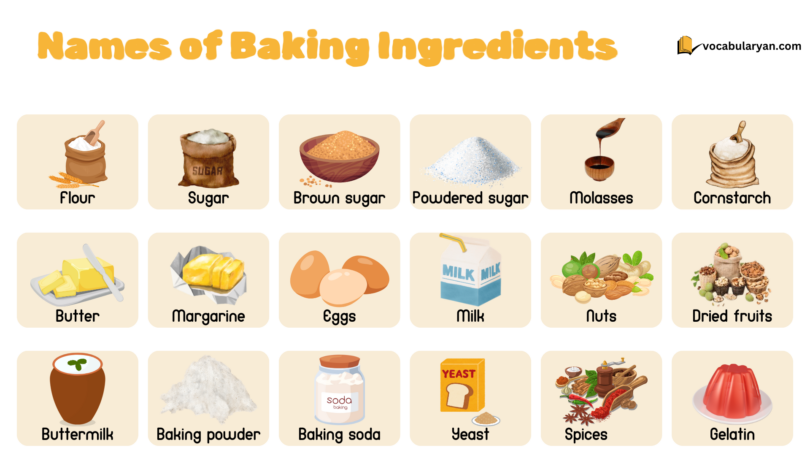
Almost every baking recipe uses the same short list of English words: flour, sugar, eggs, butter, milk, a raising agent, and salt. Learning the names of baking ingredients in English lets you read any recipe with confidence, ask for the right thing at the shop, and follow a cooking video without pausing to translate. Each ingredient below comes with a picture, the English name, and a plain line of what it does in the mix.
The seven core baking ingredients are flour, sugar, eggs, butter (or another fat), milk (or another liquid), a raising agent (baking powder, baking soda, or yeast), and salt. Every other name that follows fits one of those roles, plus a small extra set for texture, colour, and gluten-free baking.
Common Baking Ingredients With Pictures
Every category groups the ingredients by what they do, not by how they look. Once you know the role, you can swap between brands and countries without breaking a recipe.
Flours
Flour gives baked goods their structure by trapping air, binding the mix, and turning dough into something you can slice. The type of flour changes everything about how a bread, cake, or pastry turns out, so recipes name the one they want.
Flour: the base of nearly every baked good, a fine powder ground from grain, almost always wheat.
All-Purpose Flour: a middle-protein wheat flour that works across cookies, cakes, muffins, quick breads, and pancakes, which is why it is the safest choice when a recipe just says “flour.”
Bread Flour: high-protein wheat flour that develops strong gluten, which is what gives loaves, bagels, and pizza dough their chewy pull.
Cake Flour: finely milled and low in protein, so cakes made with it come out with the soft, tender crumb you want in sponge cakes and delicate layer cakes.
Whole Wheat Flour: ground from the entire wheat kernel with the bran and germ intact, which is why rustic breads and hearty muffins made with it taste nutty and feel denser.
Self-Rising Flour: all-purpose flour already mixed with salt and baking powder, so you can skip the leavener when the recipe is for scones, biscuits, or a quick sponge.
Almond Flour: blanched almonds ground into a fine gluten-free flour, forming the base of macarons, gluten-free cakes, and low-carb baking.
Types of Flour Used in Baking
| Flour | Protein level | Best for |
|---|---|---|
| Cake flour | Low (7–9%) | Sponge cakes, tender cakes |
| All-purpose flour | Medium (10–12%) | Cookies, muffins, everyday baking |
| Bread flour | High (12–14%) | Chewy bread, bagels, pizza dough |
| Whole wheat flour | Medium–high | Rustic breads, hearty muffins |
| Almond flour | Gluten-free (nut-based) | Macarons, gluten-free cakes |
Sugars and Sweeteners
Sugar does more than sweeten a bake. It browns the crust, keeps the crumb moist, softens the texture, and traps air with butter so a cake rises, which is why every type of sugar has a role a recipe was written for.
Sugar: the English default name for white granulated sugar, made from sugarcane or sugar beets.
Granulated Sugar: the standard fine white crystals most recipes ask for, small enough to dissolve quickly during creaming and syrup work.
Caster Sugar: superfine white sugar (called superfine sugar in the US) with crystals smaller than granulated, which is why it dissolves faster and gives cakes and meringues a smoother texture.
Brown Sugar: soft, moist sugar coloured with molasses, and that molasses is what adds the caramel notes and chewy edges you taste in cookies, brownies, and banana bread.
Powdered Sugar: sugar milled to a fine powder with a little cornstarch, also called confectioner’s sugar or icing sugar, and the go-to sweetener whenever you need a smooth icing, glaze, or dusting.
Demerara Sugar: coarse golden-brown raw cane sugar with a mild toffee flavour, sprinkled over muffins and biscuits for a crunchy top.
Honey: a thick natural sweetener made by bees from flower nectar, which brings sweetness, moisture, and a distinct floral note to whatever it goes into.
Molasses: the dark, thick, slightly bitter syrup left over from sugar refining, and its deep flavour is what makes gingerbread, dark cookies, and rich fruit cakes taste the way they do.
Maple Syrup: boiled down from maple tree sap into a warm brown syrup that sweetens pancakes and gives cakes a woody, roasted note.
Types of Sugar Used in Baking
| Sugar | Texture | Best for |
|---|---|---|
| Granulated | Fine, dry crystals | Everyday baking, creaming with butter |
| Caster (superfine) | Extra-fine crystals | Sponge cakes, meringues |
| Brown | Soft, damp | Cookies, brownies, muffins |
| Powdered (icing) | Powder-fine | Icings, glazes, dusting |
| Demerara | Coarse, crunchy | Toppings, streusel |
Dairy Products and Fats
Fat and dairy give a bake its richness and flavour, and they soften the crumb, add moisture, and stop cakes and pastries from drying out during the bake.
Butter: a creamy dairy fat churned from cream, and that milk fat is what brings the rich flavour and tender, flaky texture you taste in cookies, cakes, and pastry.
Margarine: a butter substitute made from vegetable oils, softer and higher in water than butter, which changes how cookies spread and how pastry flakes.
Shortening: solid, flavourless vegetable fat used in pie crusts, biscuits, and frostings when you want an extra tender, crumbly texture.
Lard: soft white fat rendered from pork, traditional in flaky pie crusts, biscuits, and savoury pastries.
Eggs: large hen’s eggs, used whole or split into yolks and whites, that bind the mix, add moisture, and lift cakes when beaten with air.
Milk: fresh cow’s milk, whole or semi-skimmed by default, which adds liquid to the batter, softens the crumb, and helps the crust brown.
Buttermilk: tangy, slightly thick fermented milk that reacts with baking soda, giving scones, pancakes, and cakes an extra tender lift.
Heavy Cream: high-fat cream at 35% fat or more (called double cream in the UK), whipped for toppings and stirred into ganache and fillings.
Sour Cream: thick, tangy cultured cream that adds moisture and a mild tang to coffee cakes, cheesecakes, and muffins.
Cream Cheese: a soft, mild fresh cheese that forms the base of classic cheesecakes and cream cheese frosting.
Condensed Milk: very sweet, thickened milk with sugar added, and the sweet heart of fudge, tres leches cake, and no-bake desserts.
Evaporated Milk: concentrated milk with roughly 60% of the water removed, which is why it adds so much creaminess to pumpkin pie, custards, and dulce de leche.
Oil: liquid vegetable fat such as sunflower, canola, or olive oil, which keeps cakes and muffins moist and light, especially in carrot cake and brownies.
Milk and Cream in Baking
Recipes name a specific dairy for a reason. Milk keeps everyday cakes soft, while buttermilk reacts with baking soda for an extra tender lift. Heavy cream whips into a light topping and enriches fillings, and sour cream adds a mild tang that keeps cakes moist for days. Swap one for another only when you understand what the swap actually changes in texture and rise.
Leavening Agents
Leaveners are what give baked goods their lift, so without one a cake stays dense and a bread stays flat. Every raising agent works a different way, and that difference is what recipes turn on.
Baking Powder: a dry raising agent made from baking soda plus a powdered acid, which reacts with liquid and heat to release carbon dioxide and give cakes and quick breads their rise.
Baking Soda: pure sodium bicarbonate that needs an acid in the recipe (buttermilk, lemon juice, cocoa, or yoghurt) to react and lift the batter.
Yeast: a living fungus (Saccharomyces cerevisiae) sold as active dry, instant, or fresh, which feeds on sugar and releases gas, raising bread and pizza dough slowly with real flavour.
Cream of Tartar: a white acid powder left in wine barrels after fermentation, best known for stabilising whipped egg whites in meringues and for pairing with baking soda inside baking powder.
Baking Powder vs Baking Soda
The two look almost identical in the tin, and swapping one for the other ruins a recipe. Here is the plain difference in a line each.
| Leavener | What it needs | How it works |
|---|---|---|
| Baking soda | An acid in the recipe (buttermilk, lemon, cocoa, yoghurt) | Reacts fast; batter goes in the oven at once |
| Baking powder | Nothing extra, the acid is already inside | Reacts twice, once with liquid and again with heat |
If a recipe calls for baking soda, you cannot swap in baking powder without adjusting the acid. If it calls for baking powder, you cannot swap in baking soda without adding an acid.
Flavourings and Spices
Flavourings turn a plain cake into a chocolate cake, a vanilla cake, or a spiced holiday cake, and a pinch or a teaspoon is what changes the whole feel of a bake.
Salt: fine table salt or sea salt that sharpens sweetness, balances bitter notes, and strengthens gluten in bread dough, so no bake works without it.
Vanilla Extract: vanilla beans soaked in alcohol until the flavour draws off as a rich brown liquid, which is why it turns up in more cakes, cookies, custards, and buttercream than any other flavouring.
Almond Extract: a strong, sweet flavouring pressed from bitter almonds, so a drop or two is enough to lift macarons, marzipan, biscotti, and cherry pastries.
Cocoa Powder: dry, bitter powder from ground and defatted cacao beans, and the two kinds behave differently: natural cocoa reacts with baking soda, while Dutch-process cocoa is alkalised and does not.
Cinnamon: warm, sweet ground bark from the cinnamon tree, and the spice behind cinnamon rolls, apple pies, and spice cakes.
Nutmeg: a warm, slightly nutty spice grated from the nutmeg seed, and the finishing note in pumpkin pie, custards, and holiday breads.
Ginger: ground dried root of the ginger plant, sharp and warming, which is the flavour that powers gingerbread, molasses cookies, and carrot cake.
Food Colouring: concentrated liquid or gel colour that tints icings, doughs, and cake batter, and gel colours are stronger than liquid ones so they change the batter less.
Binding and Thickening Agents
Binders and thickeners keep fillings smooth, set custards, and stop pastry creams from turning runny, and small amounts do a lot of the work.
Cornstarch: a fine white starch from corn that thickens pie fillings, custards, and pastry cream, and it also softens all-purpose flour into a cake-flour substitute.
Gelatin: a protein set from animal collagen, sold as powder or sheets, and used to set marshmallows, panna cotta, mousse, and glossy dessert glazes.
Xanthan Gum: a fine white powder made by fermentation, and a small pinch is enough to bind gluten-free doughs so they do not crumble.
Nuts and Dried Fruit Add-Ins
Add-ins are what give a bake its identity, so a chocolate chip cookie without its chips is just a cookie, and a fruit cake without its fruit is just a plain sponge.
Chocolate Chips: small drops of chocolate shaped to keep their form in the oven, sold as milk, dark, semi-sweet, or white, and folded into cookies, muffins, and blondies.
Almonds: sweet tree nuts sold whole, sliced, slivered, flaked, or ground, and the nut behind biscotti, macarons, frangipane, and Bakewell tart.
Walnuts: rich, slightly bitter tree nuts with a wrinkled shape, classic in banana bread, brownies, and coffee cake.
Pecans: sweet, buttery tree nuts, and the star of pecan pie, praline, and Southern American baking.
Raisins: dried grapes, sweet and chewy, and a staple of oatmeal cookies, hot cross buns, fruit cakes, and bread pudding.
Cranberries: dried cranberries with a tart-sweet flavour that go into scones, muffins, and holiday breads.
Apricots: dried apricots with a chewy texture and mild tang, and the fruit note in fruit cakes, granola bars, and stollen.
Oats: rolled or quick-cooking oats that give a chewy texture to oatmeal cookies, flapjacks, and granola bars.
Cornmeal: coarsely ground dried corn, from fine to polenta-coarse, and the grain behind cornbread, English muffins, and pizza-tin dusting.
Coconut: dried, shredded, or desiccated coconut flesh, sweetened or unsweetened, and the signature note in macaroons, coconut cake, and lamingtons.
Sprinkles: tiny sugar decorations in many colours and shapes (jimmies, nonpareils, sanding sugar), scattered over cookies, cupcakes, and doughnuts.
FAQs
Q1. What are the seven main baking ingredients?
The seven core baking ingredients are flour, sugar, eggs, a fat (butter or oil), a liquid (milk or water), a raising agent (baking powder, baking soda, or yeast), and salt. Almost every everyday recipe builds on that short set, and everything else adds flavour, texture, or colour on top.
Q2. What is the difference between baking powder and baking soda?
Baking soda is pure sodium bicarbonate and needs an acid in the recipe, such as buttermilk, lemon juice, or cocoa, to react. Baking powder already has a dry acid built in, so it works on its own with just liquid and heat, which is why swapping one for the other without changing the rest of the recipe leaves the bake flat, bitter, or metallic.
Q3. What can I use instead of eggs in baking?
Common egg replacements are mashed banana or applesauce (¼ cup per egg) for cakes and muffins, ground flaxseed mixed with water (1 tablespoon flaxseed plus 3 tablespoons water per egg) for cookies and quick breads, and silken tofu for cheesecakes and brownies. Commercial egg replacers such as Bob’s Red Mill also work well for most bakes.
Q4. What is the difference between granulated, caster, and powdered sugar?
Granulated sugar has standard fine crystals and is the everyday white sugar in most recipes, while caster sugar (called superfine sugar in the US) has smaller crystals that dissolve faster, so it is best for sponge cakes and meringues. Powdered sugar, also called confectioner’s sugar or icing sugar, is milled to a fine powder with a little cornstarch and used for icings, glazes, and dusting.
Q5. Is butter better than margarine for baking?
Butter gives a richer flavour and a tender, flaky texture, which is why it wins in shortbread, croissants, and pie crust. Margarine has more water and less fat, so it changes cookie spread and pastry flake, but it still works for a dairy-free bake or a softer, cheaper cookie.
Q6. What is cream of tartar used for in baking?
Cream of tartar stabilises whipped egg whites so meringues and angel food cakes keep their volume, and it also stops sugar from crystallising in syrups and pairs with baking soda inside baking powder. A small pinch is enough in most recipes.

Leave a Comment