
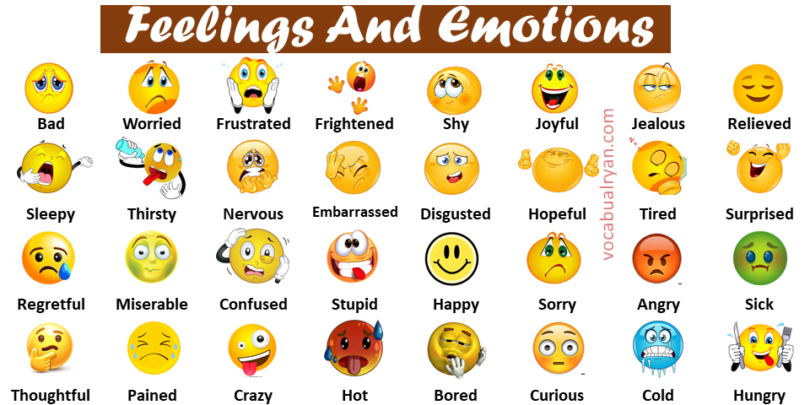
English has hundreds of feeling and emotion words. The 12 main families are happy, sad, angry, scared, surprised, disgusted, loved, calm, confused, bored, proud, and ashamed, each with an intensity ladder from mild to extreme.
English has 12 main feeling and emotion families: happy, sad, angry, scared, surprised, disgusted, loved, calm, confused, bored, proud, and ashamed. Each family has an intensity ladder from mild versions to extreme ones, giving learners over 80 precise words for how they feel.
Common Feeling and Emotion Words With Examples
Each family is defined by a core emotion, from mild moods to intense reactions. Happy, sad, angry, and scared are the four most fundamental and describe most everyday feelings. The other eight are surprised, disgusted, loved, calm, confused, bored, proud, and ashamed.
Happy and Joyful Feeling Words
Happy and joyful feeling words describe the pleasure of life going well or a moment of pure enjoyment.
Happy: a general good feeling of pleasure and satisfaction with your life or a moment in it. “She was happy to see her old college friends again after ten years apart.”
Joyful: a full deep happiness that shows on the face and in the body. “The children were joyful when the school bus finally reached the amusement park entrance.”
Cheerful: noticeably positive and light in mood, seen in a smile and an upbeat voice. “Her cheerful morning greeting brightened the whole office before the workday even started.”
Content: quietly satisfied with what you have, without needing anything more right now. “After finishing the last chapter of his novel, he sat back content and looked out the window at the sunset.”
Ecstatic: overwhelmingly happy, at the very top end of joy. “She was absolutely ecstatic when she opened her exam results and saw she had passed with distinction.”
Delighted: happily pleased about something specific that has happened. “We are delighted to announce that our daughter has been accepted to her first-choice university this autumn.”
Glad: a mild version of happy, about something small going right. “I’m so glad you were able to make it to dinner tonight; it wouldn’t have been the same without you here.”
Thrilled: excited and happy at the same time, about a piece of good news. “He was thrilled to hear that the promotion he had worked toward for years was finally his.”
Sad and Down Feeling Words
Sad and down feeling words describe unhappiness, from a small disappointment to deep grief.
Sad: feeling unhappy or sorry, in response to something bad happening. “She was sad to leave the small town where she had grown up and moved away for university.”
Unhappy: not happy, either about a general situation or a specific moment. “He had been unhappy in his job for months before he finally decided to look for something new.”
Depressed: a heavy, lasting sadness that affects daily life and can be a medical condition. “After losing his best friend, he was depressed for weeks and struggled to leave the house.”
Sorrowful: deep sadness with a sense of loss, more formal than sad. “The sorrowful expression on her mother’s face told her the news from the hospital was worse than expected.”
Heartbroken: crushed by grief, after the end of a relationship or the loss of a loved one. “She was heartbroken when her boyfriend of five years told her he wanted to break up.”
Melancholy: a quiet, thoughtful sadness that comes and goes for no obvious reason. “The rainy Sunday afternoon put him in a melancholy mood as he flipped through old photographs.”
Gloomy: low in spirits and dark in outlook, over an extended stretch of time. “He was gloomy all week after his football team was knocked out of the tournament in the first round.”
Disappointed: sad because something did not turn out the way you hoped. “The children were disappointed when the trip to the beach was cancelled because of the storm.”
Angry and Frustrated Feeling Words
Angry and frustrated feeling words describe displeasure and hostility, from mild irritation to violent rage.
Angry: feeling strong displeasure and hostility, ready to react against something or someone. “She was angry when she discovered someone had scratched her new car in the parking lot.”
Annoyed: mildly angry at something small that has gone wrong. “He was annoyed by the neighbour’s dog barking through his early-morning video call with a client.”
Frustrated: angry and stuck at the same time, when you cannot fix what is going wrong. “She was frustrated after her third attempt to reset the router still did not fix the connection.”
Irritated: slightly bothered and annoyed, quicker to react than usual. “She was irritated by the constant interruptions from her phone while she was trying to write her essay.”
Furious: extremely angry, past the point of being able to speak calmly. “He was furious when he discovered his laptop had been stolen from the coffee shop table.”
Enraged: filled with violent, out-of-control anger past the point of reason. “The crowd was enraged at the referee’s decision and started throwing water bottles onto the field in protest.”
Resentful: feeling a lasting bitter anger at unfair treatment. “She felt resentful of her older sister always getting the first choice of everything at home growing up.”
Cross: a lightly angry British-English word, used more in speech than in writing. “The teacher was cross with the whole class for talking during the fire drill instructions.”
Scared and Anxious Feeling Words
Scared and anxious feeling words describe fear and worry, from a fluttering unease to full panic.
Scared: feeling fear because of danger or the expectation of something bad. “He was scared to walk home alone through the dark park after his evening class.”
Nervous: slightly worried and unsettled, in the run-up to a big event. “She was nervous the morning of her driving test, checking the highway code one more time.”
Anxious: worried about something specific in the future, with physical signs like a fast heartbeat. “He was anxious about the biopsy results and did not sleep the night before the appointment.”
Worried: thinking about a possible bad outcome and unable to settle the mind. “She was worried about her elderly father living alone in the family home after his fall last winter.”
Terrified: extremely scared, past the point of thinking straight. “The children were terrified when the power went out during the thunderstorm and the wind rattled the windows.”
Panicked: in the grip of sudden overwhelming fear that shuts down straight thinking. “He panicked when he realised he had left his passport at the hotel and his flight was in two hours.”
Apprehensive: slightly worried and uncertain about what is coming next. “She was apprehensive about starting her new job at a much larger company across town after ten years at her old firm.”
Uneasy: having a general low-level feeling that something is wrong, without being sure what. “He felt uneasy walking down the empty street late at night and quickened his pace toward the taxi rank.”
Surprised and Amazed Feeling Words
Surprised and amazed feeling words describe the reaction to something unexpected, wanted or not.
Surprised: feeling a moment of something unexpected. “She was surprised to find her college roommate standing at her front door on a Tuesday morning without warning.”
Shocked: strongly surprised in a way that is hard to process. “He was shocked when he heard that his old boss had passed away suddenly the previous week.”
Astonished: so surprised you can barely believe what you are seeing or hearing. “She was astonished at how much her nephew had grown since she last saw him three years ago at Christmas.”
Amazed: surprised in a positive way, at something impressive or unexpectedly good. “The audience was amazed by the young pianist’s flawless performance of the difficult Rachmaninoff concerto that evening.”
Stunned: so surprised you cannot speak or react for a moment. “She was stunned by the news that she had won the international poetry prize for her first collection.”
Speechless: so surprised or moved that you literally have no words. “He was speechless when his parents surprised him with a car on his eighteenth birthday.”
Disgusted and Repelled Feeling Words
Disgusted and repelled feeling words describe strong dislike, physical or moral.
Disgusted: feeling strong dislike for something offensive or unpleasant. “She was disgusted by the mess her flatmates had left in the kitchen after the weekend party.”
Revolted: intensely disgusted, physically pulling back from what caused the reaction. “He was revolted by the smell of rotten food he found at the back of the office fridge.”
Repulsed: strongly turned away by something you find offensive. “She was repulsed by the way he talked about his ex-girlfriend at dinner and left the restaurant early.”
Appalled: shocked and disgusted at the same time, at wrong behaviour. “The teachers were appalled at the language they overheard in the school corridor between classes.”
Sickened: physically and morally revolted, by cruelty or injustice. “She was sickened by the news reports about the animal shelter conditions and immediately started a fundraising campaign.”
Horrified: filled with a mix of shock and disgust that is hard to shake off. “He was horrified to learn that his friend had been driving under the influence for years without anyone realising.”
Loved and Affectionate Feeling Words
Loved and affectionate feeling words describe warmth toward another person, family, or something you care about.
Loved: feeling that others deeply care for you as a person. “She felt loved when her family gathered from three different countries for her fiftieth birthday party.”
Adored: deeply loved and admired by someone as a person. “The little boy was adored by his grandparents, who spoiled him with sweets and small gifts every Sunday afternoon.”
Cherished: loved and treated as extremely valuable. “She cherished the handwritten letters from her late husband and kept them in a wooden box on her nightstand.”
Fond: having a warm, gentle liking for a person, place, or thing. “He was fond of his old university town and returned for a visit every autumn to see his former professors.”
Affectionate: freely expressing love and warmth through touch, words, and small gestures. “Her new golden retriever was affectionate with everyone, from the postman to strangers on the street.”
Tender: gentle and warm-hearted, especially toward someone weaker or younger. “The tender way he spoke to his newborn niece brought tears to his mother’s eyes at the christening.”
Smitten: newly and intensely in love, at the early lightheaded stage. “He was smitten from the moment he met her at his cousin’s wedding last summer.”
Devoted: committed to loving someone completely, over the long term. “She was devoted to her aging mother and drove three hours every weekend to check on her.”
Calm and Peaceful Feeling Words
Calm and peaceful feeling words describe a settled state without stress, worry, or agitation.
Calm: not upset, worried, or angry, thinking clearly under pressure. “She stayed calm when the fire alarm went off and guided the children out of the classroom in single file.”
Peaceful: feeling settled and free from conflict or distress. “The retirees felt peaceful at their small cottage by the lake, far from the noise and rush of the city.”
Relaxed: unwound and free from tension in mind and body. “After a long yoga class, she felt relaxed and slept the deepest she had in weeks.”
Serene: deeply, quietly calm with a beauty to the mood. “Her serene smile as she read to her children on the porch was the family’s favorite Sunday memory.”
Tranquil: completely undisturbed, quieter and more formal than calm. “The tranquil monastery garden was a favorite place for guests to sit and think in silence for hours at a time.”
Chilled: informal British-English word for relaxed and easygoing, opposite of stressed. “They spent a chilled evening on the sofa watching an old movie and eating takeaway curry.”
At Ease: comfortable and relaxed in a social setting. “The new employee was at ease within a week of joining the team thanks to a warm welcome from her manager.”
Mellow: relaxed and softened in mood, more mature than laid-back. “He grew mellow with age and no longer got upset about the small setbacks that had once bothered him.”
Confused and Uncertain Feeling Words
Confused and uncertain feeling words describe the state of not being able to think clearly about something.
Confused: unable to understand something or think straight about a decision. “She was confused by the new tax form and called her accountant for clarification on the two conflicting sections.”
Puzzled: curiously confused, wanting to work something out but not sure how. “He was puzzled by the strange noise coming from the basement every night around midnight.”
Bewildered: overwhelmingly confused, unable to make sense of what is happening. “The tourist looked bewildered by the maze of narrow streets in the old part of the city.”
Uncertain: not sure what to think or do next. “She was uncertain whether to accept the job offer in Berlin or stay at her current company in London.”
Torn: confused between two options that both have their pull. “He was torn between spending the summer in his home country and traveling with his university friends.”
Ambivalent: feeling two opposite feelings at once about a person or situation. “She was ambivalent about her promotion because it meant more money but far less time with her children.”
Bored and Tired Feeling Words
Bored and tired feeling words describe low energy, low interest, or the need for rest.
Bored: unhappy because there is nothing engaging to do. “The children were bored on the long car journey and started arguing in the back seat about the music.”
Tired: in need of rest or sleep after physical or mental effort. “She was tired after a full day of teaching and just wanted to sit down with a cup of tea and quiet.”
Exhausted: completely drained, past the point of being able to keep going. “He was exhausted after three back-to-back night shifts at the hospital and fell asleep on the sofa.”
Weary: worn down over time, more emotional and long-lasting than physically tired. “She was weary of hearing the same complaints from her housemates every morning at breakfast.”
Drained: emptied of energy after a hard experience or a long conversation. “He felt drained after the long conversation with his father about the family finances and inheritance planning.”
Sluggish: slow and heavy, unable to get moving. “She felt sluggish all morning after skipping breakfast and had to force herself through her workout at the gym.”
Proud and Confident Feeling Words
Proud and confident feeling words describe positive self-belief and satisfaction with achievement.
Proud: pleased with your own achievement or the achievement of someone close to you. “She was proud when her son gave his first public speech at the school assembly.”
Confident: sure of your own ability to handle something. “He was confident going into the interview because he had spent the whole weekend preparing for every question.”
Self-Assured: calmly confident in a way that shows in body language and voice. “Her self-assured presentation at the board meeting impressed the senior executives immediately and won her a promotion.”
Empowered: feeling strong and capable of making a change. “She felt empowered after the leadership course and asked her boss for a bigger role on the team.”
Accomplished: aware that you have achieved something worthwhile after real effort. “He felt accomplished after finishing the marathon he had been training for over the past eight months in every weather.”
Capable: knowing that you can handle the task in front of you. “She was capable of running the entire department while her boss was away on parental leave.”
Ashamed and Guilty Feeling Words
Ashamed and guilty feeling words describe the discomfort of knowing you have done something wrong.
Ashamed: feeling bad about something you have done or something about yourself. “He was ashamed of the way he had spoken to his mother during their argument the night before.”
Guilty: aware that you have done something wrong, weighed down by it. “She felt guilty about lying to her best friend and confessed the whole story a week later over coffee.”
Embarrassed: feeling awkward and self-conscious in front of others. “He was embarrassed when he tripped over his own feet during his best man’s speech at the wedding.”
Regretful: wishing you had done something differently in the past. “She was regretful about turning down the exchange program in Paris when she was a student.”
Humiliated: deeply shamed in a public way that damages self-respect. “He felt humiliated when his boss criticised his work in front of the entire team at the Monday meeting.”
Sorry: feeling regret and an urge to apologise for a wrong. “She was sorry for forgetting her sister’s birthday and sent flowers with a handwritten note the next morning.”
Feeling Words That Sound Similar
Some feeling words look close in meaning but sit at different levels of intensity, and picking the right one makes your English more precise.
Feeling vs Emotion vs Mood
| Term | Meaning |
|---|---|
| Feeling | The personal sensation of an emotion, with a physical side too |
| Emotion | The mental and biological reaction to a situation |
| Mood | A longer-lasting state that colors many emotions at once |
A feeling is what you notice inside; an emotion is what a psychologist would name; a mood is the background weather of your day.
Happy Intensity Ladder
| Level | Word |
|---|---|
| Mild | Glad |
| Regular | Happy |
| Strong | Delighted |
| Extreme | Ecstatic |
Sad Intensity Ladder
| Level | Word |
|---|---|
| Mild | Down |
| Regular | Sad |
| Strong | Depressed |
| Extreme | Devastated |
Angry Intensity Ladder
| Level | Word |
|---|---|
| Mild | Annoyed |
| Regular | Angry |
| Strong | Furious |
| Extreme | Enraged |
Scared Intensity Ladder
| Level | Word |
|---|---|
| Mild | Nervous |
| Regular | Scared |
| Strong | Terrified |
| Extreme | Petrified |
FAQs
Q1. What is the difference between feelings and emotions?
Feelings and emotions are related but distinct. An emotion is a short mental and biological reaction to a situation, like the sudden fear of a loud noise. A feeling is the conscious personal experience of that emotion, plus any physical sensation attached to it. A mood is a longer-lasting state that colors many feelings and emotions at once.
Q2. What are the core emotions in English?
The six core emotions recognised by psychologists (Ekman’s model) are happiness, sadness, anger, fear, surprise, and disgust. Some models add love, contempt, and shame as core emotions. Every other feeling word in English (proud, guilty, calm, jealous, bored) is a variation or combination of these core families.
Q3. What are positive emotion words?
Positive emotion words describe pleasant feelings. The main ones are happy, joyful, cheerful, content, ecstatic, delighted, glad, thrilled, calm, peaceful, relaxed, serene, proud, confident, loved, adored, and grateful. Positive emotions build well-being over time and are worth naming precisely.
Q4. What are negative emotion words?
Negative emotion words describe unpleasant feelings. The main ones are sad, angry, scared, disgusted, ashamed, guilty, embarrassed, jealous, lonely, worried, anxious, frustrated, and disappointed. Naming a negative emotion accurately is the first step to working through it.
Q5. How do you describe strong emotions in English?
English has intensity ladders inside every emotion family. To describe strong emotions, use the top-of-ladder word: ecstatic instead of happy, furious instead of angry, terrified instead of scared, devastated instead of sad. You can also add intensifiers like absolutely, completely, or utterly.
Q6. How do you say “I feel” in English?
Common English phrases for expressing emotions are: “I feel happy,” “I’m feeling sad today,” “I’ve been anxious about this all week,” “That makes me angry,” “I’m so proud of you.” You can also say “I’m in a good mood,” “I’m not in the mood,” “I’ve got mixed feelings about it,” or “My feelings are all over the place.”

Leave a Comment