
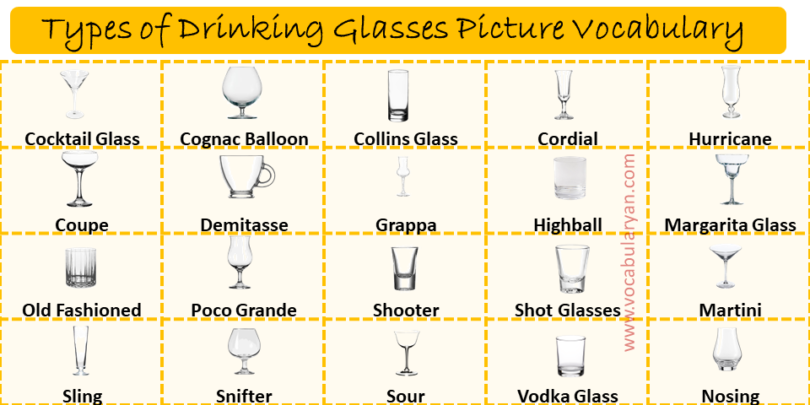
Drinking glasses come in eight main families in English: everyday glasses, wine, beer, whiskey, cocktail, shot, hot-drink cups, and specialty vessels like the copper Moscow mule mug. Each glass has a shape matched to its drink, and each name has a specific use in a home, a bar, or a restaurant.
The eight main families of drinking glasses are everyday drinking glasses (water, juice, tumbler, highball), wine glasses (red, white, champagne flute), beer glasses (pint, tankard, stein), whiskey and spirit glasses (rocks, snifter, Glencairn), cocktail glasses (martini, coupe, hurricane), shot and liqueur glasses, hot-drink cups and mugs (coffee mug, teacup, demitasse), and specialty glasses like the copper Moscow mule mug.
Common Types of Drinking Glasses With Pictures
Each family is defined by the drink it goes with. Everyday, wine, and beer are the three most familiar in most households. The other five are whiskey and spirit, cocktail, shot and liqueur, hot-drink cups and mugs, and specialty glasses.
Everyday Drinking Glass Names
Everyday drinking glasses are the glasses on the dining table for water, juice, milk, and soft drinks.
Water Glass: everyday dining-table glass with straight or slightly tapered sides, a flat base, and an 8 to 12 ounce capacity. It is the most common glass on a laid table, poured from a jug at every family meal and every restaurant around the world.
Juice Glass: stemless glass with a wide flat base and a 5 to 8 ounce capacity, shorter than the water glass beside it. It is set at every breakfast table for a serving of orange juice, apple juice, or tomato juice, and doubles as a small serving glass for smoothies.
Milk Glass: medium tumbler with straight sides and a heavier base, sized for a cold serving of milk. It is the everyday glass for milk at breakfast, with a stack of cookies after school, or with a slice of chocolate cake at supper.
Tumbler: flat-bottomed stemless glass with straight or slightly curved sides, made from thick or thin glass in every household kitchen. It is the general-purpose vessel for water, juice, soda, iced coffee, and any everyday drink from morning to night.
Highball Glass: narrow straight-sided glass around 8 to 12 ounces, taller than a rocks glass but shorter than a Collins. Bartenders reach for it for classic mixed drinks like gin and tonic, whisky and soda, and vodka and orange juice.
Iced Tea Glass: slim glass around 12 to 16 ounces, taller than a highball and built for cold drinks with plenty of ice. It is the standard American vessel for iced tea, lemonade, iced coffee, and any long soft drink served through the summer.
Wine Glass Types With Names
Wine glasses are stemmed glasses shaped to bring out the aroma of red, white, sparkling, or fortified wine.
Red Wine Glass: rounder-bowled stemmed glass with a wider opening than a white wine glass. The larger bowl gives bolder reds like Cabernet Sauvignon, Merlot, and Pinot Noir room to swirl, breathe, and release their aroma before every sip.
White Wine Glass: upright narrower-bowled stemmed glass, sized smaller than a red wine glass to keep crisp whites cool while the drinker sips. It is the standard glass for Sauvignon Blanc, Chardonnay, Pinot Grigio, and Riesling served fresh from the fridge.
Champagne Flute: narrow-bowled stemmed glass with a tall thin shape that preserves the bubbles and carbonation of sparkling wine. It is the standard toasting glass for champagne, prosecco, cava, and every sparkling wine at weddings and New Year’s Eve.
Champagne Coupe: shallow bowl-shaped stemmed glass, the vintage champagne glass of the 1920s Gatsby era. It has since been replaced by the flute for sparkling wine but is now the go-to glass for classic cocktails like the daiquiri and the sidecar.
Sherry Glass: small tulip-shaped stemmed glass around 3 to 4 ounces, made specifically for sherry. Spanish tradition serves the fortified wine chilled from Andalusia before dinner, as an aperitif with tapas or a slice of jamón ibérico.
Port Glass: small narrow stemmed glass around 3 ounces, sized for the sweet Portuguese fortified wine. Port is served after dinner with a small piece of dark chocolate, blue cheese, or dried fruit as a traditional Portuguese digestif.
Dessert Wine Glass: tight-bowled stemmed glass with a narrow opening, sized to concentrate the aromas of sweet late-harvest wines. It is used for Sauternes, Tokaji, ice wine, and other rich sweet wines poured in small portions after dinner.
Beer Glass Types and Uses
Beer glasses are the pub and pint vessels that show off the colour and foam of different beer styles.
Pint Glass: classic pub glass with straight sides and a slight taper at the top. It measures one imperial pint (20 oz) in the UK and one US pint (16 oz) in America, and it is the standard vessel for cask ale, lager, and stout.
Tankard: heavy cylindrical mug with a handle, made from glass, silver, or pewter. It is a traditional English pub vessel for ale, and older silver and pewter tankards are passed down as family heirlooms or awarded as sporting-club trophies.
Beer Stein: stoneware or glass beer mug with a hinged lid, traditionally German and painted with regional scenes. It dates back to plague-era Bavaria when the lid kept flies out of the beer, and it is now a classic Oktoberfest keepsake sold across Munich.
Pilsner Glass: narrow slender glass that tapers upward from a wide base. It shows off the golden colour of a Pilsner lager and keeps the head of foam intact, and it is the standard glass for Czech, German, and American pilsners in every beer hall.
Weizen Glass: curved glass with a narrow waist and a wide top that flares outward at the rim. It is made specifically for German wheat beers (Weissbier) that produce a thick foamy head, giving the foam a shape to build up in as the beer is poured.
Tulip Glass: bulbous-bowled stemmed glass that narrows before flaring at the rim, shaped to catch the aromas of strong ales. It is used for Belgian Trappist beers, IPAs, and barley wines, where the drinker savors the aroma as much as the taste.
Beer Mug: thick-walled handled glass mug in every size from small to large. It is the everyday drinking glass for beer in pubs, restaurants, and homes, favored because the handle keeps the drinker’s hand off the cold glass and the beer stays cool longer.
Whiskey and Spirit Glass Types
Whiskey and spirit glasses are the short heavy tumblers and stemmed tasting glasses made for whiskey, brandy, and other aromatic spirits.
Rocks Glass: short wide-bottomed tumbler around 8 to 10 ounces, also called an Old Fashioned or lowball glass. It is used for whiskey neat, whiskey on the rocks, and short spirit-forward cocktails built in the glass like the Old Fashioned and the Negroni.
Glencairn Glass: tulip-shaped stemmed whiskey glass developed in Scotland in 2001 by a partnership of the country’s five biggest distilleries. It has become the standard tasting glass for single malt Scotch, with a wide bowl that gathers the aromas and a narrow rim that concentrates them.
Nosing Glass: small stemmed glass with a narrow tapered bowl, used by whisky judges and tasters at competitions. The narrow rim concentrates the aroma at the top of the glass so the taster can evaluate the complexity of the spirit before drinking.
Snifter:
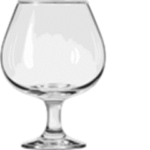
short-stemmed balloon-shaped glass that narrows sharply at the top. It is used for aromatic spirits like brandy, aged rum, and whiskey, and the short stem lets the drinker warm the drink in the palm while the narrow rim concentrates the aroma.
Cognac Balloon:
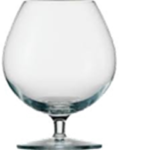
larger version of the snifter with a rounder wider bowl, also called a brandy balloon or brandy snifter. It is used for cognac and aged brandy, and the wide bowl gives the spirit maximum surface area to release its complex aromatic character.
Cocktail Glass Types With Names
Cocktail glasses are the stemmed and shaped glasses used to serve mixed drinks in bars and at home.
Cocktail Glass:
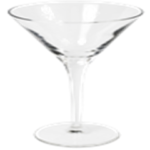
inverted-cone stemmed glass with a wide open bowl, around 4 to 8 ounces. It is the classic vessel for cocktails served “up” (without ice), and the stem keeps the drinker’s warm hand away from the chilled drink through the whole sipping process.
Martini Glass: V-shaped stemmed glass with a sharp conical bowl, around 4 to 6 ounces. It is the iconic vessel for a martini, cosmopolitan, or manhattan served straight up, and the wide rim releases the botanical aromas of gin, vodka, or vermouth.
Coupe Glass: shallow-bowl stemmed glass with a rounded rim, originally the vintage champagne coupe of the 1920s. It has become the standard glass for classic cocktails like the daiquiri, sidecar, and manhattan, and the shallow bowl gives the drink a wide flat surface.
Hurricane Glass: curvy stemmed glass shaped like a hurricane lamp, around 20 ounces. It is used for tropical tiki drinks like the Hurricane cocktail invented in 1940s New Orleans, the Piña Colada, and the Mai Tai, with room for plenty of ice and fruit garnishes.
Margarita Glass:
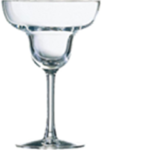
wide-stepped-bowl stemmed glass shaped like two saucers stacked, used exclusively for margaritas. The wide rim is traditionally lined with salt or sugar, and the shape gives room for a wedge of lime and a decorative straw or umbrella.
Poco Grande:
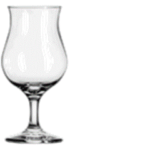
long-stemmed cousin of the hurricane glass with a longer stem and a slightly smaller bowl. It is used for blended tropical drinks and frozen daiquiris, and the long stem keeps the drinker’s warm hand away from the frozen drink underneath.
Collins Glass:
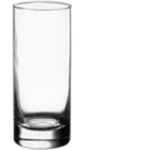
narrow straight-sided glass around 10 to 14 ounces, taller and slimmer than a highball. It is named after the classic Tom Collins cocktail of gin, lemon juice, sugar, and soda water, and it is the standard vessel for long fizzy mixed drinks.
Sour Glass: pear-shaped stemmed glass around 5 ounces, used for whiskey sours, gin sours, and other sour-family cocktails. The small bowl serves the drink without ice, and the stem keeps the chilled cocktail cool while the drinker sips slowly.
Sling Glass: footed glass around 12 to 14 ounces, purpose-built for the Singapore Sling. It is used for tall gin-based cocktails made with fruit juice and soda water, and the tall shape gives room for a heavy garnish of pineapple, cherry, or orange slice.
Zombie Glass: large footed glass around 14 to 16 ounces, used for the potent tiki drink called the Zombie. The cocktail was invented at Don the Beachcomber in 1934 as a strong mix of rum and fruit juice, and most bars limit each drinker to one per night.
Shot and Liqueur Glass Types
Shot and liqueur glasses are the small vessels for a single measure of spirit or a small sweet liqueur.
Shot Glass:
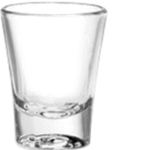
small thick-walled glass around 1 to 1.5 ounces, made for taking a spirit in a single quick drink. It is used for tequila, vodka, whiskey, and every strong spirit ordered as a shot, and the thick base keeps the glass from tipping when slammed on the bar.
Shooter Glass: taller thinner glass around 2 to 3 ounces, used for layered “shooter” drinks that go beyond a single shot in volume. Classic shooters like the B-52 layer coffee liqueur, Irish cream, and Grand Marnier in visible bands from bottom to top.
Cordial Glass: tiny stemmed glass around 1 to 2 ounces, also called a liqueur glass. It is used for sipping sweet after-dinner liqueurs like Grand Marnier, amaretto, crème de menthe, and Chartreuse slowly over dessert or with a small piece of chocolate.
Grappa Glass: thin-stemmed glass with a very narrow bowl that opens at the rim, made to release the sharp aroma of grappa. Grappa is the Italian grape-pomace spirit made from the skins and seeds left over from winemaking, and the glass concentrates its intense fragrance.
Hot Drink Cup and Mug Types
Hot drink cups and mugs are the vessels for coffee, tea, and other hot beverages.
Coffee Mug: thick ceramic cup with a handle, around 8 to 12 ounces. It is the everyday vessel for hot brewed coffee at home or in a café, made from ceramic to keep the coffee hot longer than glass or paper cups do.
Teacup: thin porcelain or bone-china cup with a matching saucer, around 4 to 6 ounces. It is used for hot brewed tea in the British afternoon-tea tradition and the Chinese gongfu tea tradition, and the thin porcelain lets the drinker feel the warmth in the hand.
Espresso Cup: thick-walled porcelain cup around 2 to 3 ounces, also called a demitasse in French. It is made to keep a single or double espresso hot and to preserve the crema (the golden layer of foam) on top, which is the mark of a properly pulled shot.
Demitasse Cup: small stemless porcelain cup around 2 to 3 ounces, matching the small espresso serving. The French word demi-tasse literally means “half cup,” and the same shape is used across Europe for after-dinner espresso and Turkish coffee.
Irish Coffee Glass: handled stemmed glass mug, made specifically for the hot cocktail of coffee, whiskey, sugar, and floating cream. The stem lets the drinker grip the glass without burning the hand, and the transparent glass shows the dark coffee below the white cream layer.
Specialty Drinking Glass Types
Specialty drinking glasses are the purpose-built vessels for one drink or one occasion.
Moscow Mule Mug: copper mug with a handle around 16 ounces, made exclusively for the Moscow Mule cocktail of vodka, ginger beer, and lime. The copper keeps the drink icy cold as it chills quickly, and the mug is nearly a signature of the drink itself.
Milkshake Glass: thick-walled soda-fountain glass around 16 ounces, tall enough for a heavy scoop of ice cream to sit above the rim. It is used for milkshakes, malts, floats, and sundaes served with a straw and a long spoon, and the shape is the visual signature of the American 1950s diner.
Absinthe Glass: thick-walled reservoir glass with a bulb near the base, made for the traditional absinthe ritual. Ice water is dripped through a sugar cube on a slotted spoon into the anise spirit, turning it cloudy green in a swirling ceremony called la louche.
Drinking Glasses That Look Similar
Some drinking glass names look almost identical but name different shapes or capacities.
Highball vs Collins
| Term | Size | Shape |
|---|---|---|
| Highball | 8 to 12 oz | Shorter and wider |
| Collins | 10 to 14 oz | Taller and narrower |
Both are tall straight-sided glasses for mixed drinks. The Collins is taller and thinner, and the Tom Collins cocktail gave the Collins glass its name.
Martini vs Cocktail vs Coupe
| Term | Shape | Best for |
|---|---|---|
| Martini | Sharp V-cone | Martini, cosmopolitan, manhattan |
| Cocktail | Softer inverted cone | Any short cocktail served up |
| Coupe | Shallow rounded bowl | Daiquiri, sidecar, sparkling wine |
The martini glass is the sharpest V. The cocktail glass has a gentler curve. The coupe is a shallow saucer that predates both.
Rocks vs Old Fashioned vs Lowball
| Term | Verdict |
|---|---|
| Rocks Glass | The same glass |
| Old Fashioned Glass | The same glass |
| Lowball Glass | The same glass |
All three names name the same short wide-bottomed tumbler. American bartenders call it a rocks glass; the cocktail world calls it an Old Fashioned after the classic cocktail; British and Australian bartenders call it a lowball.
Cordial vs Liqueur vs Shot
| Term | Purpose |
|---|---|
| Cordial Glass | Sipping sweet after-dinner liqueurs |
| Liqueur Glass | Same shape and use as cordial |
| Shot Glass | Downing a spirit in one quick drink |
Cordial and liqueur glasses are the same glass under two names. Shot glasses are thicker-walled and made for drinking fast, not sipping.
FAQs
Q1. What are the main types of drinking glasses?
The main types of drinking glasses are everyday glasses (water, juice, tumbler), wine glasses (red, white, champagne flute), beer glasses (pint, tankard, stein), whiskey and spirit glasses (rocks, snifter, Glencairn), cocktail glasses (martini, coupe, hurricane), shot and liqueur glasses, hot-drink cups (coffee mug, teacup), and specialty glasses like the copper Moscow mule mug.
Q2. What is the difference between a tumbler and a glass?
A glass is any drinking vessel made of glass, from a wine glass to a beer stein. A tumbler is a specific type of glass with a flat bottom, no stem, and straight or slightly curved sides, used for water, juice, soda, whiskey, and other everyday drinks. Every tumbler is a glass, but not every glass is a tumbler.
Q3. What glass is used for whiskey?
Whiskey is served in several glasses depending on how it is drunk. The rocks glass (also called Old Fashioned or lowball) is used for whiskey neat, on the rocks, or in an Old Fashioned cocktail. The Glencairn glass is the standard tasting glass for single malt Scotch. The snifter and nosing glass are used for warming and evaluating the aroma of aged whiskey.
Q4. What is the difference between a highball and a Collins glass?
Both are tall straight-sided glasses used for mixed drinks with a small amount of spirit and a large amount of mixer. A highball is shorter and wider (8 to 12 ounces). A Collins is taller and narrower (10 to 14 ounces). Bartenders use them interchangeably in casual settings, but the Collins glass is the correct one for a Tom Collins cocktail.
Q5. What is the difference between a rocks glass and an Old Fashioned glass?
There is no difference. Rocks glass, Old Fashioned glass, and lowball glass are three names for the same short wide-bottomed tumbler around 8 to 10 ounces. American bartenders call it a rocks glass; the cocktail world calls it an Old Fashioned after the classic cocktail; British and Australian bartenders call it a lowball.
Q6. What is the difference between a martini glass and a cocktail glass?
A martini glass and a cocktail glass are close cousins with a shared V-shape and wide open bowl. The martini glass has a sharper, more pointed V-shape, while a cocktail glass has a slightly softer curve. Both take 4 to 6 ounces of a drink served “up” (without ice). Most bars use the two words interchangeably.

Leave a Comment