
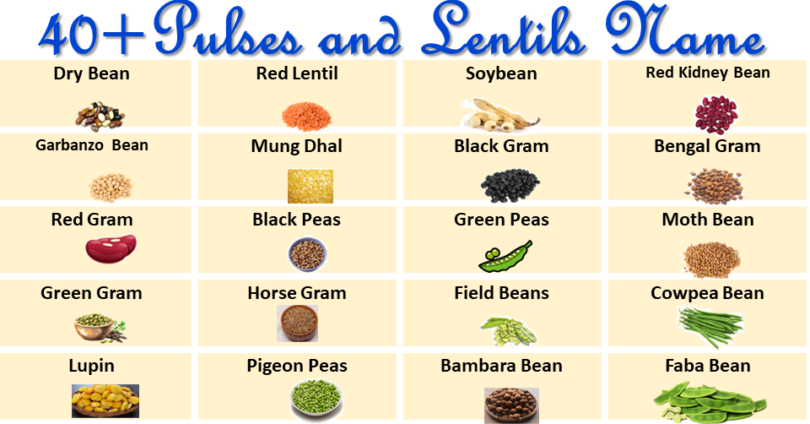
Pulses are the dry edible seeds inside legume pods. The main types are lentils, beans, chickpeas, peas, and other legumes like soybeans and peanuts, each with a specific name, shape, and use in cooking around the world.
Pulses are the dry edible seeds inside legume pods. The six main types by category are lentils (red, brown, green, French green, beluga, yellow), split pulses (pigeon peas, Bengal gram, black gram, green gram), beans (kidney, black, navy, cannellini, pinto, fava, lima, cranberry, adzuki, mung), chickpeas (regular, black, green), peas and cowpeas (green peas, split peas, white peas, cowpeas), and other legumes (soybeans, peanuts, horse gram, moth beans, lupini).
Common Pulses and Lentils With Pictures
Each family is defined by seed shape and cooking form. Lentils, split pulses, and beans are the three most-used in households worldwide. The other three are chickpeas, peas and cowpeas, and other pulses like soybeans and peanuts.
Types of Lentils With Names
Lentils are small round or lens-shaped dry pulses that cook quickly and dissolve into creamy stews and soups.
Red Lentils: small orange-red flat lentils that turn golden and soft when cooked. They cook in 15 minutes without soaking, and they are the base of Indian red lentil stew, Turkish red lentil soup (mercimek çorbası), and Middle Eastern mujadara.
Brown Lentils:
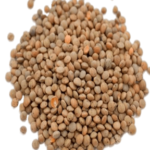
small round earth-brown lentils, the most common lentil in Western grocery stores. They keep their shape when cooked and are used in lentil soups, veggie burgers, hearty salads, and side dishes across Europe and North America.
Green Lentils:
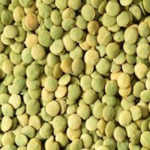
small round greenish-brown lentils, larger than red lentils and firmer than brown ones. They keep their shape well when cooked and are used in cold lentil salads, warm lentil loaves, and long-simmered French country stews.
French Green Lentils: slate-green speckled small lentils grown in the volcanic soil of Le Puy in central France. They have a peppery flavor and keep their shape perfectly when cooked, and they are prized in French bistro salads and paired with duck confit.
Black Beluga Lentils: tiny glossy black lentils that resemble beluga caviar, and the name comes from the resemblance. They cook in 20 minutes, keep their shape well, and are used in warm salads, grain bowls, and modern restaurant sides in Europe and North America.
Yellow Lentils:
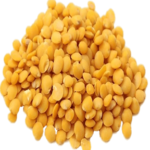
golden-yellow split pulses sold under two English meanings. In South Asian cooking the term means split yellow mung beans, and in Middle Eastern and Ethiopian cooking it means split yellow peas used in stews and curries.
Types of Split Pulses With Names
Split pulses are the whole beans and lentils cracked in half and hulled for faster cooking.
Split Pigeon Peas: pale yellow oval split pulse, the everyday base of many South Asian lentil stews. They are cooked into South Indian lentil-and-tamarind stew, spiced-and-tempered lentil dishes, and Gujarati sweet-and-sour lentil curries, and they are the most-eaten pulse in South Asia by weight.
Split Bengal Gram: yellow split pulse from black chickpeas, larger and firmer than split mung beans. It is used in Indian stews, laddu sweets, roasted-flour drinks, and roasted-and-fried as a crunchy topping in South Asian snack mixes.
Split Black Gram: pale creamy-white split lentil made from whole black gram beans. It is the base of South Indian dosa and idli batter, North Indian creamy black lentil stew, and the crunchy fritters served at breakfast across India.
Split Green Gram: small pale yellow split pulse made from hulled green mung beans. It cooks in 20 minutes without soaking and is the base of yellow split mung soup, spiced rice-and-lentil porridge, and the sweet mung halwa dessert served at Rajasthani weddings.
Types of Beans With Names and Pictures
Beans are the larger kidney-shaped or oval pulses eaten around the world in stews, curries, and salads.
Kidney Beans:
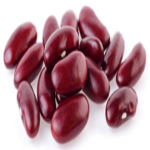
large deep-red kidney-shaped beans, popular around the world for their firm texture and mild sweet flavor. They are the star of Mexican chili con carne, Louisiana red beans and rice, Caribbean rice and peas, and North Indian red kidney bean curry.
Black Beans:
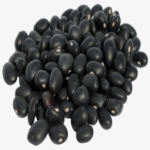
small shiny black beans, a staple across Latin America and the Caribbean. They are used in Cuban black beans and rice, Brazilian feijoada, Mexican refried beans, and vegetarian burgers across North America.
Navy Beans:
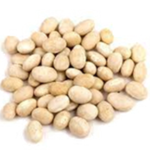
small oval white beans, also called haricot beans in Britain. They cook down to a creamy soft texture and are the classic base of American Boston baked beans and British beans-on-toast.
Great Northern Beans:
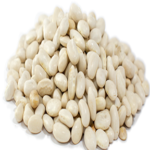
medium white beans, larger than navy beans and firmer than cannellini. They are used in French cassoulet, Italian white bean soups, and American slow-simmered stews and casseroles.
Cannellini Beans: large white Italian kidney beans, creamy and mild in flavor. They are the star of Tuscan minestrone soup, Italian pasta e fagioli, and white bean salads dressed with olive oil and fresh herbs.
Pinto Beans: speckled tan and brown medium beans, the everyday bean of the American Southwest and Mexico. They are the base of refried beans, burritos, chili, and cowboy-style baked beans across Tex-Mex cooking.
Fava Beans (Broad Beans):
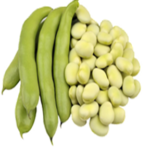
large flat pale-green beans with a mild sweet nutty flavor. They are eaten fresh in spring in the Mediterranean, dried for the Egyptian breakfast dish ful medames, and mashed for Sicilian pasta sauces with pecorino.
Lima Beans (Butter Beans):
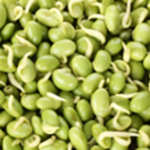
flat pale-green or white beans with a soft creamy texture, called butter beans in Britain. They are used in Southern American succotash (with corn), Greek gigantes plaki, and slow-simmered West African stews.
Cranberry Beans (Borlotti Beans):
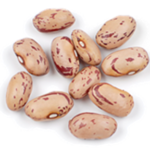
cream-colored beans with red-pink speckles that fade to pale brown when cooked. They are used in Italian pasta e fagioli, Portuguese feijoada, and Turkish barbunya pilaki stew.
Adzuki Beans:
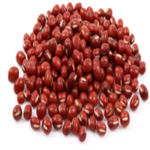
small reddish-brown beans with a slightly sweet flavor. They are used across East Asia in the sweet red bean paste of Japanese dorayaki and mochi, Chinese red bean soup, and Korean patjuk porridge.
Whole Mung Beans: small round olive-green whole beans that soak overnight and cook in 30 minutes. They are used for whole mung bean stew, mung sprout salads, and mung-based rice porridge in Indian and traditional Ayurvedic cooking.
Whole Black Gram: small black round beans with a creamy white interior. They are the base of North Indian creamy black lentil stew, the slow-cooked Punjabi black lentil dish, and traditional Punjabi black lentil curries served with tandoori flatbread.
Types of Chickpeas With Names
Chickpeas are the round golden or dark pulses eaten from the Middle East to India and North Africa.
Chickpeas (Garbanzo Beans):
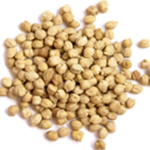
round pale-golden pulse about the size of a large pea, with a firm texture and nutty flavor. They are the base of Middle Eastern hummus and falafel, Indian chickpea curry, and Spanish chickpea stews with chorizo and spinach.
Black Chickpeas: small dark-brown chickpeas with a thicker skin and firmer texture than the pale golden variety. They are the base of North Indian black chickpea curry, the boiled-and-tempered street food served during Hindu fasting festivals, and Punjabi black chickpea stew.
Green Chickpeas: fresh green chickpeas eaten as an early-spring vegetable in North India. They are stir-fried with cumin and ginger, made into green chickpea curry, and roasted in the pod as a winter street snack in Delhi and Punjab.
Types of Peas and Cowpeas With Names
Peas and cowpeas are the round dry pulses that come from pea and cowpea pods rather than lentil or bean plants.
Green Peas:
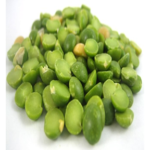
round bright-green fresh peas, sweet when young and starchy when older. They are eaten fresh in salads and pasta, frozen for winter cooking, and dried for split peas and whole yellow peas used in soups and stews.
Yellow Split Peas:
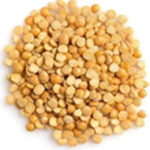
golden-yellow split dried peas that dissolve into a creamy soup when cooked. They are the base of British split pea soup, Scandinavian ärtsoppa, Ethiopian yekik alicha, and Indian yellow pea stew.
Green Split Peas:
olive-green split dried peas with a stronger flavor than yellow split peas. They are the base of the classic British pea and ham soup, Dutch snert, and Canadian yellow-and-green split pea combinations.
White Peas: round pale-cream whole dried peas, larger than split peas. They are used in Delhi street food served with tamarind and mint chutney, Maharashtra’s white pea curry, and Punjabi flatbread-and-peas dishes.
Cowpeas (Black-eyed Peas):
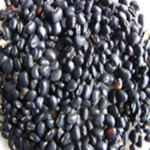
cream-colored beans with a distinctive black spot on one side, and the same pulse under two English names. They are used in Indian cowpea curry, American Southern hoppin’ John (with rice), and West African akara fritters.
Other Pulses and Legumes
Other pulses are the additional legumes that do not fit the bean, lentil, chickpea, or pea categories.
Soybeans:

round pale-yellow oil-rich legumes, the world’s most-produced pulse by tonnage. They are eaten as edamame (fresh green pods), fermented into tofu, tempeh, miso, and soy sauce, and pressed into soybean oil and vegetable protein.
Peanuts (Groundnuts): oval brown-skinned legumes that grow underground rather than in above-ground pods. They are technically legumes but are treated as nuts in cooking, and they are the base of peanut butter, Southeast Asian satay sauce, and Indian peanut chutney.
Horse Gram:
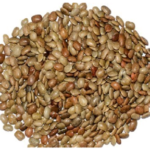
small hard reddish-brown pulse traditionally fed to horses, and the English name records that history. It is used in South Indian horse gram broth and mountain-village horse gram curry, and it is valued in traditional medicine for kidney and weight-loss remedies.
Moth Beans: small tan-brown beans that sprout into the crunchy sprouts served with Maharashtra’s spiced-sprout breakfast plate. They are used in Gujarati stir-fries, Rajasthani sprouted-bean curries, and the sprouted breakfast bowl of Pune and Mumbai.
Lupini Beans:
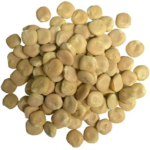
flat pale-yellow Mediterranean beans that are pickled in brine and eaten as a bar snack in Italy, Portugal, and Egypt. They are high in protein and traditionally eaten by squeezing each bean out of its thin outer skin.
Pulses vs Lentils vs Beans: The Difference
Pulses, lentils, beans, and legumes are related but distinct terms.
Legume vs Pulse vs Lentil vs Bean
| Term | Meaning |
|---|---|
| Legume | Any plant that grows seeds in a pod (fresh peas, fresh beans, peanuts, all pulses) |
| Pulse | The dry edible seed inside a legume pod (dry beans, dry peas, lentils, chickpeas) |
| Lentil | A type of pulse (small round or lens-shaped dry seed) |
| Bean | A type of pulse (larger and kidney or oval-shaped) |
Every pulse is a legume, but not every legume is a pulse. Fresh green peas are legumes but not pulses; dried split peas are both.
Whole vs Split Pulses
| Form | Meaning |
|---|---|
| Whole | Pulse with skin on, unsplit |
| Split | Pulse cracked in half, hulled in most cases |
| Hulled | Outer skin removed |
Whole green mung beans (skin on) become split yellow mung (hulled and split). Whole black gram becomes split creamy-white gram. Whole black chickpeas become split yellow chickpeas.
Cowpeas vs Black-eyed Peas
| Term | Verdict |
|---|---|
| Cowpeas | The same pulse |
| Black-eyed Peas | The same pulse |
Both names name the same cream-colored bean with a black spot on one side. Africans and Indians call them cowpeas; Americans call them black-eyed peas after the visual mark.
FAQs
Q1. What are pulses?
Pulses are the dry edible seeds inside legume pods. The four main pulse types are dry beans, dry peas, lentils, and chickpeas. Fresh green beans, fresh green peas, and peanuts (which are oilseeds) are excluded from the strict UN definition. Pulses are a major source of plant-based protein around the world.
Q2. What is the difference between pulses, lentils, beans, and legumes?
A legume is any plant that grows seeds in a pod. A pulse is the dry seed inside that pod. Lentils and beans are two types of pulses: lentils are small and lens-shaped, while beans are larger and kidney or oval-shaped. Every pulse is a legume, but not every legume is a pulse.
Q3. Are chickpeas pulses?
Yes, chickpeas are pulses. The FAO officially classifies chickpeas as one of the four main pulse types alongside dry beans, dry peas, and lentils. Both the pale-golden chickpeas (used in hummus and Indian chickpea curry) and the smaller dark black chickpeas are pulses.
Q4. What are the main types of split pulses?
The main split pulses are split pigeon peas (pale yellow, used in South Asian lentil stews), split Bengal gram (yellow, from black chickpeas), split black gram (creamy white, base of dosa batter and slow-cooked black lentil stew), and split green gram (pale yellow, from hulled mung beans). Split red lentils are another everyday split pulse.
Q5. What is the difference between whole and split pulses?
Whole pulses keep the outer skin and take longer to cook, requiring soaking for several hours. Split pulses are cracked in half, and the split hulled version cooks in 15 to 30 minutes without soaking. Split hulled pulses dissolve into a creamy curry, while whole pulses keep their shape in stews.
Q6. Are black-eyed peas and cowpeas the same thing?
Yes, black-eyed peas and cowpeas are the same pulse. Cowpea is the botanical name and the term used in Africa and India; black-eyed pea is the common American name, taken from the distinctive black spot on the side of the bean. Both cook in about 30 minutes after soaking.

Leave a Comment